

Maddy summaryThe Save Our Sequoias Act establishes a coordinated approach to protect giant sequoia groves in California from wildfires, insects, and drought. It creates a Giant Sequoia Lands Coalition including federal agencies, state governments, and the Tule River Indian Tribe to assess grove health, develop protection projects, and recommend forest management activities. The bill streamlines implementation of certain projects through categorical exclusion from environmental reviews, authorizes $10-40 million annually for conservation efforts, and establishes a fund for philanthropic support of sequoia protection.
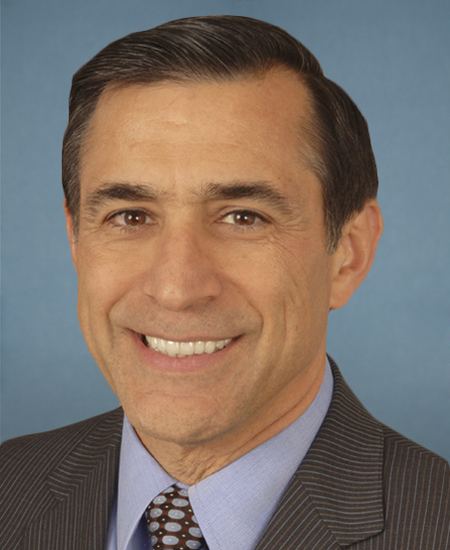
Rep. Darrell Issa
Sponsored bills
Maddy summaryThis bill requires the Secretary of Agriculture to suppress wildfires on specific National Forest System lands within 24 hours of detection. It directly affects lands classified as high-risk - those in severe drought (D2+), under National Wildland Fire Preparedness Level 5, or in the top 10% of fire exposure zones. Key provisions mandate immediate suppression of prescribed fires that exceed limits, prohibit hindering state/local firefighting efforts, and restrict using fire as a management tool to only compliant prescribed burns. Backfires or burnouts may only be initiated with an incident commander’s order or for firefighter safety, and must be controlled until extinguished.
Maddy summaryThis bill establishes specific water allocation requirements for Central Valley Project (CVP) agricultural contractors based on water year types, guaranteeing at least 100% of contract water in Wet and Above Normal years, 50% in Dry years, and other specified percentages in other conditions. It requires CVP and SWP operations to follow the Preferred Alternative and Biological Opinions, with strict conditions for reconsultation during severe drought periods (requiring 4 consecutive years of D3/D4 drought). The bill also includes infrastructure provisions for the Shasta Dam enlargement project and includes a 7-year sunset provision for its main operational requirements. These provisions directly affect CVP contractors, SWP contractors, and water management agencies in California.
Maddy summaryThe Proven Forest Management Act of 2022 streamlines forest management activities on National Forest System land, primarily focusing on reducing wildfire risk through fuel reduction projects. It requires the Secretary of Agriculture (managing National Forests) to coordinate with local governments and communities when planning projects, while mandating multiple ecosystem benefits like reducing forest fuels, improving water quality, and maintaining biodiversity - unless costs are deemed excessive. A key provision allows projects under 10,000 acres (with up to 3,000 acres of mechanical thinning) to bypass certain environmental reviews under the National Environmental Policy Act (NEPA), provided they align with local input and forest plans. This directly affects federal land managers and communities near National Forests by accelerating wildfire risk mitigation while maintaining ecological standards.
Maddy summaryThis bill, the Affordable Prescriptions for Patients Act of 2024, aims to lower drug costs by limiting how pharmaceutical companies can use patents to block cheaper biosimilar alternatives. It restricts reference product sponsors (brand-name drug makers) to asserting no more than 20 patents in lawsuits against biosimilar applicants (companies seeking to produce cheaper alternatives), with only 10 of those patents allowed to be newer ones (issued after a specific date). The bill also includes a provision increasing Medicare's Improvement Fund by $1.8 billion. These changes directly affect drug manufacturers, biosimilar developers, and patients seeking more affordable biologic medications.
Maddy summaryThis bill requires states to submit annual lists of individuals convicted of sexually violent offenses who have been deemed "sexually dangerous" under existing law. It directs the Attorney General to review these lists to determine if federal prosecution is warranted for those individuals. The bill also restricts Medicaid and Medicare benefits for these "specified individuals," with an exception for those receiving involuntary inpatient treatment in hospitals or skilled nursing facilities. These provisions apply specifically to people meeting the defined criteria under the Adam Walsh Act.
Maddy summaryHR 5994, the "No Funds for Iran-Backed Terror Act," requires the President to fully enforce existing oil sanctions against Iran by maximizing use of authorities targeting Iranian petroleum purchases. It mandates monthly certifications to Congress on sanctionable entities linked to Iranian oil transfers and cancels previous waivers allowing access to funds held in South Korea and Iraq related to Iranian oil revenues. The bill also blocks Iran's access to International Monetary Fund Special Drawing Rights by directing U.S. representatives to prevent Iran from using these financial instruments. These measures remain in effect until the President certifies Iran has ended funding terrorism, pursuing nuclear weapons, and supporting Russia's war in Ukraine.
Maddy summaryHR 3858, the "No Free TRIPS Act," requires the U.S. President and federal officials to obtain explicit Congressional approval *before* negotiating any changes to the global TRIPS Agreement on intellectual property rights. This bill directly affects U.S. trade negotiators and the President by blocking any withdrawal, suspension, waiver, or modification of the TRIPS Agreement without prior congressional authorization. The key mechanism mandates that Congress must give specific permission before negotiations begin, preventing unilateral executive action on international intellectual property rules. The bill focuses solely on the procedural requirement for negotiations, not on the substance of intellectual property policy or its potential impacts.
Maddy summaryHR 3745, the Unemployment Trust Fund Accountability Act, requires states with outstanding federal unemployment advances exceeding $1 billion as of January 1, 2023, to submit detailed repayment plans within 90 days of the bill's enactment. These states must report to Congress and the Secretary of Labor on how they intend to repay their debts to the federal Unemployment Trust Fund. The bill targets specific states with significant existing obligations under Section 1201 of the Social Security Act. It establishes a reporting mandate focused on transparency and accountability for large outstanding balances, without altering existing repayment terms.
Maddy summaryThis bill would require Medicare to cover FDA-approved blood tests that screen for multiple cancers simultaneously (like breast, lung, or colorectal cancer) for beneficiaries. It directly affects Medicare recipients aged 65+ who could access these new screenings once per year, without prior authorization. The key provision adds "multi-cancer early detection screening tests" to Medicare's covered services under Part B, defining them as blood tests analyzing cell-free DNA, while maintaining existing coverage for standard screenings like mammograms. The bill does not change current coverage for individual cancer screenings but ensures Medicare keeps pace with new medical technology.