

Maddy summaryThis bill amends the Tennessee Valley Authority (TVA) Act to require the TVA Board to publish an annual report listing all management-level employees (including executives and Board members) earning $155,000 or more, with their names, salaries, and duties. It replaces previous financial reporting requirements with this specific salary disclosure for senior staff. However, the bill also exempts this salary information from Freedom of Information Act (FOIA) requests and other disclosure requirements. The change directly affects TVA leadership and high-level staff whose compensation meets the threshold, while limiting public access to that data.
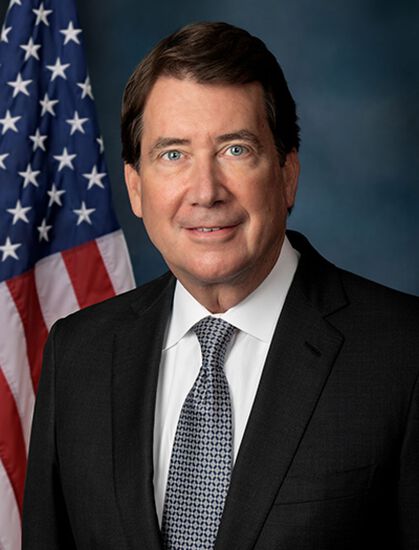
Sen. Bill Hagerty
Sponsored bills
Maddy summaryThis resolution (SRES 159) is a ceremonial Senate measure honoring the late Senator John Bennett Johnston, Jr. (1932-2024), who represented Louisiana in the U.S. Senate from 1972 to 1997. It commemorates his career, including his work on energy policy, flood control, and Louisiana conservation efforts, and requests the Senate adjourn in his memory while sending condolences to his family. As a non-binding resolution, it has no policy impact or direct effect on any individuals or laws.
Maddy summaryThis bill eliminates "official time" for federal employees, meaning they can no longer use regular work hours to perform union-related activities. It directly affects federal workers who are union members, requiring them to handle union business during non-duty time instead of paid work hours. The key provision amends Title 5 of the U.S. Code to change the rule governing union activities during work time. This is a procedural change to federal employment law, not a new policy affecting the public or specific industries.
Maddy summarySenate Joint Resolution 45 seeks to block an Environmental Protection Agency (EPA) rule that would have allowed California to enforce its Advanced Clean Cars II vehicle emission standards. The resolution uses the congressional disapproval process under federal law to declare the EPA rule invalid, preventing California from implementing its stricter pollution controls for cars and trucks. If passed, this resolution would stop the rule from taking effect, meaning California could not override federal vehicle emission standards with its own requirements. The bill directly affects California's ability to set state-level environmental regulations for motor vehicles and the EPA's regulatory authority.
Maddy summaryThis bill amends federal law to clarify that certain less-than-lethal projectile devices are exempt from firearm restrictions under Title 18. It defines these devices as those not firing standard ammunition, operating below 500 ft/s velocity, unlikely to cause serious injury, and incompatible with common firearm magazines. The law directly affects manufacturers and users of such devices by establishing a clear legal standard for their classification. It also requires the Attorney General to review device requests within 90 days to confirm compliance with the new definition.
Maddy summaryS 1289 authorizes the U.S. Mint to produce and sell commemorative $5 gold and $1 silver coins to mark the 25th anniversary of the September 11, 2001, terrorist attacks. The bill specifies coin specifications (e.g., 90% gold/silver content, design requirements including "Never Forget"), sets a one-year issuance window (January 1, 2027-2028), and requires surcharges of $35 per gold coin and $10 per silver coin. These surcharges will be paid directly to the National September 11 Memorial and Museum to support its operations and maintenance, with coins sold at a price covering face value, surcharge, and production costs. The legislation does not impose new regulations or affect public policy but focuses on commemoration and funding for the museum.
Maddy summarySRES 148 is a ceremonial resolution passed by the U.S. Senate to honor the late Senator Alan K. Simpson of Wyoming, who died in 2022. The resolution expresses the Senate's "profound sorrow and deep regret" over his passing and formally requests the Secretary of the Senate to transmit an enrolled copy to his family. It also directs the Senate to adjourn as a mark of respect during its final session following the resolution's adoption. This resolution has no policy impact or direct effect on constituents - it solely serves as a formal tribute to Simpson's legacy.
Maddy summaryThis bill prevents U.S. federal courts from issuing orders (such as injunctions, stays, or declarations) that stop enforcement of laws against people or entities not directly involved in a lawsuit (non-parties). It requires that such orders only apply if a non-party is represented through a party acting under standard legal rules. The law applies to all federal courts, including those in U.S. territories, and modifies related procedures for temporary restraining orders and declaratory judgments to enforce this restriction. Its core change limits court authority to affect non-parties regarding statutes, regulations, or government actions.
Maddy summaryThis bill allows state and federal correctional facilities (like jails and prisons) to operate cellphone jamming systems to block wireless signals used for contraband devices or by incarcerated individuals. It restricts the FCC from preventing this use, but requires jamming systems to be limited to housing areas within the facility. Facilities must fund the systems entirely themselves (if state-run), consult local law enforcement before implementation, and notify the Bureau of Prisons about operations. The law specifically targets blocking signals to/from contraband devices or inmates, not general cellphone use.
Accountability Through Electronic Verification Act This bill expands the E-Verify program by requiring all employers to use it and permanently reauthorizes the program. Currently, E-Verify use is voluntary for most employers, although some states mandate its use. All employers must use E-Verify to confirm the identity and employment eligibility of all recruited, referred, or hired individuals, including current employees who were never verified under the program. Failure to use E-Verify shall create a rebuttable presumption that the employer is violating immigration law. U.S. Citizenship and Immigration Services must generate weekly reports about individuals who have received a final nonconfirmation of employment eligibility. The Department of Homeland Security (DHS) must use the report to enforce immigration laws. The bill increases civil and criminal penalties for hiring non-U.S. nationals ( aliens under federal law) who are not authorized to work. DHS must bar repeat offenders and those criminally convicted from holding federal contracts, grants, or cooperative agreements. The Social Security Administration, Internal Revenue Service, Department of the Treasury, and DHS must jointly establish a program to share information to help identify non-U.S. nationals who are not authorized to work. The bill establishes the Employer Compliance Inspection Center within Homeland Security Investigations of U.S. Immigration and Customs Enforcement. The center's duties include processing I-9 employment eligibility verification forms and ensuring compliance with employment eligibility laws. DHS must report to Congress on ways to simplify procedures relating to I-9 forms and on whether the I-9 process should be eliminated.