

Maddy summaryThe Natural Climate Solutions Research and Extension Act of 2026 directs federal funding toward studying and promoting land management practices that help store carbon or lower greenhouse gas emissions in agricultural lands, grasslands, wetlands, and forests. This legislation specifically supports projects that incorporate traditional ecological knowledge, enhance biodiversity, and reduce water runoff. By amending an existing agricultural law, the bill ensures that research grants prioritize these environmental benefits to improve climate resilience.
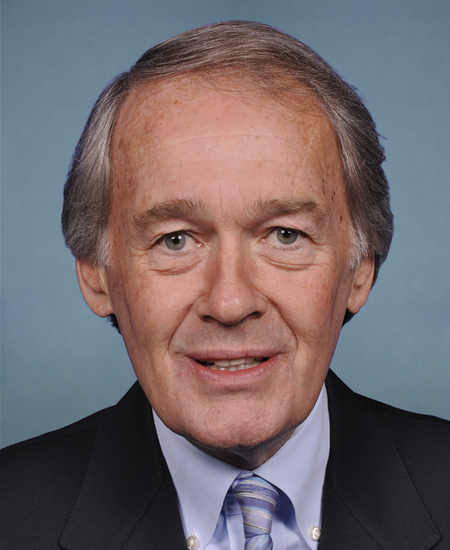
Sen. Edward J. Markey
Sponsored bills
Maddy summaryThe No Toxic Chemicals in Food Packaging Act of 2026 prohibits the use of specific harmful substances, such as PFAS, certain phthalates, and bisphenols, in materials that come into contact with food. This law directly affects manufacturers and regulators by amending federal statutes to classify these chemicals as unsafe and requiring the FDA to consider potential risks to vulnerable groups, including children and pregnant women, when evaluating alternative substances. The bill sets a minimum national standard while explicitly allowing states to enforce stricter regulations without fear of federal preemption. These restrictions will not take effect until two years after the law is enacted to provide time for industry adjustments.
Maddy summaryThis bill, known as the Asal Sayas National Strategy on Young Adult Cancers Act, directs the National Institutes of Health to create a comprehensive plan to address the rising cancer rates among individuals aged 18 to 49. The legislation requires the development of a national education campaign to raise public and professional awareness about symptoms and risk factors, alongside the establishment of a federal clearinghouse to share research findings and clinical guidelines. Additionally, the bill mandates the formation of a coordinating committee involving multiple federal agencies and stakeholders to identify research priorities, improve early detection methods, and support the psychosocial needs of young adult patients and their families.
Maddy summaryThis joint resolution seeks to reject a specific federal rule issued by the Centers for Medicare & Medicaid Services regarding the WISeR Model, which was designed to reduce wasteful spending by requiring prior authorization for select Medicare services. If passed, the measure would legally nullify the rule, preventing the Centers for Medicare & Medicaid Services from enforcing the new prior authorization requirements on healthcare providers. The bill directly affects Medicare beneficiaries and medical facilities that would otherwise have to comply with these administrative changes. By invoking the Congressional Review Act, the legislation aims to stop the implementation of the policy without altering the underlying statute governing Medicare.
Maddy summaryThe Equal Remedies Act of 2026 expands the types of damages available to individuals who file discrimination lawsuits. It allows victims of race discrimination to receive compensation for both financial losses and non-financial harms like emotional pain and loss of enjoyment of life. The bill also permits any party in a race discrimination case to request a jury trial. Additionally, the law extends these expanded remedies to age discrimination cases, enabling plaintiffs to seek the same broad range of relief available in sex and race discrimination suits. These changes apply to individuals bringing claims under federal civil rights laws and the Age Discrimination in Employment Act.
Maddy summaryThe Freedom to Travel for Health Care Act of 2026 prohibits any person or government entity from restricting, sanctioning, or discriminating against individuals who travel to another state to receive reproductive health care that is legal there. It also protects those who assist travelers and reproductive health care providers from facing penalties for offering services to out-of-state patients, effectively overriding any conflicting state laws. The bill establishes a private right of action allowing affected individuals, organizations, and providers to sue in federal or state court for violations, with provisions for damages and attorney's fees. Additionally, it removes state sovereign immunity defenses for officials enforcing laws that interfere with this travel right, ensuring federal courts can hear such cases directly.
Maddy summaryThis bill, known as the Alice Cogswell and Anne Sullivan Macy Act, strengthens the Individuals with Disabilities Education Act to better support children who are deaf, hard of hearing, deafblind, or blind or visually impaired. It requires schools to identify these students regardless of how they are currently classified and mandates that they receive specialized instruction in their primary language, such as American Sign Language or Braille, rather than being served only under general disability categories. The legislation also establishes a new national center within the Department of Education to fund research, provide professional training, and develop curricula specifically for educators serving students with visual disabilities. Additionally, the bill improves early intervention services for infants and toddlers by ensuring evaluations focus on unique language and communication needs and by increasing the availability of qualified teachers and interveners.
Maddy summaryThis Senate resolution honors the life and legacy of Donald W. Riegle, Jr., a former U.S. Senator from Michigan who passed away in April 2026. The bill formally acknowledges his nearly three decades of public service, including his roles as a Representative and Senator, and highlights his significant contributions to legislation on banking, housing, and veterans' health. It also expresses the Senate's condolences to his family and directs officials to share the resolution with the House of Representatives and send a copy to Riegle's family. Finally, the Senate will stand in adjournment as a mark of respect for the former senator when the session concludes.
Maddy summaryThis Senate resolution expresses the Senate's commitment to reducing traffic fatalities to zero by the year 2050. It calls on Congress and the Department of Transportation to collaborate on implementing proven safety measures, such as improving data collection, prioritizing countermeasures, and addressing disparities in transportation safety. The document also encourages the use of the term "crash" instead of "accident" to better describe traffic incidents. As a non-binding expression of sense, the bill does not create new laws but serves as a formal statement of policy goals for federal agencies.
Maddy summaryThe Elder Pride Act amends the Older Americans Act to formally recognize LGBTQI individuals and people living with HIV as distinct groups requiring specific attention. It establishes a new Office of LGBTQI Inclusion within the Department of Health and Human Services to coordinate services, conduct research, and administer grants aimed at improving care for older LGBTQI people. Additionally, the bill creates a $5 million rural outreach grant program to fund initiatives that reduce isolation, enhance cultural competency among service providers, and expand sexual health services in non-urban areas. These changes are designed to ensure that aging services are more inclusive and accessible to older adults who have historically faced discrimination or lack of tailored support.