

Maddy summaryThe America the Beautiful Act reauthorizes the National Parks and Public Land Legacy Restoration Fund through 2033, increasing its annual funding from $1.9 billion to $2 billion. It requires that projects funded by the Legacy Restoration Fund must secure at least 15% of their costs from public donations, which will be solicited through public awareness campaigns, donation locations at recreation sites, and during the purchase of recreation passes. The bill also mandates new reporting requirements for deferred maintenance and disposal of assets no longer serving public interest, while ensuring donations are credited to the Fund and allocated to specific projects.
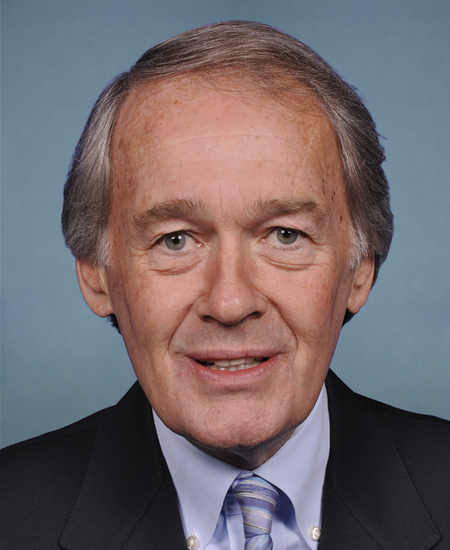
Sen. Edward J. Markey
Sponsored bills
Maddy summaryThe Land of the Free Act of 2026 amends federal immigration law to remove a specific ground for deportation related to protected speech activities. By striking a particular subsection of the Immigration and Nationality Act, the bill aims to prevent individuals from being deported solely for engaging in constitutionally protected expression. This change directly affects immigrants who might otherwise face removal proceedings based on their speech. The legislation does not alter other deportation criteria or create new categories of removable offenses.
Maddy summaryThe Slash the Pentagon Act sets a strict spending limit for the U.S. national defense budget in fiscal year 2027, capping total appropriations at $750 billion. This legislation directly affects the Department of Defense by restricting the total amount of money available for military operations and equipment. However, it includes specific exceptions that prevent the reduction of funds designated for military personnel and the Defense Health Program. By establishing this financial ceiling, the bill aims to control overall defense expenditures while ensuring continued support for service members and their healthcare.
Maddy summaryThe Stock Buyback Accountability Act of 2026 raises the federal excise tax on corporate stock repurchases from 1 percent to 4 percent, directly affecting corporations that buy back their own shares. This change also modifies existing tax rules to exclude stock issued to high-income executives and employees earning over $1 million from the tax calculation. The new provisions apply to stock repurchases occurring after the law is enacted, with specific transition rules for partial-year transactions, while the adjustments to tax exemptions take effect for taxable years ending more than 90 days after enactment.
Maddy summaryThis Senate resolution designates June 6, 2026, as National Naloxone Awareness Day to highlight the importance of naloxone in reversing opioid overdoses. The measure aims to educate the public, healthcare providers, and first responders on how to recognize overdose signs and safely administer the medication. It also encourages federal, state, and local governments along with private organizations to support efforts that increase access to and distribution of naloxone.
First Rhode Island Regiment Congressional Gold Medal Act This bill provides for the award of a single Congressional Gold Medal to the First Rhode Island Regiment, collectively, in recognition of their dedicated service during the Revolutionary War.
Maddy summaryThis Senate resolution formally acknowledges and apologizes for the decades of discrimination and wrongful termination faced by lesbian, gay, bisexual, and transgender individuals who served in the U.S. military, Foreign Service, and federal civil service. The measure highlights historical policies, such as the "Don't Ask, Don't Tell" rule and the "Lavender Scare," which forced hundreds of thousands of service members to leave their jobs or hide their identities, while also noting recent executive actions that have rescinded protections for gender identity. While the resolution reaffirms a commitment to equal rights and respect for all LGBT government employees, it explicitly states that it does not create any legal claims or settlements for affected individuals.
Maddy summaryThis bill, known as the Gun Records Restoration and Preservation Act, aims to repeal specific restrictions on how the Bureau of Alcohol, Tobacco, Firearms and Explosives manages gun-related data. By removing these limits, the legislation would allow federal agencies to keep instant background check records longer than the current 24-hour requirement and enable the ATF to conduct annual inventory audits of gun dealers. Additionally, the bill would permit the consolidation of firearms records and allow for more Freedom of Information Act requests regarding gun traces. These changes are intended to help law enforcement track illegal firearms more effectively and support research into gun trafficking patterns.
Maddy summaryThe Child Safety and Well-Being Act of 2026 establishes a new federal Children's Commission to advocate for the interests of all children and specifically marginalized youth, including foster care recipients and those facing systemic barriers. This 15-member commission, appointed by the Comptroller General, will conduct research, review federal regulations, and issue reports to ensure that child well-being is considered in government policies and legislation. The bill also creates a Children's Commissioner to lead the commission and requires agencies to share relevant data, while authorizing $7.5 million annually from 2027 through 2034 to fund these operations.
Maddy summaryThe Artificial Intelligence Environmental Impacts Act of 2026 directs federal agencies to conduct a comprehensive study on how artificial intelligence and related data centers affect energy use, water consumption, and pollution. This study will examine both the negative environmental consequences, such as increased electricity costs and electronic waste, and potential positive applications like optimizing energy efficiency. To support these efforts, the bill establishes a stakeholder consortium to develop standardized methods for measuring environmental impacts and requires large data centers to annually report their resource usage to the Environmental Protection Agency. The legislation also mandates that these reports be made publicly available and includes provisions for penalties if facilities fail to comply with reporting requirements. Ultimately, the bill aims to create a transparent framework for understanding and mitigating the environmental footprint of the rapidly growing artificial intelligence industry.