

Maddy summarySRES 618 is a Senate resolution recognizing the vital role of career and technical education (CTE) educators and work-based learning coordinators in preparing students for careers, classrooms, and life. It highlights that these professionals deliver hands-on skills training, support workforce pipelines in critical economic sectors, and address persistent shortages in CTE staffing (reported in 25 states for the 2025-2026 school year). The resolution formally commends CTE educators and coordinators for their contributions and emphasizes that improving their wages, benefits, and working conditions would help reduce staffing gaps. It does not create new programs or funding but serves as a symbolic endorsement of CTE’s importance to U.S. economic competitiveness.
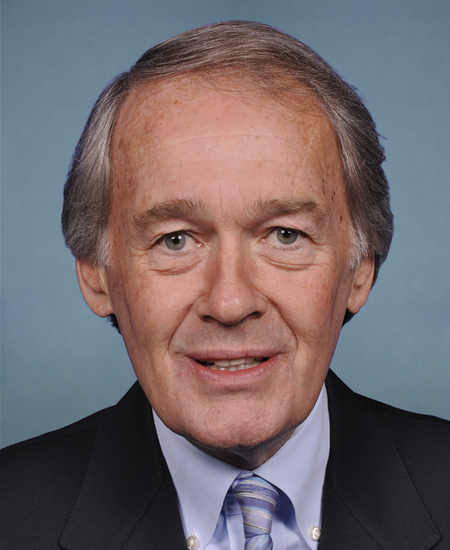
Sen. Edward J. Markey
Sponsored bills
Maddy summarySRES 621 designates the week of February 23-27, 2026, as "National Public Schools Week" to recognize the role of public schools in U.S. education. The resolution highlights public schools' importance in fostering inclusive learning environments and preparing students for civic and economic participation, citing that 87% of U.S. children attend public schools. It does not create new laws, funding, or policy changes - it is a symbolic gesture by the Senate without binding effect. The resolution aligns with broader efforts to support public education but focuses solely on commemoration.
Maddy summaryThis bill, known as the Direct File Act of 2026, would establish a government-run online platform for taxpayers to prepare and file their individual income tax returns for free. It requires the Treasury Department to create a user-friendly system that uses IRS data to simplify the process, offers customer support, and is available in multiple languages and on mobile devices. The legislation also prohibits the Treasury from entering into agreements that would limit its ability to provide these tax preparation and filing services. Additionally, the bill allows eligible states to integrate their state tax filing with the federal system and provides funding to states that meet certain standards for doing so.
Maddy summarySRES 615 is a Senate resolution celebrating Black History Month, acknowledging the historical contributions of African Americans to U.S. society across fields like civil rights, arts, science, and leadership. The resolution encourages all citizens to reflect on this history as part of the nation's ongoing journey toward equality, without creating new laws or policies. It specifically recognizes figures such as Frederick Douglass, Maya Angelou, and Rosa Parks, and emphasizes the importance of Black History Month in February as a time for communal learning and inspiration. This ceremonial resolution was introduced by multiple senators and passed unanimously by the Senate in 2026.
Maddy summaryS 3905, the Tariff Refund Act of 2026, requires U.S. Customs and Border Protection (CBP) to refund all duties unlawfully collected under the International Emergency Economic Powers Act (IEEPA) to importers within 180 days of the bill's enactment, including interest. It mandates CBP to reliquidate previously processed imports to calculate refunds and prioritizes small businesses for faster processing, with coordinated outreach to them via the Small Business Administration. The bill also requires CBP to submit regular reports to Congress detailing refund progress and timelines. This directly affects importers who paid IEEPA duties, with specific provisions to streamline refunds for small business importers.
Maddy summaryThe American Homeownership Act restricts tax deductions for interest and depreciation on residential properties owned by institutional investment entities or "large owners" (defined as those holding 50+ single-family units). It creates exceptions for new construction, rehabilitation of uninhabitable properties, sales to individuals for primary residence, and properties serving affordable housing through tax credit programs. The bill also prohibits federal housing agencies from selling properties or providing mortgage loans to these large investors and allocates savings from these tax changes to fund affordable housing programs. These provisions aim to encourage homeownership by limiting tax benefits for large-scale rental property ownership while directing resources toward affordable housing development.
Rotorcraft Operations Transparency and Oversight Reform Act or the ROTOR Act This bill addresses aviation safety by increasing requirements for aircraft tracking and communication using Automatic Dependent Surveillance-Broadcast (ADS-B) technology and expanding oversight. As background, ADS-B for broadcasting (Out) and receiving (In) transmits information (e.g., location and weather information) between aircraft and air traffic control. Under the bill, aircraft must generally operate with ADS-B In equipment to provide the aircraft with location information of other aircraft and traffic advisories. Current law does not require this equipment. Current Federal Aviation Administration (FAA) regulations allow aircraft performing a sensitive government mission to be excepted from requirements for using ADS-B Out equipment. This bill limits which flights may be considered sensitive government missions (e.g., not training flights) and requires additional reporting and notifications for the exception. The Government Accountability Office must review the use of the ADS-B Out exception and the Office of the Inspector General (OIG) of the Department of Transportation must annually audit FAA oversight of operations that use the exception. Further, the bill repeals a 2025 law that exempts certain military helicopters from the ADS-B Out requirements for the Washington, DC, metropolitan area. The bill also requires the OIG of the Army to audit the Army’s coordination with the FAA, the FAA to establish an office to coordinate airspace usage of military aircraft and review the safety of flight operations and routes around airports, and the FAA to enter into memoranda of understanding with military agencies for safety information sharing.
Maddy summaryThis concurrent resolution (SCONRES 25) commemorates the 15th anniversary of the January 8, 2011, Tucson shooting that killed six people and injured 13, including former Congresswoman Gabby Giffords. It honors the victims (such as Judge John Roll, Gabriel Zimmerman, and 9-year-old Christina-Taylor Green), survivors like Giffords and Ron Barber (who later became a U.S. Representative), and the community's response. The resolution expresses support for survivors, recognizes Giffords’ advocacy against gun violence, and reaffirms commitment to respectful dialogue and opposing political violence. As a symbolic gesture, it does not enact new laws or policy changes.
Maddy summaryThe SPARK Act establishes the Spark Program to support underserved small businesses by providing grants to eligible organizations like incubators, accelerators, and community development financial institutions. It directly affects minority-owned businesses (which face twice the denial rate for financing), women-owned businesses, rural businesses, and businesses in economically distressed areas by offering free mentorship, counseling, and access to capital. The program requires participating organizations to provide 5-year services with no fees for businesses and track metrics including jobs created, capital accessed, and business growth. It also creates a Spark Financing Program that provides grants up to $20,000 and low-interest loans to covered small businesses. Annual reports will track outcomes including demographic breakdowns of participants and business retention rates.
Maddy summaryThe Healthy Families Act would require most private employers and certain government entities to provide employees with earned paid sick time, allowing workers to take up to 56 hours per year for their own health needs, caring for family members, or addressing domestic violence, sexual assault, or stalking. Employees would earn 1 hour of paid sick time for every 30 hours worked, with the ability to use it for medical appointments, caring for family members with health needs, or seeking safety from violence. The bill prohibits employers from retaliating against workers who use this time and requires employers to post clear notices about the policy. It applies to most private employers, with specific provisions for government entities like the Library of Congress and Government Accountability Office.