

Maddy summaryThe WIPPES Act (S 1092) requires manufacturers and retailers to label specific wipes with a clear "Do Not Flush" notice and symbol. It directly affects producers of baby wipes, antibacterial wipes, cleaning wipes, and personal care wipes (like makeup remover or feminine hygiene wipes) that could be flushed. The law mandates precise labeling on packaging - ensuring visibility, high contrast, and specific placement depending on package type - while banning all claims that these wipes are flushable. Enforcement falls to the Federal Trade Commission under existing consumer protection laws, and the federal standard preempts conflicting state regulations.
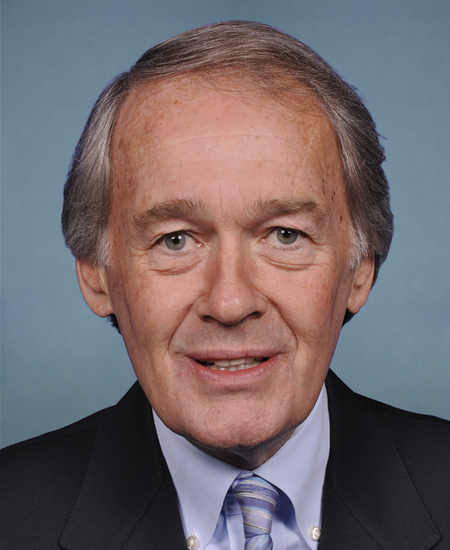
Sen. Edward J. Markey
Sponsored bills
Maddy summaryThis bill amends the Marine Mammal Protection Act to create new provisions specifically for sea turtles. It establishes a dedicated $5 million annual grant program (2025-2030) for sea turtle rescue and rehabilitation, funded through a new "Sea Turtle Rescue, Rehabilitation, and Rapid Response Fund" with $500,000 yearly. Eligible applicants include coastal organizations with Endangered Species Act authorizations or cooperative agreements, required to follow specific care standards and data reporting. The law directly affects wildlife rehabilitation groups and coastal communities handling stranded sea turtles by providing targeted federal funding and clear grant eligibility criteria.
Maddy summaryThis resolution honors the USS Massachusetts (SSN-798), a Virginia-class nuclear submarine, and its crew on the occasion of its commissioning on March 28, 2026. The bill formally recognizes the historical significance of this vessel as the eighth U.S. Navy ship to carry the Massachusetts name and acknowledges its connection to the state's maritime tradition. It expresses the Senate's best wishes for the submarine's service and confirms that its official service begins with its commissioning ceremony in Boston Harbor.
Maddy summaryThis bill, known as the SHIELD Act, authorizes the Attorney General to provide grants to states, local governments, and organizations to help recruit, train, and retain staff needed to support legal representation for individuals facing immigration removal proceedings. The program would fund workforce development initiatives such as hiring new lawyers and accredited representatives, providing technical training, improving language services, and building administrative infrastructure in areas with high unmet legal needs. Eligible recipients must use funds to supplement existing resources rather than replace them, and they would be required to submit regular reports on how the grants improve access to legal services. The legislation allocates $100 million for fiscal years 2026 and 2027 to support these efforts while maintaining oversight through audits and compliance requirements.
Maddy summaryThe Family Vaccine Protection Act establishes formal procedures for the Advisory Committee on Immunization Practices (ACIP) within the Public Health Service Act. It requires the CDC Director to adopt ACIP vaccine recommendations unless they lack scientific support, in which case the Director must publish the rationale and notify Congress within 48 hours. The bill specifies the committee's composition, including required expertise for members and ex-officio members from key health agencies like the FDA and CMS. These provisions affect vaccine recommendations that determine coverage for health insurance plans and the Vaccines for Children Program, ensuring all recommendations are based on peer-reviewed scientific evidence.
Maddy summaryThis bill allocates $30 million annually (2026-2030) for research on family caregivers under the Older Americans Act. It defines "family caregiver" to include adults providing in-home care to older adults or those with Alzheimer's, and specifically creates a new "older relative caregiver" category for adults 55+ caring for children or disabled relatives. The bill updates the National Family Caregiver Support Program to focus exclusively on family caregivers (removing prior references to "older relative caregivers" in program descriptions) and requires new definitions to align with the updated terminology. These changes directly affect millions of unpaid caregivers by expanding research funding and clarifying eligibility for support services.
Maddy summaryThis bill (S 1677, Ensuring Lasting Smiles Act) requires health insurance plans to cover medically necessary treatments for congenital anomalies or birth defects affecting the eyes, ears, teeth, mouth, or jaw. It mandates coverage for reconstructive services, dental/orthodontic care, and related treatments during the course of medical treatment, while excluding purely cosmetic procedures not medically necessary. Plans may apply cost-sharing requirements similar to those for other medical services but must provide notice about these coverage requirements to participants by January 1, 2026. The bill also directs a study on provider network adequacy and cost impacts related to these coverage requirements, to be completed by December 2027.
Maddy summaryThe HELP Copays Act requires that financial assistance from non-profit organizations or prescription drug manufacturers counts toward patients' annual out-of-pocket cost-sharing limits (like deductibles and copays) for certain prescription drugs. It directly affects individuals enrolled in group health plans or individual insurance who receive such assistance, ensuring payments from these sources reduce their total out-of-pocket spending. The bill amends key healthcare laws to include these payments in calculating cost-sharing thresholds, specifically for specialty drugs and drugs subject to utilization management (like prior authorization). It takes effect for plan years beginning in 2026 and does not change how utilization management tools are applied.
Maddy summaryS. Res. 650 is a Senate resolution that formally recognizes the heritage, culture, and contributions of American Indian, Alaska Native, and Native Hawaiian women in the United States. The resolution highlights their achievements in military service, business ownership, healthcare, science, arts, and civil rights advocacy through specific examples of individual women. It does not create new laws or funding but serves as a symbolic acknowledgment of their historical and ongoing contributions to American society.
Maddy summaryThe Love Lives On Act of 2025 modifies veterans' and military survivors' benefit rules to prevent remarriage from automatically ending eligibility. It directly affects surviving spouses of veterans or military members who remarried, ensuring they retain access to key benefits. Key provisions include: (1) preventing termination of veterans' dependency compensation (under 38 U.S.C. §1311/1562) due to remarriage; (2) stopping termination of military Survivor Benefit Plan annuities solely for remarriage, with specific rules for those who remarried before age 55; and (3) expanding TRICARE coverage to include remarried widows/widowers whose subsequent marriage ended (via death, divorce, or annulment). These changes restore or maintain benefits that were previously lost upon remarriage.