

Maddy summaryThis joint resolution directs the President to remove U.S. Armed Forces from hostilities against Iran that lack explicit congressional authorization. The bill asserts that Congress has not declared war on Iran or passed a specific authorization for military force, yet U.S. forces have conducted sustained offensive operations against Iranian military targets. While mandating the withdrawal of offensive forces, the measure allows the U.S. to continue defensive actions against attacks on American personnel, conduct intelligence gathering, and assist partner nations in intercepting retaliatory attacks. The legislation invokes expedited congressional procedures to ensure prompt consideration of the resolution.
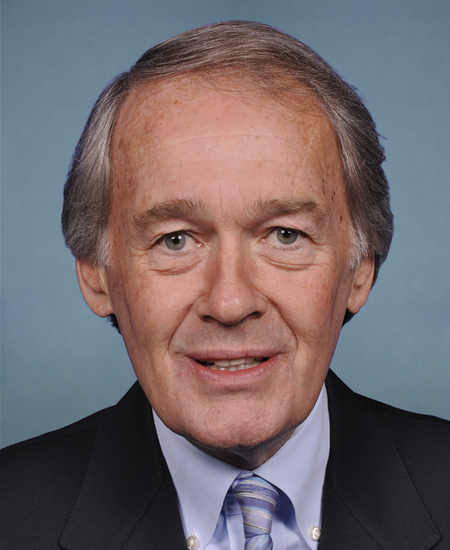
Sen. Edward J. Markey
Sponsored bills
Maddy summaryThis bill, known as the Rx ACCESS Act, aims to improve medication access for military beneficiaries enrolled in the TRICARE health program by allowing them to choose how they receive non-generic prescription maintenance medications starting in October 2026. It requires pharmacy benefit managers to reimburse retail pharmacies at least the actual cost of acquiring drugs plus a professional dispensing fee, and prohibits hidden fees on pharmacies. The bill also mandates annual audits by the Government Accountability Office to review reimbursement rates, pharmacy network adequacy, and beneficiary access, with results reported to congressional defense committees.
Maddy summaryThe Small Business Innovation and Economic Security Act amends the SBIR and STTR programs to enhance security reviews of small business concerns receiving federal research funding. It requires agencies to assess security risks related to foreign entities by checking against specific government lists, including those related to Chinese military-industrial complex companies. The bill creates a new "strategic breakthrough" funding mechanism for high-potential small businesses with specific requirements like prior awards and matching funds. It also reduces administrative burdens by setting limits on the number of proposals small businesses can submit and improves data collection about program awards. The bill extends the SBIR and STTR programs through fiscal year 2031.
Maddy summaryThis Senate resolution designates the first week of April as National Asbestos Awareness Week to raise public awareness about the dangers of asbestos exposure. The bill does not create new laws or regulations but instead calls for the Surgeon General to educate the public about asbestos-related health risks. It highlights that asbestos fibers can cause serious diseases like mesothelioma and asbestosis, particularly affecting workers and residents of older buildings constructed before 1975. The resolution also requests that a copy be sent to the Office of the Surgeon General to support ongoing health education efforts.
Maddy summaryThis bill establishes a new annual wealth tax on individuals with net assets exceeding $50 million, effective in 2027, targeting ultra-wealthy taxpayers by taxing the total value of their taxable assets rather than income. The tax uses a tiered structure with a 0% bracket up to $50 million, a 2% rate between $50 million and $1 billion, and a 3% or 6% rate on assets above $1 billion, with the higher rate applying if a universal health insurance program is enacted. It includes special rules for married couples filing jointly, trusts, and non-resident aliens, while also adding stricter information reporting requirements and increased IRS funding for enforcement.
Maddy summaryThis bill, the End Polluter Welfare for Enhanced Oil Recovery Act of 2026, removes tax incentives for enhanced oil recovery projects that use carbon dioxide as an injectant. It directly affects oil and gas companies and energy producers who build qualified facilities after the law is enacted. The legislation eliminates the tax credit for carbon capture and storage when the captured carbon dioxide is used to extract more oil from existing wells. Additionally, the bill repeals the federal enhanced oil recovery tax credit that previously allowed companies to deduct certain costs related to extracting additional oil from mature wells. These changes apply to taxable years beginning after the bill is enacted.
Maddy summaryThis bill establishes a policy requiring Saudi Arabia to give up uranium enrichment and reprocessing capabilities on its soil and agree to an International Atomic Energy Agency inspection protocol before the U.S. can approve a civilian nuclear cooperation agreement with the country. It mandates that the President submit a detailed report to Congress outlining Saudi Arabia's commitments on these nuclear restrictions before any agreement can proceed. Additionally, the legislation requires Congress to pass a joint resolution explicitly approving the agreement before it can take effect, ensuring legislative oversight over the deal. The bill also directs the U.S. to oppose nuclear technology sales to Saudi Arabia through the Nuclear Suppliers Group until these conditions are met.
Maddy summaryThis concurrent resolution formally recognizes Congress's duty to protect the rights and economic security of working women in the United States. It highlights concerns about wage gaps, workplace discrimination, and recent policy changes that the bill's sponsors claim have disproportionately harmed women in the workforce. The document calls for federal action to ensure equal pay, workplace safety, access to healthcare, and the right to unionize, while affirming the importance of women's contributions to the economy. As a non-binding statement of principle, it does not create new laws but serves to express congressional intent and guide future legislative priorities.
Maddy summarySJRES 103 is a congressional disapproval resolution targeting a Department of Veterans Affairs (VA) rule on reproductive health services for veterans. The resolution, if passed, would block the VA rule from taking effect by invoking the Congressional Review Act (Chapter 8 of Title 5, U.S. Code), meaning the rule published in the Federal Register (December 31, 2025) would have no legal force. This directly affects the VA’s ability to implement new guidelines for reproductive health services at its facilities, preserving existing policies instead. The resolution does not create new policy but halts a specific administrative rule.
Maddy summaryThis bill, known as the Plastic Pellet Free Waters Act, directs the Environmental Protection Agency to ban the discharge of pre-production plastic pellets and related materials into wastewater and runoff from specific industrial facilities. It requires the EPA to issue new rules within 60 days that prohibit these discharges from factories that make, use, package, or transport plastic pellets, as well as from facilities regulated under existing federal water pollution regulations. The law mandates that these new restrictions be included in all wastewater and stormwater permits issued by the EPA and state programs, as well as in performance standards for affected industrial point sources. This legislation directly impacts manufacturers and distributors of plastic pellets and aims to prevent plastic pollution from entering water systems during the production and packaging stages.