

COVID-19 Nursing Home Protection Act of 2021 This bill provides funds and establishes requirements for Medicare skilled nursing facilities (SNFs) and Medicaid nursing facilities (NFs) to address COVID-19 (i.e., coronavirus disease 2019). Specifically, the bill provides FY2021 funding for COVID-19 strike teams that can be deployed to these facilities to help with vaccinations, clinical care, infection control, or staffing. The amounts provided by the bill are designated as an emergency requirement pursuant to the Statutory Pay-As-You-Go Act of 2010 (PAYGO) and the Senate PAYGO rule. (This excludes the budget effects from being counted for the purposes of enforcing the PAYGO rules.) In addition, the bill requires the Centers for Medicare & Medicaid Services (CMS) to ensure that, during the public health emergency relating to COVID-19, at least one of its contracts with Medicare quality improvement organizations requires that the organization assist SNFs with COVID-19 infection control (e.g., training materials). Finally, the bill provides statutory authority for the requirement that SNFs and NFs report data regarding COVID-19 preparedness, testing, infections, and deaths. Additionally, the CMS must publish on the Nursing Home Compare website certain demographic information, aggregated by state, with respect to COVID-19 infections and deaths in such facilities.
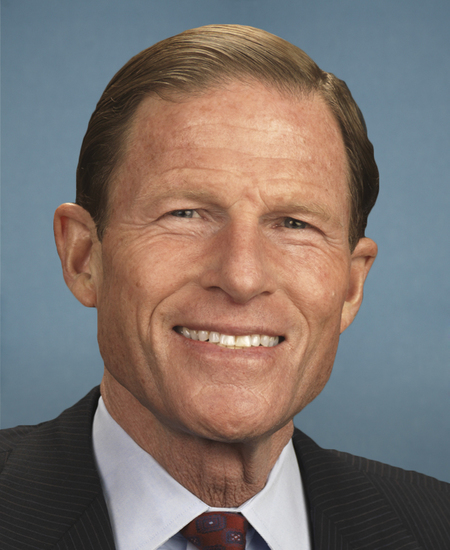
Sen. Richard Blumenthal
Sponsored bills
ABLE Age Adjustment Act This bill increases from 26 to 46 the age threshold for tax-favored ABLE (Achieving a Better Life Experience) accounts. (ABLE accounts are designed to enable individuals with disabilities to save for and pay for disability-related expenses. To establish an account, an individual must have a qualifying impairment that began before the individual attained the age threshold.)
Black Maternal Health Momnibus Act of 2021 This bill directs multi-agency efforts to improve maternal health, particularly among racial and ethnic minority groups, veterans, and other vulnerable populations. It also addresses maternal health issues related to COVID-19 (i.e., coronavirus disease 2019). The Department of Health and Human Services (HHS) and other specified departments must address the social determinants of maternal health, which include child care, housing, food security, transportation, and environmental conditions. The bill also extends to 24 months postpartum eligibility for the Special Supplemental Nutrition Program for Woman, Infants, and Children. Additionally, HHS and other agencies must take actions to grow and diversify the maternal health workforce. To increase access to maternity care, HHS and other agencies must (1) award specified grants; (2) test an alternative payment model for perinatal care under Medicaid and the Children's Health Insurance Program (CHIP); and (3) support training, technology, and telehealth initiatives. The bill also increases research and data collection on maternal morbidity and mortality, particularly among tribal populations and minority groups. The Bureau of Prisons and the Department of Justice must establish programs to improve maternity care for incarcerated populations. The Medicaid and CHIP Payment and Access Commission must also report on the impact of Medicaid ineligibility for pregnant and postpartum prisoners. Additionally, as a condition for certain grants, states and territories must have laws limiting the use of restraints on pregnant individuals in prisons. The bill also directs activities to mitigate adverse maternal health outcomes associated with climate change and to improve maternal vaccination rates.
Data to Save Moms Act This bill expands data collection and research on maternal morbidity and mortality among minority populations. Specifically, the bill adds requirements to a program within the Centers for Disease Control and Prevention (CDC) that supports maternal mortality review committees. To the extent practicable, the committees must use the most up-to-date indicators of severe maternal morbidity; review deaths caused by suicide, overdose, or other behavioral health conditions attributed to or aggravated by pregnancy or childbirth; and consult with representatives of communities about nonclinical factors that may contribute to adverse maternal outcomes. The CDC may also award grants to committees to increase their engagement with local communities, such as by bringing on community representatives as committee members. Additionally, the Centers for Medicare & Medicaid Services and the Agency for Healthcare Research and Quality must consult with diverse stakeholders to review maternal health data collection processes and quality measures and make recommendations to improve them. The Indian Health Service and the Department of Health and Human Services must also arrange for studies on adverse maternal health outcomes among tribal and minority populations, respectively.
COVID-19 Medical Debt Collection Relief Act of 2021 This bill temporarily limits certain activities to collect medical debts by health care providers that apply for, or accept, COVID-19 (i.e., coronavirus 2019) financial relief. Specifically, such health care providers must suspend extraordinary collection actions, such as selling a debt to a third-party collector or placing a lien on an individual's property, until the later of the end of the COVID-19 public health emergency or 18 months after the enactment of this bill. Further, such health care providers must notify individuals who have entered into medical debt repayment plans that they may request the suspension of payments during such period. Providers must provide reasonable repayment options for individuals once repayments resume, such as extending repayment periods. The bill also applies specified consumer protections to medical debt incurred for COVID-19-related testing and treatment between February 1, 2020, and 60 days after the COVID-19 public health emergency ends.
U.S. Citizenship Act This bill establishes a path to citizenship for certain undocumented individuals. The bill also replaces the term alien with noncitizen in the immigration statutes and addresses other related issues. Specifically, the bill establishes a new status of lawful prospective immigrant . This status shall be available to an applying noncitizen who meets certain requirements, including being continually present in the United States from January 1, 2021, and passing background checks. After at least five years with this status, an eligible noncitizen may apply for and receive permanent resident status. The bill also provides permanent resident status to certain applying noncitizens, specifically for eligible noncitizens who (1) entered the United States as a minor, (2) were eligible for temporary protected status or deferred enforced departure on January 1, 2017, or (3) worked a certain amount of agricultural labor in the five years prior to applying. Among other things, the bill also redefines for immigration purposes the term conviction to exclude convictions that have been expunged or vacated, requires the Department of State to implement a strategy to advance reforms in Central America and address key factors contributing to migration from the region to the United States, requires the State Department to establish refugee processing centers in Central America, requires Customs and Border Patrol sectors and stations to have a certain number of employees with certain qualifications such as paramedic training, generally prohibits religious discrimination in granting or denying immigration benefits, and establishes grant programs for providing training and services to immigrants.
Officer Eugene Goodman Congressional Gold Medal Act This bill directs the Speaker of the House of Representatives and the President pro tempore of the Senate to arrange for the presentation of a Congressional Gold Medal to U.S. Capitol Police Officer Eugene Goodman for his actions to protect the Senate chamber during the security breach at the U.S. Capitol on January 6, 2021.
COVID-19 in Corrections Data Transparency Act This bill requires the Bureau of Prisons, the U.S. Marshal Service, and state and local correctional facilities to publish on their websites and report to the Centers for Disease Control and Prevention certain data on COVID-19 (i.e., coronavirus disease 2019) cases, vaccinations, and outcomes.
Presidential Pardon Transparency Act of 2021 This bill requires certain information about presidential pardons and reprieves to be made public. Specifically, the President must publish the issue date, recipient, and full text of each pardon or reprieve granted.
Quality Care for Nursing Home Residents Act This bill establishes several requirements for Medicare skilled nursing facilities and Medicaid nursing facilities, including with respect to minimum staffing levels, protections for whistleblowers and residents, and training for nurses. Specifically, the bill establishes minimum nurse-resident ratios for day, evening, and night shifts and prohibits facilities from retaliating against residents or staff who file complaints or cooperate in investigations; violators are subject to civil penalties. Facilities must also train nurses on their emergency procedures and on residents' rights. The bill also requires specific consent procedures in relation to the administration of certain psychotropic drugs and prohibits the use of pre-dispute arbitration agreements in such facilities.