

Maddy summaryS 3030, the Pay Our Military Act of 2025, ensures that active-duty military members, reservists, civilian Defense personnel, and supporting contractors continue receiving pay and essential benefits during any funding gap in fiscal year 2026. It appropriates necessary funds from the Treasury to cover pay, allowances, housing, travel, and other payments if Congress hasn’t passed full-year appropriations by September 30, 2026. These funds are charged to future appropriations when regular funding is enacted, preventing delays in military compensation. The bill takes effect retroactively as of September 30, 2025, to cover any missed payments during the prior fiscal year.
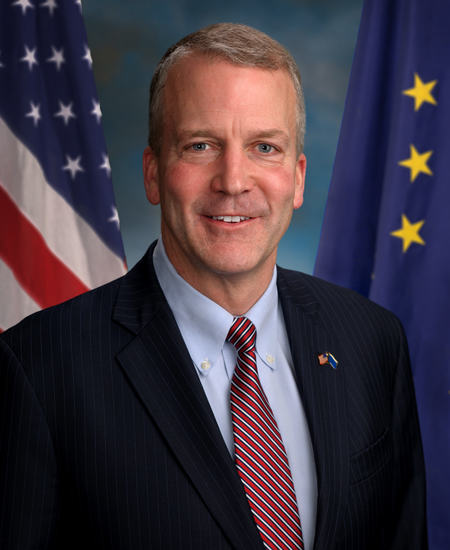
Sen. Dan Sullivan
Sponsored bills
Maddy summaryThis bill requires the Department of Energy (DOE) and NASA to formally coordinate research and development through agreements and collaborative projects. It authorizes joint funding competitions for specific areas like nuclear propulsion, quantum computing, Arctic science, wildfire resilience, and space weather forecasting, directly affecting DOE and NASA operations. Key mechanisms include mandatory interagency agreements, merit-based funding for federal labs and universities, and shared data infrastructure. The bill also mandates a biennial report to Congress detailing coordination progress and future collaboration opportunities, with no new funding or tax changes.
Maddy summaryS 3031, the Keep America Flying Act of 2026, provides temporary funding to ensure continued pay and benefits for critical aviation personnel during the 2025-2026 federal budget gap. It appropriates funds for Federal Aviation Administration (FAA) air traffic controllers, Transportation Security Administration (TSA) screeners, and their contractors who support flight safety and security operations. This funding covers standard pay, allowances, and benefits for these staff until regular appropriations are enacted or by September 30, 2026. The bill directly affects FAA and TSA employees and contractors whose work is essential to maintaining safe air travel.
Maddy summaryThis bill ensures uninterrupted food assistance benefits for SNAP recipients during a government funding gap. If Congress fails to pass full funding for the Department of Agriculture by September 30, 2025, the bill directs the Treasury to provide necessary funds to keep SNAP benefits flowing without interruption. It also covers missed benefits retroactively from September 30, 2025, through the bill’s enactment date. The funding stops once Congress enacts actual fiscal year 2026 appropriations for the Department of Agriculture. This directly affects approximately 40 million low-income individuals and families who rely on SNAP benefits.
Maddy summaryThe Judicial Efficiency Improvement Act reorganizes federal judicial circuits by creating a new Twelfth Circuit covering Alaska, Arizona, Idaho, Montana, Nevada, Oregon, and Washington, while modifying the Ninth Circuit to cover California, Guam, Hawaii, and the Northern Mariana Islands. It adds judgeships to both circuits and specific district courts across multiple states, with additional judgeships for California, Florida, New York, Texas, and other districts scheduled to be implemented incrementally from 2025 through 2035. The bill establishes procedures for transferring cases and temporarily assigning judges between the former Ninth Circuit and the new Twelfth Circuit, including specific requirements for case transfers and judge assignments. It also includes funding authorizations that increase annually to support these changes, with the reorganization taking effect one year after enactment. The old Ninth Circuit court will cease administrative operations two years after the bill's enactment.
Maddy summarySRES 457 is a symbolic resolution designating the week beginning October 19, 2025, as "Coal Week" in recognition of the coal industry's historical and ongoing contributions to U.S. energy, military readiness, and economic stability. It highlights coal's role in providing 19.5% of U.S. electricity in 2022, its global significance (36% of global electricity), and progress in reducing emissions from coal power plants. The resolution does not create new policy or affect specific groups, as it is purely commemorative. It was introduced by Senators Lummis, Hoeven, Lee, and others.
Maddy summaryThis bill prohibits all federal enforcement of emissions control requirements for diesel trucks. It directly affects diesel truck manufacturers, importers, distributors, and owners by eliminating all federal mandates (including under the Clean Air Act) for emissions control devices or onboard diagnostic systems on diesel vehicles. Key provisions repeal existing EPA regulations, prevent future rulemaking on emissions devices, and expunge past legal records related to non-compliance with emissions standards. The law would remove all federal legal barriers to modifying or removing emissions equipment from diesel engines.
Maddy summaryThis bill amends the North Pacific Research Board's structure and funding rules. It adds a new Board member position to be nominated by the Board and appointed by the Secretary, requiring the person to represent Alaska Natives and have direct experience with subsistence uses. The bill also adjusts the 15% cap on administrative expenses for the Board, allowing the NOAA Administrator to temporarily increase this cap if funding decreases, to prioritize continuing Board operations, maximizing research funding, and maintaining grant quality. The cap waiver is set to last for 5 years from the bill's enactment date.
Maddy summaryThe ANCHOR Act requires the National Science Foundation (NSF) Director to create a plan within one year to improve cybersecurity and internet connectivity for ocean research vessels operated by U.S. universities and laboratories. The plan must assess current needs - like secure data sharing, telemedicine for crew, and real-time scientific collaboration - along with costs for equipment (e.g., satellite systems) and training. It specifically targets the U.S. Academic Research Fleet, defined as NSF-funded vessels used for ocean science. The bill does not provide new funding but mandates a roadmap for upgrading these vessels’ technology to support safe and effective research.
Maddy summarySRES 446 is a ceremonial Senate resolution commemorating the 250th anniversary of the U.S. Navy's founding on October 13, 1775. It recognizes the Navy's historical role in protecting U.S. interests and acknowledges its current size (over 290 ships, 3,700 aircraft, and 590,000 personnel). The resolution expresses appreciation for the service of Navy personnel past and present and reaffirms Senate support for the Navy as a key national defense force. It has no binding effect or policy changes, serving solely as a symbolic tribute.