

Maddy summaryHR 1303, the Protecting America’s Seniors’ Access to Care Act, would block the federal government from enforcing a 2024 rule requiring nursing homes to meet minimum staffing standards and mandating Medicaid programs to report payment transparency details. This bill directly affects long-term care facilities and Medicaid programs by preventing the implementation of these specific requirements. The legislation prohibits the Secretary of Health and Human Services from carrying out the rule published on May 10, 2024, which was designed to improve care quality and accountability in senior healthcare. It stops the rule from taking effect without creating new policies or regulations.
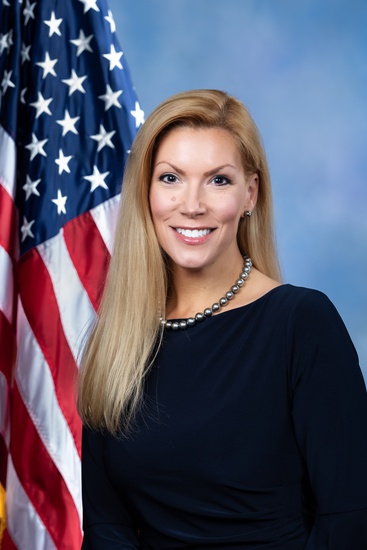
Rep. Beth Van Duyne
Sponsored bills
Maddy summaryHR 1301, the Death Tax Repeal Act, would eliminate the federal estate tax and generation-skipping transfer tax for estates of individuals dying on or after its enactment date. It directly affects individuals inheriting significant assets, as it removes taxes on estates exceeding $10 million (adjusted for inflation) and repeals taxes on large transfers between generations. The bill modifies the gift tax by establishing a $10 million lifetime exemption with annual inflation adjustments, replacing previous tax brackets. It applies to estates, gifts, and transfers occurring on or after the bill's effective date.
More Homes on the Market Act This bill increases the amount of gain from the sale of a principal residence that an individual may exclude from gross income (for federal tax purposes). Under the bill, an individual may exclude from gross income gain from the sale of a principal residence of up to $500,000 (currently $250,000), and taxpayers who are married and file a joint federal income tax return may exclude up to $1 million (currently $500.000). The bill also requires these amounts to be adjusted annually for inflation.
Fighting Trade Cheats Act of 2025 This bill increases penalties for, and establishes additional enforcement mechanisms related to, fraudulent and grossly negligent violations of U.S. customs laws. Specifically, the bill increases the maximum civil penalty for a fraudulent violation to three times the domestic value of the merchandise. (Currently, the maximum penalty is the domestic value of the merchandise.) It prohibits a person who commits a fraudulent violation from importing merchandise into the United States for a five-year period. Additionally, the bill increases the maximum civil penalty for a grossly negligent violation to the lesser of (1) 3 times the domestic value of the merchandise; or (2) 10 times the lawful duties, taxes, and fees. (Currently, the maximum penalty is the lesser of the domestic value of the merchandise or four times the lawful duties, taxes, and fees.) It prohibits a person who commits a grossly negligent violation from importing merchandise into the United States for a two-year period. Further, the bill applies these importation bans to an affiliated person (e.g., a family member or employee) of the person who committed the fraudulent or grossly negligent violation. The bill establishes a private right of action for an interested party (e.g., a manufacturer) affected by customs fraud or grossly negligent violations. The bill prohibits any person (or an affiliated person) who commits a fraudulent or grossly negligent violation from participating in the U.S. Customs and Border Protection's Importer of Record program, and further requires revocation of their importer of record numbers.
Maddy summaryHR 1232, the National Right-to-Work Act, would make union membership voluntary for workers in most private-sector jobs by removing legal requirements for employees to join a union or pay dues as a condition of employment. It directly affects workers in unionized workplaces covered by the National Labor Relations Act (including most private employers) and railroad workers covered by the Railway Labor Act. The key change eliminates provisions that allowed "union security agreements" (requiring dues or membership), meaning workers could no longer be forced to pay union fees to keep their jobs. This bill does not change other labor rights or create new programs - it only modifies existing laws to allow workers to opt out of union membership and financial obligations.
Maddy summaryThis bill requires the U.S. State Department to report to Congress within 90 days on all U.S. funding provided to UNRWA (the UN agency aiding Palestinian refugees) from fiscal years 2020-2024, including monthly breakdowns and how funds were spent. It then prohibits the use of federal funds - directly or indirectly - to support UNRWA starting on the bill’s enactment date. The bill directly affects UNRWA by halting U.S. financial support pending the report, without making any findings about UNRWA’s activities. The key mechanisms are the mandatory funding report and the immediate funding ban.
Security And Fairness Enhancement for America Act of 2025 or SAFE for America Act of 2025 This bill eliminates the diversity visa program. This program provides up to 55,000 visas annually to individuals from countries with low rates of immigration to the United States.
Maddy summaryThis bill creates a 10% tax credit for businesses that modernize or replace freight railcars, directly affecting railcar owners and manufacturers. To qualify, railcars must meet an 8% improvement standard in capacity or fuel efficiency, be built or modernized after enactment, and replace two scrapped railcars. The credit is limited to 1,000 qualified railcars per business annually, with reporting requirements for the Treasury to track claimed credits, scrapped railcars, and new railcar production. The credit applies to railcars placed in service after December 2024, ending three years after enactment.
Maddy summaryHR 1184, the "Stop CCP Land Act," requires states to ban purchases of agricultural land by entities from designated countries (like China and Russia) to receive certain federal agricultural and environmental funds. It mandates states to prohibit such foreign purchases and require annual reporting from existing foreign landholders. The bill also directs the Agriculture Secretary to update federal reporting rules for foreign agricultural investment and the GAO to assess national security impacts and suggest safeguards. This directly affects states receiving specific federal programs and foreign entities from listed countries.
Maddy summaryThis bill expands tax-advantaged health accounts to cover specific oral care products. It adds toothbrushes (manual or electric), water flossers, and over-the-counter antiplaque/anticaries drugs (like certain mouthwashes or gels) to the list of qualified medical expenses for Health Savings Accounts (HSAs), Archer MSAs, and health flexible spending accounts (FSAs). The change allows people to use pre-tax dollars from these accounts to pay for these common oral healthcare products, directly affecting individuals managing their dental care costs through such accounts. The bill amends existing tax code provisions to include these items under "qualified medical expenses" without creating new government programs.