

Maddy summaryThis bill awards a Congressional Gold Medal to the 761st Tank Battalion (known as the "Black Panthers"), the first predominantly Black armored unit in World War II's European Theater. It recognizes their combat service from 1944-1946, including key roles in the Battle of the Bulge and breaking the Siegfried Line, despite facing racial prejudice during and after the war. The medal will be displayed at the National Museum of African American History and Culture, with bronze duplicates available for sale to cover costs. The bill commemorates the battalion's 130,000 enemy casualties inflicted, 50% casualty rate, and their 1978 Presidential Unit Citation. It does not create new laws or affect current policies.
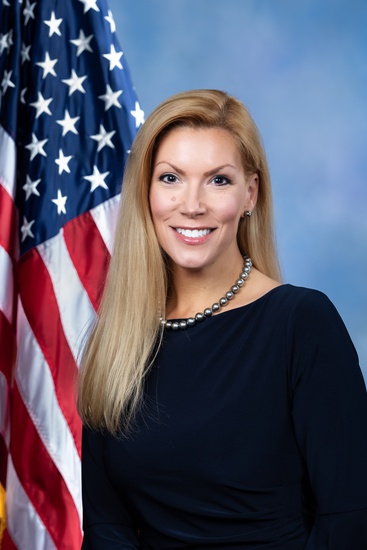
Rep. Beth Van Duyne
Sponsored bills
Maddy summaryHR 1551, the Protect and Serve Act of 2025, creates a new federal criminal offense for intentionally harming law enforcement officers under specific circumstances. It imposes harsher penalties, including up to 10 years in prison for serious injury or life imprisonment if death occurs, kidnapping is involved, or a firearm is used. The law applies when the crime crosses state lines, involves interstate weapons, occurs on federal property, or targets federal officers. Prosecutions require the Attorney General’s written certification, considering factors like prior state convictions and public safety impact. The bill directly affects law enforcement officers and federal prosecutors by expanding federal jurisdiction for certain violent crimes against them.
Maddy summaryHR 1554, the Freedom from Government Competition Act of 2025, requires all federal agencies to procure most goods and services from private companies instead of providing them directly. It directly affects all executive departments, military departments, and independent agencies by mandating that they obtain items like IT services, facilities management, or supplies through private contracts, unless specific exemptions apply. Key exemptions include legal requirements for government provision, national security needs, inherently governmental tasks, or lack of private availability, with agencies needing to justify exemptions to Congress. The bill also mandates annual reports tracking progress toward shifting commercial activities to private contractors within five years, using competitive sourcing analyses to ensure taxpayer value. This policy change aims to reduce government competition with private businesses by shifting service delivery to the private sector.
Maddy summaryHR 1548, the "Leveling the Playing Field 2.0 Act," amends U.S. trade laws to strengthen enforcement of antidumping and countervailing duty regulations. The bill creates new rules for handling multiple investigations on the same merchandise (successive investigations), addresses market distortions in foreign countries that affect production costs, and improves mechanisms to prevent companies from circumventing existing duties. It also establishes procedures for investigating currency undervaluation as a form of subsidy and strengthens requirements for importers to certify compliance with trade laws. These changes primarily affect U.S. importers of foreign goods, foreign exporters, and the Department of Commerce, which administers these trade enforcement mechanisms.
Maddy summaryHR 1502 authorizes the creation of a Congressional Gold Medal to honor the volunteers and communities (primarily from Nebraska, Colorado, and Kansas) who supported the North Platte Canteen during World War II. The bill directs the Treasury Secretary to design and strike the medal, which will be presented to the individuals who contributed to the canteen’s operations and then permanently displayed at the Lincoln County Historical Museum in North Platte, Nebraska. It also permits the sale of bronze duplicates to cover production costs, with proceeds going to the U.S. Mint. This is a commemorative measure recognizing historical service, not a policy change affecting current laws or programs.
Reducing Expensive Departments & Unnecessary Civil Employees Act or the REDUCE Act This bill limits federal hiring and requires each federal agency to establish plans to eliminate or combine components of the agency. The bill does not apply to positions or agency components that are critical to national security, public safety, law enforcement, or immigration enforcement. Specifically, a federal agency may not appoint more than one employee for every four employees that retire, transfer, or separate from such agency. This limitation does not apply after the agency has reduced the number of its employees by 20%. The bill also requires each agency to determine which agency components should be eliminated or combined and develop a plan to bring this into effect through reorganization or reduction in force. Each agency must conduct a review of each position within the agency to identify positions that are redundant or unnecessary and report the results of this review to Congress.
Maddy summaryHR 1492 amends the Social Security Act to extend the negotiation period for standard drug manufacturers under the federal drug pricing program. Specifically, it changes the timeframe from 7 years to 11 years for small-molecule drugs (like traditional pills) to negotiate prices with the government, aligning it with the existing 12-year period for complex biologic drugs (like insulin or monoclonal antibodies). This adjustment directly affects pharmaceutical companies that produce small-molecule drugs, giving them a longer window to negotiate pricing terms. The bill makes this change effective as if it had been part of the 2022 law that established the program.
Maddy summaryHR 534, the CONTAINER Act, allows Border States (adjacent to the U.S. northern or southern borders) to place temporary barriers on federal land without needing a special use permit, provided they notify the relevant federal agency 45 days in advance. The bill directly affects Border States and federal land management agencies (like the Bureau of Land Management and National Park Service) by streamlining the process for deploying short-term border security structures. Key provisions include a one-year initial placement period for these barriers, with potential 90-day extensions if U.S. Customs and Border Protection determines operational control hasn't been achieved. This eliminates a bureaucratic hurdle for states seeking rapid border security measures.
Maddy summaryThe ELITE Vehicles Act repeals federal tax credits for purchasing new electric vehicles, used clean vehicles, and commercial clean vehicles. It also eliminates the tax credit for installing electric vehicle charging infrastructure. These changes apply to vehicles purchased or with a binding contract entered into 30 days after the bill's enactment. The bill directly affects consumers and businesses that previously used these credits to offset the cost of electric vehicles and charging stations.
This concurrent resolution declares that Congress should not impose any new performance fee, tax, royalty, or other charge relating to the public performance of sound recordings on a local radio station for broadcasting sound recordings over the air, or on any business for such public performance of sound recordings.