

Maddy summaryThis bill would add pharmacist services to Medicare Part B coverage for beneficiaries, specifically covering pharmacist-led testing and treatment for illnesses like flu, COVID-19, or strep throat during public health emergencies. It defines covered services as those performed under state law, often requiring collaboration with a physician, and sets payment at 80% of the lesser of the actual charge or 85% of physician payment rates. Pharmacists would be prohibited from balance billing for these services, ensuring Medicare beneficiaries pay only their standard copayment. The changes would take effect January 1, 2026.
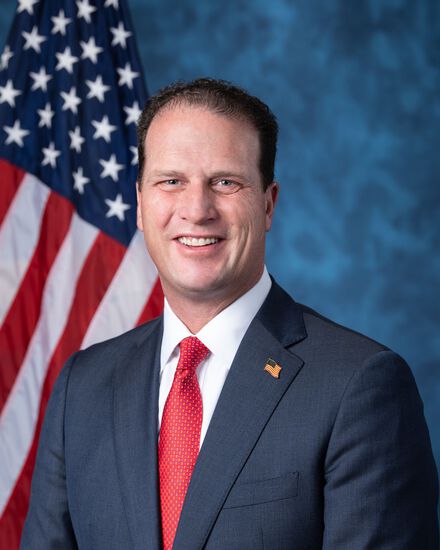
Rep. August Pfluger
Sponsored bills
Maddy summaryThis bill authorizes the U.S. Mint to produce commemorative $5 gold and $1 silver coins marking the 25th anniversary of the September 11, 2001, terrorist attacks. The coins must feature designs honoring victims and first responders (including the inscription "Never Forget") and will be sold only during 2027-2028. All surcharges ($35 per gold coin, $10 per silver coin) collected from sales will fund the National September 11 Memorial and Museum at the World Trade Center, with no net cost to the federal government. The coins are legal tender but primarily intended for collectors, not circulation.
Maddy summaryThe Smithsonian American Women’s History Museum Act authorizes the creation of a new Smithsonian museum dedicated to women’s history, to be located within the National Mall Reserve in Washington, D.C. If the site is managed by another federal agency, the bill requires that agency to transfer the land after notifying Congress and relevant committees. The museum must ensure exhibits and programs accurately represent diverse women’s experiences by consulting a broad range of experts and community voices. The Smithsonian will submit biennial reports to Congress detailing how the museum meets these representation standards.
Maddy summaryThe Rural MOMS Act of 2026 modifies how Medicare counts hospital beds, specifically excluding labor and delivery rooms from the total number of acute care inpatient beds used to determine if a facility qualifies as a Critical Access Hospital. This change directly affects rural hospitals that provide maternity services by altering the financial thresholds required to maintain their special status under the Medicare program. By removing delivery rooms from the bed count calculation, the bill aims to prevent these facilities from losing their designation solely because they offer childbirth care. The legislation does not change how these hospitals are funded or operated, but rather adjusts the metric used to evaluate their eligibility for critical access benefits.
Maddy summaryThe Next GEN Act of 2026 modifies the Drug Price Negotiation Program to include a specific category of medications called engineered cyclic peptides. This change extends the time before these drugs can be negotiated for lower prices from seven years to eleven years. The bill defines these peptides as synthetic, amino acid-based drugs that are self-administered and created using genetic library screening methods. By adjusting the timeline, the legislation directly affects pharmaceutical companies and the government agencies responsible for setting drug prices under the program.
Maddy summaryThis bill requires the Department of Veterans Affairs (VA) to partner with private sector stakeholders to identify high-growth emerging tech industries (like AI and semiconductors) and relevant training programs for veterans. It mandates the VA to prominently include these opportunities in veterans' transition programs and on its website, and to create a 90-day expedited process for approving qualifying education courses. The bill also updates existing VA programs by replacing "high technology" with "high technology or emerging technology" in key sections, ensuring emerging tech fields are explicitly included. The provisions expire on September 30, 2027.
Maddy summaryThe BEACON Act of 2026 establishes two grant programs to improve treatment for veterans with chronic mild traumatic brain injury (mTBI). It authorizes $30 million over three years for grants to nonprofits, academic institutions, and health providers to develop and test non-drug neurorehabilitation approaches, focusing on mental health outcomes, suicide risk reduction, and long-term recovery. The bill requires grantees to prioritize patient-centered care, conduct clinical studies, and partner with VA facilities, with each grant capped at $5 million annually. A separate $10 million annual program funds independent research on TBI treatments, requiring third-party analysis and annual reports to Congress. The pilot programs expire after three years, with evaluations to determine future expansion.
Maddy summaryHR 6444 establishes a VA-DoD task force to improve care for veterans and active-duty service members diagnosed with blast-related injuries like traumatic brain injury (TBI) or PTSD. The task force will coordinate research on specific issues (e.g., sleep therapy, gut health, brain inflammation), develop clinical baselines, and create guidelines for evaluating disability claims related to blast exposure. It must report annually to Congress on research progress and claim evaluation recommendations, and will expire on September 30, 2029. The bill directly affects veterans and service members with blast exposure symptoms by focusing research and care coordination on their specific health needs.
This resolution expresses support for police officers and other law enforcement personnel. The resolution further recognizes law enforcement officers across the United States in the pursuit of preserving safe and secure communities; the need to ensure that such officers have the equipment, training, and resources necessary to protect their health and safety while they are protecting the public; and the law enforcement community for acts of sacrifice and heroism. The resolution expresses condolences and appreciation to the loved ones of each law enforcement officer who has made the ultimate sacrifice in the line of duty.
Maddy summaryThis bill would amend federal law to strengthen penalties for organized retail crime by expanding definitions of theft to include digital goods, gift cards, and setting a $5,000 aggregate value threshold for charges over a 12-month period. It would establish a new "Organized Retail and Supply Chain Crime Coordination Center" under Homeland Security to coordinate Federal, State, local, and Tribal law enforcement efforts against cross-jurisdictional theft groups. The Center would share information with retailers, transportation companies, and law enforcement agencies, track crime trends, and produce annual reports on organized retail crime. This legislation directly affects retailers, supply chain businesses, and law enforcement agencies, while targeting organized crime groups responsible for a 93% increase in larceny incidents and rising safety concerns for retail employees. The bill aims to address significant financial losses and supply chain disruptions noted in the National Retail Federation's 2023 data.