

Maddy summaryThe Generative AI Terrorism Risk Assessment Act requires the Department of Homeland Security (DHS) and the Director of National Intelligence to produce an annual report for five years on terrorism threats posed by terrorist groups using generative AI (such as AI that creates text, images, or videos). Each report must analyze past incidents where such AI was used to spread extremist content, recruit members, or develop weapons, and include countermeasures to address these threats. DHS must coordinate reports to protect privacy and civil liberties, post unclassified summaries online, and brief Congress within 30 days of submission. The law also directs DHS to share AI-related terrorism threat information with state and local fusion centers and incorporate their input into assessments. This bill directly affects DHS, intelligence agencies, and state/local fusion centers.
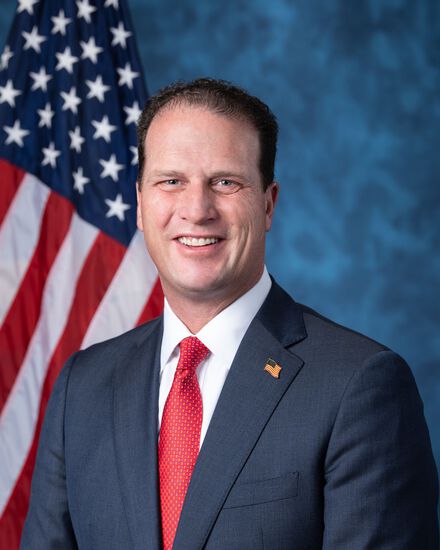
Rep. August Pfluger
Sponsored bills
Maddy summaryHR 1327, the Syria Terrorism Threat Assessment Act, requires the Secretary of Homeland Security to conduct a threat assessment of individuals in Syria affiliated with designated foreign or global terrorist organizations. The assessment must identify each individual's country of origin, describe their terrorist group affiliation, detail DHS's capability to track them, and outline actions taken to mitigate threats and prevent entry into the U.S. The Secretary must submit this report to Congress within 60 days of the bill's enactment. This is a procedural requirement focused on gathering and reporting threat information, not on changing existing laws or policies.
Maddy summaryThis bill would require Medicare to cover early detection screening tests for Alzheimer's disease and related dementias starting January 1, 2028. It defines eligible tests as FDA-cleared genomic blood tests, blood product analyses, or equivalent medical imaging methods (like protein expression or whole genome sequencing) that detect pre-symptomatic or early-stage conditions. Medicare beneficiaries would receive this coverage without cost-sharing for these specific screenings. The bill amends Medicare coverage rules to explicitly include these tests under Section 1861(nnn) of the Social Security Act.
Maddy summaryHR 6121, the Promoting Physical Activity for Americans Act, requires the Secretary of Health and Human Services to publish science-based physical activity recommendations for the U.S. public every 10 years, starting by December 31, 2029. These reports must include evidence-based guidance for general populations and specific subgroups like children or people with disabilities, and must be updated every 5 years after the first report. Federal agencies must consider these recommendations when developing their own physical activity guidelines, though the bill explicitly states no federal fitness standards established under it will be binding on individuals. The act does not affect existing biomedical research or scientific communication by federal agencies.
Maddy summaryHR 6106, the CLEAR Path Act, restricts former senior U.S. government officials from lobbying foreign governments of designated "countries of concern" for 5 years after leaving office. It applies specifically to individuals who held Senate-confirmed positions (like agency heads) and later represent foreign governments before U.S. officials with intent to influence decisions. Key mechanisms include requiring agencies to provide written notice of these restrictions upon appointment and termination, and establishing a process where the Secretary of State must seek congressional approval via a specific joint resolution to add or remove countries from the "concern" list. The restrictions sunset after 5 years from the bill's enactment, though they apply retroactively to conduct occurring before that date.
Maddy summaryHR 6107, the PAID OFF Act of 2025, modifies the Foreign Agents Registration Act (FARA) by closing exemptions for foreign agents representing corporate or government entities owned by specific countries identified as security concerns. It prevents these entities from using FARA exemptions, requiring them to register as foreign agents. The bill also creates a new process where the Secretary of State can propose adding or removing countries from the "country of concern" list, but only with Congress approving a specific joint resolution. These changes expire after five years from the bill's enactment. The bill directly affects foreign entities seeking to avoid FARA registration when representing certain governments or state-owned corporations.
Maddy summaryThis bill requires the Defense Secretary to revoke security clearances for retired or separated military personnel and Defense Department civilians who lobby for Chinese companies listed on two specific U.S. government designations: those identified in a 2021 Defense report and those on the Treasury’s Non-SDN Chinese Military-Industrial Complex list. It directly affects former defense workers engaging in lobbying activities for these designated entities. The Secretary may temporarily waive the revocation for up to 180 days if certified as necessary for national security. The law targets specific lobbying contacts with named Chinese military-linked companies, not general lobbying or all Chinese entities.
Maddy summaryHR 2212 establishes a new DHS Intelligence Rotational Assignment Program for intelligence analysts. The bill requires the DHS Secretary to create this program within one year, allowing analysts in DHS intelligence components and the Secret Service's Office of Strategic Intelligence and Information to rotate between positions. This aims to build broader expertise by enabling analysts to gain experience across different DHS intelligence roles. The program must follow coordination requirements already set for DHS's existing rotation program. It directly affects DHS intelligence analysts and Secret Service strategic intelligence personnel.
Maddy summaryHRES 782 is a non-binding House resolution expressing condolences to victims of the July 4, 2025, catastrophic floods in Texas, which caused at least 135 deaths (including 37 children) and widespread destruction. It honors first responders who rescued over 850 people and community heroes like camp staff who saved children, while committing the House to stand with affected Texans. The resolution does not create new laws or allocate funds - it formally mourns the loss of life, recognizes acts of courage, and urges prioritization of rebuilding infrastructure and support for vulnerable residents. This symbolic gesture was introduced by multiple Texas representatives and referred to the Transportation Committee.
Maddy summaryThis bill requires all new passenger vehicles manufactured for sale in the U.S. to include AM radio as standard equipment (not an optional add-on) by 2027-2028, depending on manufacturer size. It mandates that AM radio receivers must be easily accessible to drivers and allows compliance through digital AM broadcast technology. During a transition period, manufacturers must clearly label vehicles without AM radio but cannot charge extra for this feature. The bill also mandates a GAO study on AM radio's role in emergency alerts and includes a 10-year sunset provision for the rule. It preempts state laws regarding AM radio access in vehicles.