

Maddy summaryThis bill, titled the Clean Water for All Life Act, would amend federal criminal law to prohibit chemical abortions unless a healthcare provider is physically present during the procedure. It directly affects individuals who prescribe, administer, or assist with chemical abortion drugs like mifepristone and misoprostol by making it a federal crime to provide these services without a physical exam and the provider's presence. The law requires that patients receive a catch kit and red bag medical waste container with disposal instructions, and it defines an unborn child as beginning at fertilization. Violations could result in up to five years in prison and a $50,000 fine for each occurrence. The bill does not address other forms of abortion or change existing state laws.
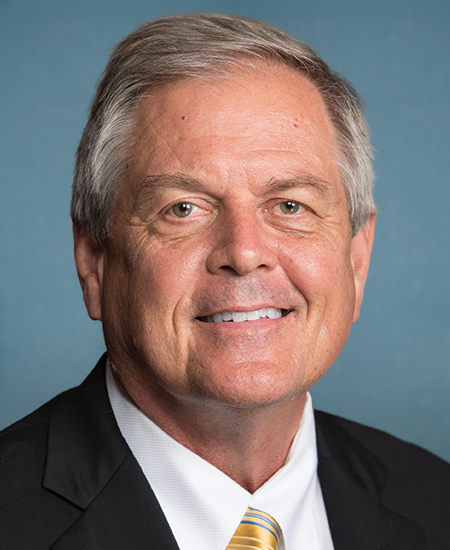
Rep. Ralph Norman
Sponsored bills
Enhanced Iran Sanctions Act of 2025 This bill imposes sanctions on certain foreign persons (individuals and entities) that are involved in Iran's petroleum sector as well as certain associated persons. The bill also requires or authorizes actions to facilitate the enforcement of sanctions on Iran. Specifically, the bill requires the President to impose visa- and property-blocking sanctions on any foreign person that, after the bill's enactment, knowingly engages in any transaction related to the processing, export, or sale of oil, condensates, gas, liquefied natural gas, or other petrochemical products in whole or in part from Iran. The President must also impose sanctions on certain foreign persons associated with a sanctioned individual or entity. For example, the President must sanction the subsidiaries and corporate officers of a sanctioned business. The bill provides certain exceptions to these sanctions, including specifying that sanctions do not apply to the importation of goods or to conducting or facilitating transactions for humanitarian assistance. The Department of State must establish an interagency working group that shall seek to establish a multilateral contact group to coordinate international efforts to enforce sanctions on Iran. The bill expands the State Department rewards program to authorize a reward payment to any individual who furnishes information leading to the identification of a person (1) subject to sanctions under this bill, or (2) that has attempted or is attempting to evade sanctions under this bill.
Maddy summaryThis bill, titled the Safeguarding Women from Chemical Abortion Act, aims to revoke federal approval for the drug mifepristone (also known as RU-486) for use in terminating pregnancies. If enacted, the Food and Drug Administration's approval for mifepristone for this indication would be withdrawn within 14 days, making its introduction into interstate commerce for pregnancy termination a violation of federal law. Additionally, the bill establishes a new federal right for individuals to sue manufacturers of mifepristone if they experience bodily injury or harm to mental health attributed to its use for pregnancy termination. This legislation directly affects drug manufacturers, distributors, healthcare providers, and individuals seeking or having used medication abortion.
Maddy summaryHR 7678, the Gun Owner Registration Information Protection Act, prohibits federal funding for state or local databases that track lawfully owned firearms or their owners. The bill allows federal funding for databases recording lost or stolen firearms but bans it for databases listing legal gun ownership. This means states cannot use federal money to create or maintain systems that compile information about legally owned guns. The bill directly affects state and local governments that rely on federal funds for firearm ownership databases.
Respect State Housing Laws Act This bill eliminates a provision that requires a 30-day notice period before a landlord may begin eviction proceedings against a tenant in federally assisted or federally backed housing.
Maddy summaryHR 7628 repeals a provision in the 1946 Legislative Reorganization Act that automatically adjusted Members of Congress' pay based on federal employee raises. This change directly affects current and future members of Congress by removing automatic pay increases, requiring Congress to pass separate legislation for any future pay adjustments. The bill takes effect when the 120th Congress convenes, ending a long-standing practice of automatic compensation changes.
Maddy summaryHRES 1060 is a symbolic resolution designating April 5, 2026, as "Barth Syndrome Awareness Day" in the U.S. House of Representatives. It directly supports individuals and families affected by Barth syndrome, a rare genetic disorder primarily impacting males that causes heart, muscle, and immune system issues. The resolution expresses support for raising public awareness, improving early diagnosis, advancing research, and developing treatments for this condition - though it does not create new funding or policy changes. It serves as a non-binding statement of recognition by Congress, acknowledging the challenges faced by the small patient community (fewer than 160 diagnosed in the U.S.) and the need for greater attention to this ultrarare disease.
Maddy summaryThe No Tax Dollars for Terrorists Act requires the U.S. State Department to identify foreign countries and organizations receiving U.S. foreign aid that have provided financial or material support to the Taliban, including the amounts of aid they receive and the support they give to the Taliban. It mandates a strategy to use U.S. aid to discourage such support, with initial and follow-up reports to Congress on the strategy and its implementation. The bill also demands detailed reports on U.S. cash assistance programs in Afghanistan and the Afghan Fund, explaining how funds are transferred (including traditional money transfer systems) and how safeguards prevent Taliban access.
Maddy summaryThe LASSO Act requires 10% of annual revenue generated from public lands managed by the Interior Department and Agriculture Department (including national forests and Outer Continental Shelf areas) to be deposited into the Social Security Trust Fund. This directly affects the Social Security Trust Fund by increasing its funding, while ensuring no fee hikes for public land activities or reductions in funds for states, tribes, or local governments. The bill mandates this transfer annually without altering existing revenue-sharing agreements or pricing structures. It aims to bolster Social Security finances through a specific, measurable mechanism tied to federal land management.
Maddy summaryThe Make Elections Great Again Act (HR 7300) would require voters to present photo identification to cast ballots in person or by mail for federal elections, with limited exceptions for religious objections or military voters. It would establish new requirements for proving U.S. citizenship during voter registration, including documentary proof of citizenship and proof of state residency. The bill would change mail-in ballot procedures by requiring voters to request mail-in ballots (rather than universal mail-in voting), implementing barcode tracking for mail-in ballots, and setting strict deadlines for ballot receipt. These provisions would apply to all states for federal elections held in 2027 or later, affecting how voters register, vote in person, and submit mail-in ballots for federal office elections.