

Maddy summaryThis bill would amend federal law to strengthen penalties for organized retail crime by expanding definitions of theft to include digital goods, gift cards, and setting a $5,000 aggregate value threshold for charges over a 12-month period. It would establish a new "Organized Retail and Supply Chain Crime Coordination Center" under Homeland Security to coordinate Federal, State, local, and Tribal law enforcement efforts against cross-jurisdictional theft groups. The Center would share information with retailers, transportation companies, and law enforcement agencies, track crime trends, and produce annual reports on organized retail crime. This legislation directly affects retailers, supply chain businesses, and law enforcement agencies, while targeting organized crime groups responsible for a 93% increase in larceny incidents and rising safety concerns for retail employees. The bill aims to address significant financial losses and supply chain disruptions noted in the National Retail Federation's 2023 data.
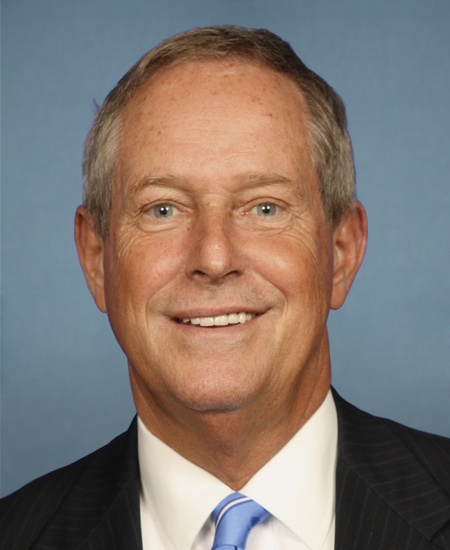
Rep. Joe Wilson
Sponsored bills
Maddy summaryThis bill establishes a process to identify and sanction foreign individuals and governments involved in recruiting or trafficking African citizens to fight for Russia in Ukraine. It requires the State Department to compile a list of these actors within 90 days, explicitly excluding those who were victims of fraud or coercion. Once the list is finalized, the President can impose severe penalties, including freezing assets, cutting off access to U.S. loans and contracts, and denying entry or revoking visas for the listed entities and their affiliates. The sanctions include specific exemptions for humanitarian aid and may be lifted if the President determines that doing so serves vital U.S. national interests. All sanctions imposed under this act will automatically expire five years after the bill is enacted.
Maddy summaryThis bill officially designates the Russian Federation as a state sponsor of terrorism, a status that triggers existing U.S. laws allowing for sanctions and restrictions on foreign aid and arms exports. The legislation is based on findings that the Russian government has supported international terrorism through actions in Chechnya, Ukraine, and Syria, as well as by utilizing mercenary groups like the Wagner Group. While the designation enables broader accountability measures, the bill includes specific protections to ensure that sanctions do not block the export of Ukrainian agricultural products or the provision of humanitarian assistance. The designation will remain in effect for five years or until the U.S. Secretary of State determines that negotiations to end the conflict in Ukraine have begun.
Maddy summaryThe FLEETS Now Act aims to strengthen the U.S. shipbuilding industry by creating new government roles, establishing international partnerships with allies, and investigating unfair practices by Chinese state-owned shipbuilding companies. It creates a new Assistant Secretary position at the State Department to oversee maritime and space affairs, designates a lead official for international shipbuilding investment, and sets up an exchange program for shipbuilding experts between the U.S. and other countries. The bill also requires regular reports on Chinese shipbuilding entities, establishes a framework for allied countries to collaborate on ship production, and directs U.S. diplomats to advocate for changes at the International Maritime Organization regarding environmental regulations and leadership positions.
Maddy summaryThis resolution formally welcomes King Charles III to the United States for his scheduled April 2026 visit and addresses a joint session of Congress. It reaffirms the long-standing special relationship between the two nations, highlighting their shared history, democratic values, and military cooperation. The document also calls for continued collaboration on defense, trade, and human rights issues. As a non-binding expression of sentiment, the resolution does not create new laws or alter existing policies.
Maddy summaryThis resolution formally condemns the politically motivated shooting at the White House Correspondents' Association Dinner on April 25, 2026, and denounces political violence in general. It commends law enforcement agencies, particularly the Secret Service, for their rapid response that protected attendees and saved lives, while noting one officer was injured. The document calls on citizens and public figures to reject rhetoric that encourages violence and urges Congress to pass funding for enhanced security measures for national leaders. As a House resolution, it expresses the chamber's official stance on the incident without creating new laws or changing existing policy.
Maddy summaryThis House Resolution proposes to formally "expunge" the two impeachments of President Donald Trump that passed the House of Representatives on December 18, 2019, and January 13, 2021. If passed, the resolution specifies that these impeachments would be treated "as if such Articles had never passed the full House of Representatives." This action directly affects President Trump by aiming to remove these impeachment proceedings from his official record and would alter the historical legislative record of the House. The resolution's text outlines several reasons for this action, including claims of wrongful accusations, lack of due process, and political bias in the original impeachment proceedings.
Maddy summaryThe Countering Russia's War on Faith Act requires the U.S. government to produce annual reports detailing how Russian forces in occupied Ukrainian territories are persecuting religious groups such as Christians, Jews, and Muslims. These reports must document specific actions like the destruction of religious sites, the detention of clergy, and efforts to force local faith communities to align with the Russian Orthodox Church. If the President certifies that specific individuals or entities are responsible for these violations, the law mandates imposing sanctions on them under existing U.S. regulations. The bill focuses on gathering factual information and enforcing penalties against those directly involved in religious persecution, without speculating on the broader geopolitical outcomes of these actions.
Maddy summaryThe BIS STRENGTH Act allows the Bureau of Industry and Security (BIS) to hire up to 25 outside experts in critical technology and security fields without following standard civil service hiring rules. These experts can be appointed to positions with pay up to the maximum for senior government roles (capped at Vice President-level compensation) for up to 5 years, extendable by 1 year for national security needs. The bill requires annual reports to Congress detailing hiring gaps, appointments, and impacts on BIS's mission. It includes strict limits on the total number of such hires and mandates continued employment for existing appointees if the program ends.
Maddy summaryHR 5543, the Baltic Security Assessment Act of 2025, requires the U.S. State and Defense Departments to submit a report within 180 days of enactment. The report will assess emerging military, cyber, hybrid, and political threats to Estonia, Latvia, and Lithuania, including the roles of Russia, Belarus, China, Iran, and other actors. It will also evaluate U.S. and NATO military presence in the region, opportunities for defense cooperation, and recommendations to strengthen deterrence, cybersecurity, and democratic resilience in the Baltic countries. This bill directly affects U.S. foreign policy and defense planning regarding the Baltics, but does not create new programs or funding.