

Maddy summaryThis bill, known as the Stopping Harmful and Outrageous Torts Act, expands legal protections for firearm manufacturers and sellers by strengthening their immunity from civil lawsuits. It requires courts to immediately dismiss any pending cases against these companies that are based on the criminal or unlawful misuse of a gun by a third party, while also clarifying that sellers are not liable for negligence in entrusting products to others. The legislation further restricts who can file such suits by prohibiting foreign governments from bringing these claims and adding a specific exception for victims under the age of 17, though it maintains immunity for cases involving design or manufacturing defects. Additionally, the bill allows companies to move these cases to federal court and grants them the right to appeal dismissal orders immediately, along with the ability to recover legal fees if they win. Finally, it preempts state and local laws that attempt to impose liability on these entities for the same types of misuse-related harms.
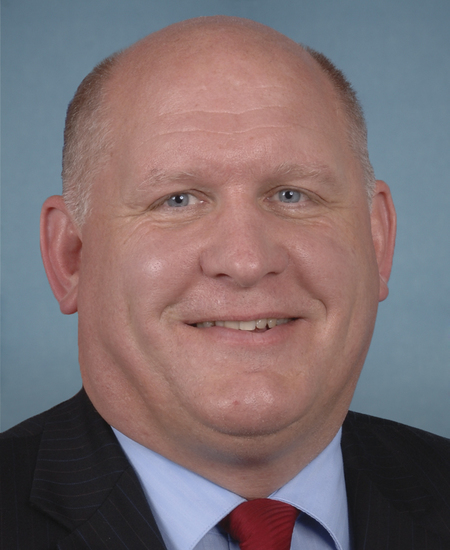
Rep. Glenn Thompson
Sponsored bills
Maddy summaryThis bill directs federal agencies to prioritize the construction of public buildings using domestically sourced mass timber products. It requires the General Services Administration and the Department of Defense to give preference to wood harvested from U.S. forests and produced at facilities located within the country. The legislation further mandates that these wood products come from responsibly managed sources, such as forests undergoing restoration or those managed to prevent wildfires, while also supporting underserved forest owners. Additionally, the bill requires an independent lifecycle assessment of these new buildings to evaluate their environmental impact and a subsequent report to be submitted to Congress.
Maddy summaryThe Timeshare Transparency Act requires timeshare companies to provide buyers with a single document detailing all acquisition and maintenance costs, potential fee changes, exit options, and a 14-day penalty-free cancellation period. Before signing an agreement, consumers must have a chance to review these documents independently, away from company employees. The Federal Trade Commission is authorized to enforce these requirements and issue necessary rules, treating violations as unfair or deceptive practices. This law applies to agreements made after a 90-day waiting period and does not prevent states from enforcing stricter consumer protections.
Maddy summaryThis resolution expresses the House of Representatives' support for the Department of State to prevent members of the Islamic Revolutionary Guard Corps from infiltrating the Iranian National Football Delegation during the 2026 FIFA World Cup. It also urges the State Department to limit the delegation's time in the United States to only what is necessary for playing scheduled matches. As a non-binding measure of congressional sentiment, the bill does not create new laws or enforceable rules but instead signals official backing for existing security protocols. The text frames these actions as necessary national security steps given the IRGC's designation as a foreign terrorist organization and its history of using sports events for intelligence gathering.
Maddy summaryThe FRESH Act establishes a grant program to help schools purchase and install refrigeration equipment for storing and dispensing milk. This funding is available to local school districts, tribal organizations, and their consortia on a competitive basis, with the federal government covering up to 75 percent of the project costs. The bill authorizes $4 million annually from 2027 through 2031 to support these initiatives under the National School Lunch Act.
Maddy summaryThe American Manufacturing Revitalization Exchange Program Act of 2026 establishes a new international exchange program designed to address skilled labor shortages in the U.S. manufacturing sector by sending American workers to allied nations for training. Administered by the Assistant Secretary for Educational and Cultural Affairs within the Department of State, the program will select up to 10 participants annually who must be U.S. citizens with prior apprenticeship or higher education experience in manufacturing fields. These selected individuals will travel to allied countries for up to 12 months to gain hands-on expertise in strategic industries such as robotics, semiconductors, and aerospace, while also serving as cultural ambassadors. Upon returning to the United States, participants are expected to share their newly acquired skills and knowledge with domestic employers and training institutions, and the program will conclude two years after its enactment.
Maddy summaryHR 7891 creates a new category for institutions identified as having disbursed federal student aid to students where identity fraud was suspected (based on a Secretary's detection system), effective October 1, 2026. It requires colleges and universities to identify such cases unless they verified the student's identity in person or via live video before disbursing aid and documented this verification. The bill does not penalize institutions but allows this identification to inform audits or reviews under existing law. This directly affects institutions receiving federal student aid under Title IV of the Higher Education Act, focusing on preventing fraud through mandatory reporting and verification requirements.
Maddy summaryH.Res. 1320 is a non-binding resolution that calls on all Americans to honor military personnel who died while serving in the pursuit of freedom and peace on Memorial Day 2026. The bill does not create new laws or change any policies; instead, it serves as a formal expression of gratitude and remembrance from the House of Representatives. Because it is a commemorative resolution rather than a procedural or funding measure, it has no direct legal effect on individuals or government operations.
Maddy summaryThe Rural Hospital Revitalization Act of 2026 provides zero-interest loans to specific rural hospitals for building new facilities or renovating existing ones. To qualify, a hospital must be located in a county with fewer than 20,000 people, be at least 35 miles from the nearest hospital, have operated for at least 30 years, and demonstrate financial stability. The loans are initially interest-free for five years and can be refinanced later at standard rates if the hospital's financial situation improves, or renewed once under strict conditions if the hospital struggles financially. Additionally, receiving hospitals become eligible for technical assistance grants designed to help improve their operations and financial health.
Maddy summaryThis bill, the Provider Reimbursement Stability Act of 2026, aims to create more predictable payment adjustments for physicians and other healthcare providers under the Medicare program. It directly affects medical practices and providers who receive reimbursement for services through the physician fee schedule. The legislation increases a threshold for certain budget neutrality calculations from $20 million to $54.3 million in 2027, with automatic increases every five years thereafter. It also requires the government to correct payment estimates when actual service usage differs significantly from projections, mandates regular updates to cost calculations for practice expenses, and limits how much Medicare payment rates can change from year to year to a maximum of 2.5 percent.