

Maddy summaryThis resolution honors the memory of Corey Comperatore, a veteran and volunteer firefighter from Sarver, Pennsylvania, who passed away on July 13, 2024. It formally acknowledges his service to his community and country while mourning his loss as a husband, father, and hero. The House of Representatives is asked to express its condolences and celebrate his life through this commemorative measure.
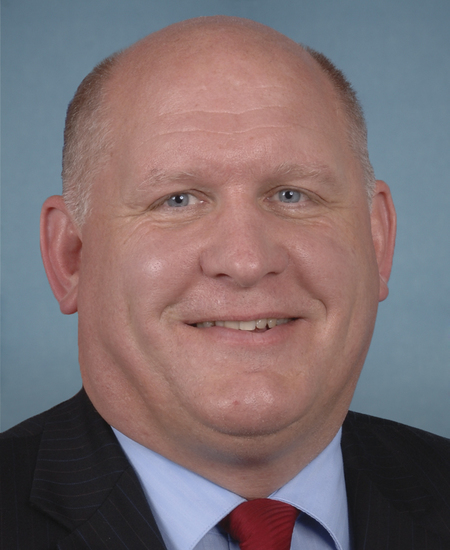
Rep. Glenn Thompson
Sponsored bills
Maddy summaryThe Securing Agriculture's Workforce Act of 2026 modernizes the H-2A visa program by transferring administrative authority to the Department of Homeland Security and introducing a unified online platform to streamline applications for employers and workers. Key provisions include establishing new housing standards with mandatory inspections, creating a system for staggered worker entry and exit, and allowing workers to transfer between employers without losing their status. The bill also defines specific job classifications for wage calculations, expands the scope of covered agricultural activities, and provides legal protections for employers who document the employment of workers seeking visa status. Additionally, it requires agencies to develop a heat illness prevention plan and allows for contract termination due to natural disasters.
Maddy summaryHR 4398, the Veteran Burial Timeliness and Death Certificate Accountability Act, requires Veterans Affairs (VA) physicians or nurse practitioners to certify the death of a veteran who dies of natural causes within 48 hours of learning of the death. This directly affects veterans' families, who previously faced delays of up to eight weeks in burial and access to survivor benefits due to slow death certifications. The bill mandates annual reports to Congress on VA compliance with the 48-hour rule, including statistics on delays and their causes. The key change is establishing a strict timeline for death certification to prevent unnecessary delays in honoring veterans' final arrangements.
Maddy summaryThe Local Foods for Healthy Schools Act of 2026 creates a new program to help state and local governments purchase and distribute food grown within 400 miles of schools. This initiative provides $200 million annually to eligible state agencies, which can either buy local produce directly or give funds to school districts for that purpose. The bill defines local foods as minimally processed agricultural products and requires recipients to submit reports on their purchases while ensuring funds supplement rather than replace existing state support.
Maddy summaryThis bill authorizes the presentation of Congressional Gold Medals to the four crew members of the Artemis II mission to recognize their historic achievement in advancing human space exploration. The legislation directs the Speaker of the House and the President pro tempore of the Senate to arrange for the medals, which will feature the faces of the astronauts and be struck by the Secretary of the Treasury. In addition to the gold medals, the bill permits the minting and sale of duplicate bronze versions to help cover production costs, with any proceeds returned to the United States Mint Public Enterprise Fund.
Maddy summaryThis bill amends the existing Northern Border Security Review Act to update deadlines and requirements for border security assessments. It requires the Department of Homeland Security Secretary to submit a northern border threat analysis by September 2, 2026, and every two years after, with strategy updates due 90 days after each analysis. The bill also mandates classified briefings to congressional committees 30 days after each threat analysis and directs the development of performance measures for Air and Marine Operations within six months of enactment. These changes directly affect the DHS Secretary, congressional committees, and U.S. Customs and Border Protection's operations along the northern border.
Maddy summaryThe Latonya Reeves Freedom Act of 2026 strengthens the Americans with Disabilities Act to ensure individuals with long-term service and support needs have a federally protected right to live in their communities rather than institutions. It requires states and insurance providers to offer community-based services that allow people to maintain independence, control their own care, and access affordable, integrated housing. The bill mandates that public entities and insurers create enforceable transition plans to move people out of institutions, conduct self-evaluations to identify barriers, and establish clear grievance procedures for resolving complaints. Enforcement is handled by the Department of Justice, which can investigate violations, while individuals may also file civil lawsuits to seek damages or court orders preventing institutionalization.
Repealing Big Brother Overreach Act This bill repeals the Corporate Transparency Act. The act requires existing companies and newly created companies to report beneficial ownership information to the Department of the Treasury’s Financial Crimes Enforcement Network for purposes of addressing the financing of terrorism and money laundering.
Maddy summaryThe Juice for Healthy Families Act of 2026 amends the Child Nutrition Act to increase the maximum monthly allowance of single-strength juice for participants in the Special Supplemental Nutrition Program for Women, Infants, and Children (WIC). Under this change, families receiving Food Packages IV, V, VI, or VII would be authorized to receive up to 128 fluid ounces of juice per month instead of the current limit. This policy adjustment directly affects WIC participants by expanding their access to juice as part of their nutritional support. The bill does not alter eligibility requirements or the overall structure of the program, focusing solely on the specific quantity of juice permitted.
Maddy summaryThe Juice Access Improvement Act modifies the Special Supplemental Nutrition Program for Women, Infants, and Children (WIC) to make juice the standard food benefit for specific participant groups, including young children, pregnant women, and breastfeeding mothers. Under this bill, the Secretary of Agriculture must require state agencies to set juice as the default option while still allowing participants to request a cash-value voucher instead if they prefer other food items. The law defines eligible juice based on existing federal nutritional standards and ensures that the value of any cash vouchers used for substitutions is adjusted annually for inflation. This change directly affects families enrolled in WIC food packages designed for children, pregnant women, and postpartum or breastfeeding individuals.