

Maddy summaryThe Ukraine Security Supplemental Appropriations Act, 2024 provides approximately $50 billion in supplemental funding for U.S. security assistance to Ukraine, including $7.849 billion for economic support through the Economic Support Fund and $27.9 billion for defense operations and equipment. The bill allocates specific amounts for military personnel, equipment procurement, and research within the Department of Defense, along with $481 million for refugee assistance through the Department of Health and Human Services. It includes reporting requirements for the Departments of Defense and State to track fund usage, ensure accountability, and monitor the effectiveness of assistance provided to Ukraine. The legislation also establishes repayment arrangements with Ukraine that restrict debt cancellation before specific dates, requiring congressional review before any cancellation can occur.
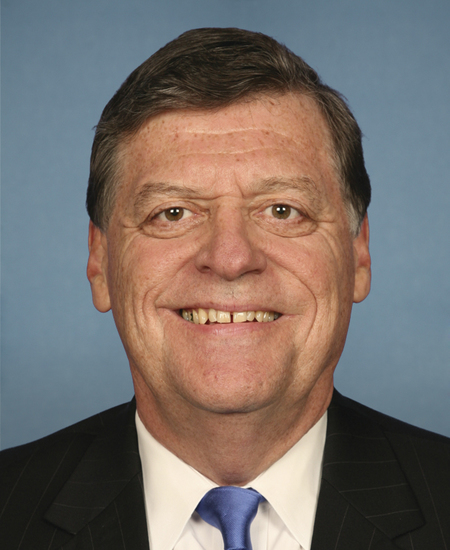
Rep. Tom Cole
Sponsored bills
Maddy summaryHR 8061, the Crime Victims Fund Stabilization Act of 2024, ensures stable funding for the Crime Victims Fund by directing certain False Claims Act collections into it from 2024 through 2029. Specifically, it adds a provision requiring that amounts collected under the False Claims Act (excluding whistleblower rewards and government reimbursement for damages) be deposited into the fund during this period. This directly affects crime victims who rely on the fund for services like counseling and emergency aid, as it prevents potential shortfalls in funding. The bill makes a concrete policy change by redirecting specific federal civil penalties into the fund, rather than altering the fund's existing purposes or eligibility rules.
Maddy summaryHR 8041, the Driving Forward Act, extends a temporary exemption from pre-trip safety checks for school bus drivers operating within states until November 2027. This directly affects school bus drivers and state transportation agencies responsible for implementing the exemption. The bill requires the Transportation Secretary to seek public input on making the exemption permanent after 120 days and allows states to use existing highway funds to cover associated costs. It makes no changes to driver qualification standards but delays a requirement that would have otherwise taken effect.
Maddy summaryHRES 1148 is a resolution passed by the U.S. House of Representatives that condemns the Iranian government for supporting terrorism, regional proxy conflicts, and internal suppression of dissent - including its crackdown on protests following Mahsa Amini's death in 2022. It specifically calls for maintaining sanctions against Iran, supporting the Iranian Resistance's Ten-Point Plan (which advocates for a democratic, secular, nonnuclear Iran), and protecting Iranian political refugees in Albania. The resolution also affirms the Iranian people's right to self-determination under international law and urges the U.S. to recognize their struggle for freedom. As a non-binding resolution, it does not create new laws but formally expresses congressional stance.
Maddy summaryThis is a ceremonial resolution (HRES 1122) honoring General Thomas P. Stafford, a retired U.S. Air Force officer and NASA astronaut. It recognizes his career achievements, including commanding Apollo 10, piloting the first Gemini rendezvous in space, contributing to the development of stealth aircraft (like the F-117A and B-2 bomber), and leading the Apollo-Soyuz international space mission. The resolution has no legislative effect - it simply expresses the House's tribute to his service and legacy. It does not create new policies, affect any individuals or groups, or alter government programs.
Maddy summaryThe TERRA Act (Tribal Environmental Resiliency Resources Act) allows Indian Tribes to integrate funding from multiple Federal environmental and disaster-related programs into a single comprehensive plan to address threats like flooding, erosion, wildfires, and sea level rise. It streamlines processes by reducing administrative burdens through consolidated reporting requirements, enabling Tribes to create one annual report instead of multiple reports for individual programs, and allowing reallocation of funds for community-driven relocation or environmental remediation without additional approvals. The Act establishes the Department of the Interior as the lead agency with sole authority to approve these plans and integrate Federal programs, while providing mechanisms for Tribes to request waivers of certain statutory requirements and expedite land trust acquisitions for relocation purposes. Tribes can use integrated funds for infrastructure development, environmental remediation, and community-driven relocation, with reduced requirements for separate recordkeeping and reporting for each Federal program.
Maddy summary# Summary of the Federal Appropriations Bill This document is a comprehensive appropriations bill for fiscal year 2024, allocating funds across various federal departments and agencies. It contains five main titles: 1. **Department of the Treasury Appropriations Act, 2024**: Allocates funds for Treasury operations including the Internal Revenue Service (over $12 billion), the Bureau of Engraving and Printing, and the Financial Crimes Enforcement Network. Includes numerous restrictions on IRS activities, such as prohibitions on targeting citizens for First Amendment rights and restrictions on conference spending. 2. **Executive Office of the President Appropriations Act, 2024**: Funds the White House, Office of Management and Budget, National Security Council, and other executive offices. Includes requirements for budget impact statements on executive orders. 3. **Judiciary Appropriations Act, 2024**: Allocates over $5.9 billion for federal courts, including salaries for judges, court operations, defender services ($1.45 billion), and court security ($750 million). Includes provisions for court security improvements and judicial training. 4. **District of Columbia Appropriations Act, 2024**: Provides federal funding for District of Columbia programs including $40 million for resident tuition support, $292 million for District courts, $46 million for defender services, and $286 million for the Court Services and Offender Supervision Agency. 5. **Independent Agencies Appropriations Act**: Funds various independent agencies including the Consumer Product Safety Commission ($150.9 million), Election Assistance Commission ($55 million), and Administrative Conference of the United States. Key restrictions across the bill include: - Prohibitions on using funds to target citizens based on First Amendment rights - Restrictions on IRS activities related to taxpayer targeting - Requirements for transparency in information technology spending - Specific limitations on how funds may be transferred between accounts - Prohibitions on certain regulatory actions (like banning gas stoves) The bill contains numerous administrative provisions, reporting requirements, and specific funding allocations for various programs and services across the federal government.
Maddy summaryHR 7770, the Rosie the Riveter Commemorative Coin Act, authorizes the U.S. Mint to produce and sell three commemorative coins honoring women who worked on the U.S. home front during World War II. It specifies $5 gold coins (max 50,000), $1 silver coins (max 400,000), and half-dollar coins (max 750,000), all to be issued between January 1, 2025, and December 31, 2025. Each coin sale includes a surcharge ($35 for gold, $10 for silver, $5 for half-dollar), with all surcharge funds directed to the Rosie the Riveter Trust for maintaining the Rosie the Riveter WWII Home Front National Historical Park and educational programs. The coins will feature designs reflecting the legacy of diverse women workers and must meet specific weight, diameter, and composition standards.
Maddy summaryHR 6727 establishes the United States Foundation for International Conservation, a nonprofit organization that will provide grants to support long-term management of protected and conserved areas in eligible countries. The Foundation requires a 2:1 cost match from other sources, demands host country and community consent through binding agreements, and prioritizes areas with high biodiversity or species of significant importance. It will be governed by a Board of Directors including government officials and private sector experts, operate for 10 years with $1 million authorized for 2024 and $100 million annually from 2025-2035, and must follow international conservation standards while prohibiting funding for countries supporting terrorism or violating human rights.
Maddy summaryThis bill amends the Fair Credit Reporting Act to protect Native Americans from credit report damage related to certain medical debts. It defines "Native American's medical debt" as debt from health care authorized by the Indian Health Service (IHS) or wrongly charged by the Department of Health and Human Services (HHS), including debts HHS has wrongfully billed. The bill requires credit bureaus to automatically exclude from credit reports: (1) medical debt under one year old, and (2) fully paid or settled debt previously marked as delinquent. It also creates a dispute process where Native Americans can submit proof of HHS liability to have such debts removed from their reports. The changes apply to Native Americans as defined under federal law and take effect 90 days after enactment.