

Maddy summaryThe VSAFE Act of 2023 (HR 6452) establishes a new "Veterans Scam and Fraud Evasion Officer" within the Department of Veterans Affairs. This position focuses on preventing fraud against veterans, their families, caregivers, and survivors by creating communication plans, developing reporting guidelines, monitoring fraud metrics, and coordinating with other federal agencies like the IRS and DOJ. The bill does not create new benefits or increase staffing, instead directing the Department to improve existing fraud prevention efforts through standardized training and cross-agency collaboration.
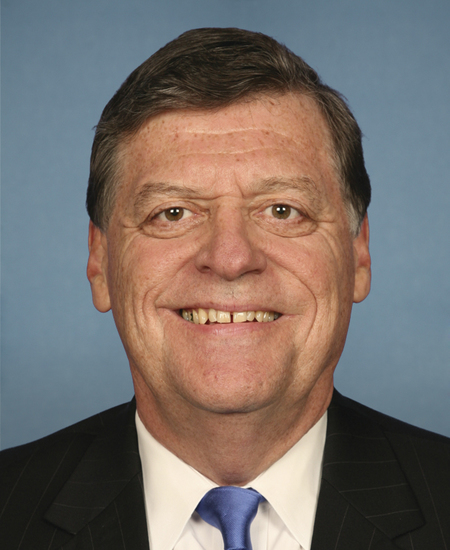
Rep. Tom Cole
Sponsored bills
Maddy summaryHJRES 170 is a resolution seeking congressional disapproval of a federal rule that would have required new housing projects financed by the Department of Housing and Urban Development (HUD) or the Department of Agriculture (USDA) to meet specific energy efficiency standards. The rule, published in April 2024, aimed to set these standards for new construction in federally subsidized housing. If passed, this resolution would block the rule under the Congressional Review Act, making it legally void. It directly affects developers and builders of HUD- and USDA-financed housing by removing the requirement to comply with these energy standards.
Maddy summaryThis bill establishes a Department of the Interior program to support Indian Tribes and Tribal organizations in managing buffalo and buffalo habitat on Indian land. It authorizes grants, contracts, and technical assistance for tribes to restore buffalo populations, develop commercial buffalo activities, and participate in related decision-making. The program requires ongoing consultation with tribes on buffalo management and protects culturally sensitive information shared with the Department. The program will end on September 30, 2030, and explicitly preserves existing tribal treaty rights.
Maddy summaryThis bill, HR 6180, officially recognizes the Poarch Band of Creek Indians as a federally recognized tribe under the Indian Reorganization Act. It reaffirms all lands previously taken into trust for the tribe by the U.S. government as valid trust lands, ratifying the Secretary of the Interior's actions. The law applies retroactively to June 18, 1934, covering all existing and future legal challenges regarding the tribe's land titles or the validity of trust acquisitions. This directly affects the Poarch Band of Creek Indians' land holdings and legal standing on federal trust lands.
Maddy summaryThis bill (HR 1208) amends the 1934 Indian Reorganization Act to clarify that the Secretary of the Interior can take land into trust for any federally recognized tribe, updating outdated language. It specifically revises Section 19 to replace "any recognized Indian tribe now under Federal jurisdiction" with "any federally recognized Indian Tribe." The bill also ratifies and confirms all past land trust decisions made for federally recognized tribes, protecting those actions from legal challenges based on historical recognition status. This change directly affects federally recognized tribes by ensuring their land trust authority remains valid under current law.
Maddy summaryThis bill requires the federal government to improve how states implement the Indian Child Welfare Act (ICWA) of 1978, directly affecting Indian tribes, state child welfare agencies, and tribal organizations. It mandates the Secretary of Health and Human Services to develop a plan by January 2025, using data to track specific ICWA compliance points like timely tribal notice in custody cases, active efforts to keep families together, and proper placement preferences for Indian children. The plan must include technical assistance for states and tribes, and the Secretary must submit biennial reports to Congress detailing state compliance and federal support efforts. These requirements aim to strengthen accountability and adherence to ICWA standards in child welfare proceedings.
Maddy summaryHR 5403, the CBDC Anti-Surveillance State Act, prohibits the Federal Reserve from issuing or facilitating central bank digital currency (CBDC) directly or indirectly to individuals through financial institutions. It specifically bans Federal Reserve banks from offering digital products to individuals, maintaining individual accounts, or using CBDC for monetary policy implementation. The bill also clarifies that its restrictions do not apply to existing physical cash or private, permissionless digital payment systems. This bill directly affects the Federal Reserve's ability to develop or deploy a government-run digital dollar. The law aims to prevent the Federal Reserve from creating a digital currency that could enable transaction tracking or government oversight of personal financial activity.
Maddy summaryThe Alzheimer’s Accountability and Investment Act (HR 620) requires the National Institutes of Health (NIH) Director to annually submit a budget estimate for Alzheimer’s-related initiatives - including personnel needs - directly to the President for review and then to Congress. This budget must be prepared after public comment and submitted without changes by the Secretary of Health and Human Services or the Advisory Council. The bill directly affects the NIH’s budget reporting process for Alzheimer’s research and programs, mandating transparency in how funds are allocated. It does not change funding levels but establishes a specific annual reporting mechanism to improve accountability.
Maddy summaryThe SCREENS for Cancer Act of 2024 reauthorizes and expands the National Breast and Cervical Cancer Early Detection Program (NBCCEDP), which provides free screenings and care coordination to low-income, uninsured, or underinsured women. It increases annual funding from $275 million (2024) to $500 million (2028) and explicitly adds "prevention" to the program’s mission, requiring it to reduce racial and ethnic disparities in cancer outcomes. The bill mandates the program to address barriers like social determinants of health and implement evidence-based strategies to boost screenings, particularly for underserved communities disproportionately affected by pandemic-related screening declines. This directly benefits millions of women, especially Black, Hispanic, and Asian women, who face higher cancer death rates and reduced access to care.
Maddy summaryThis bill reauthorizes the National Alzheimer's Project Act through 2035 (extending the previous deadline of 2025) and adds new requirements to promote healthy aging and reduce Alzheimer’s risk factors. It mandates the program to provide information on healthy behaviors that may lower cognitive decline risk and expands the advisory group to include representatives from agencies like the Department of Justice, FEMA, and Social Security Administration, plus experts with diverse clinical trial experience. The bill directly affects Alzheimer’s research, care programs, and the federal advisory group overseeing national efforts. Key changes include requiring annual evaluations instead of initial ones and adding a focus on reducing health disparities in Alzheimer’s initiatives.