

Maddy summaryHR 5688, the Non-Domiciled CDL Integrity Act, changes rules for issuing commercial driver's licenses (CDLs) to people who don't live in the state where the license is issued. It allows states to issue CDLs to foreign nationals with lawful U.S. immigration status and work-related visas (valid for up to one year or until their stay ends), requiring states to verify status before issuing and keep records for two years. For residents of U.S. territories like Puerto Rico, it requires proof of U.S. citizenship or permanent residency before issuing CDLs, with similar verification and record-keeping rules. The bill directly affects commercial drivers from foreign countries and U.S. territories seeking CDLs in states where they are not residents.
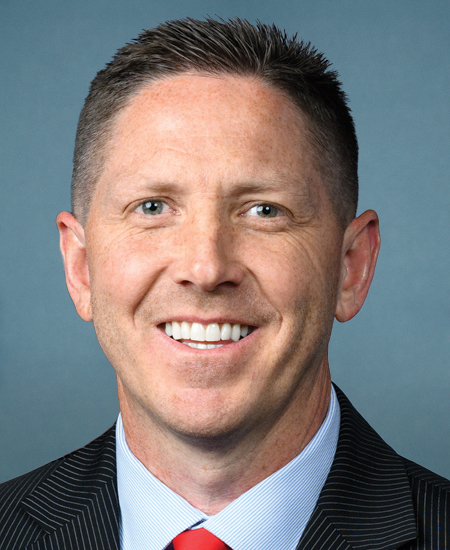
Rep. Josh Brecheen
Sponsored bills
Enhanced Iran Sanctions Act of 2025 This bill imposes sanctions on certain foreign persons (individuals and entities) that are involved in Iran's petroleum sector as well as certain associated persons. The bill also requires or authorizes actions to facilitate the enforcement of sanctions on Iran. Specifically, the bill requires the President to impose visa- and property-blocking sanctions on any foreign person that, after the bill's enactment, knowingly engages in any transaction related to the processing, export, or sale of oil, condensates, gas, liquefied natural gas, or other petrochemical products in whole or in part from Iran. The President must also impose sanctions on certain foreign persons associated with a sanctioned individual or entity. For example, the President must sanction the subsidiaries and corporate officers of a sanctioned business. The bill provides certain exceptions to these sanctions, including specifying that sanctions do not apply to the importation of goods or to conducting or facilitating transactions for humanitarian assistance. The Department of State must establish an interagency working group that shall seek to establish a multilateral contact group to coordinate international efforts to enforce sanctions on Iran. The bill expands the State Department rewards program to authorize a reward payment to any individual who furnishes information leading to the identification of a person (1) subject to sanctions under this bill, or (2) that has attempted or is attempting to evade sanctions under this bill.
Maddy summaryHR 7678, the Gun Owner Registration Information Protection Act, prohibits federal funding for state or local databases that track lawfully owned firearms or their owners. The bill allows federal funding for databases recording lost or stolen firearms but bans it for databases listing legal gun ownership. This means states cannot use federal money to create or maintain systems that compile information about legally owned guns. The bill directly affects state and local governments that rely on federal funds for firearm ownership databases.
Maddy summaryThis bill modifies federal budget rules for unspent agency funds. It requires federal agencies to allocate 49% of unused funds to the next fiscal year, 49% toward paying the national debt, and 2% for retention bonuses (capped at 10% of an employee's base pay). Agencies must also limit future budget requests to the previous year's amount adjusted for inflation. The bill directly affects all executive branch agencies (excluding the Red Cross), altering how they manage leftover budget authority. It does not create new savings programs for individuals but changes government fiscal management procedures.
Safeguard American Voter Eligibility Act or the SAVE America Act This bill requires individuals to provide documentary proof of U.S. citizenship when registering to vote, and requires photo identification to vote, in federal elections. Specifically, the bill prohibits states from accepting and processing an application to register to vote in a federal election unless the applicant presents documentary proof of U.S. citizenship. The bill specifies what documents are considered acceptable proof of U.S. citizenship, such as identification that complies with the REAL ID Act of 2005 that indicates U.S. citizenship. Further, the bill (1) prohibits states from registering an individual to vote in a federal election unless, at the time the individual applies to register to vote, the individual provides documentary proof of U.S. citizenship; and (2) requires states to establish an alternative process to demonstrate U.S. citizenship. Each state must take affirmative steps on an ongoing basis to ensure that only U.S. citizens are registered to vote, which shall include establishing a program to identify individuals who are not U.S. citizens using information supplied by certain sources. Additionally, states must remove noncitizens from their official lists of eligible voters. The bill (1) provides for a private right of action for certain violations, and (2) establishes criminal penalties for certain offenses. Individuals voting in federal elections must present an eligible photo identification document. An individual who votes by absentee ballot must submit a copy of their identification document with both the request for, and the submission of, the absentee ballot.
Maddy summaryThe UBER Act establishes new federal requirements for ride-sharing and shared-transportation companies to receive government contracts. To qualify, every driver must be at least 21 years old, hold a valid license from a single state, pass a road test, and demonstrate sufficient English proficiency to communicate with the public and read traffic signs, with an exception for drivers who use American Sign Language. Companies that fail to certify that all their drivers meet these standards will be banned from federal contracts for five years.
Maddy summaryHR 7156, the SCAM Act, would expand grounds for revoking U.S. citizenship (denaturalization) for naturalized citizens who commit specific offenses within 10 years of becoming citizens. It targets individuals convicted of defrauding federal, state, or local governments (e.g., $10,000+ in public benefit fraud), affiliating with foreign terrorist organizations, or committing aggravated felonies or espionage. If convicted in these categories, the government could automatically revoke citizenship retroactively (as if it never existed) based on evidence that the person lacked good moral character or loyalty to the U.S. at the time of naturalization. This bill directly affects naturalized citizens who commit these offenses within a decade of gaining citizenship, with revocation triggering immediate deportability.
Maddy summaryHR 2641 requires all federal contractors and subcontractors (at every tier) to elect participation in the E-Verify program, which checks the employment eligibility of new hires. This bill amends the 1996 Immigration Act to mandate that every contractor working with federal agencies must use E-Verify for all new employees. It directly affects businesses that contract with the federal government, including those providing services or goods to agencies. The key mechanism is the mandatory election to participate in E-Verify, replacing the current voluntary system for federal contractors.
Maddy summaryHR 6876, the "Protecting Children from Foreign Mutilation Act," imposes visa bans on foreign medical professionals or facilities that provide certain gender-affirming treatments to U.S. minors under 18. It targets foreign physicians or clinics performing "chemical or surgical mutilations" (defined as puberty blockers, hormones, or surgeries altering physical sex characteristics for transgender youth), excluding medically necessary care for intersex conditions or injuries. The bill requires the President to revoke visas for qualifying foreign providers and mandates a report to Congress on enforcement within 180 days. It explicitly excludes detransition treatments and medically necessary care for conditions like intersex variations or trauma. The law applies solely to foreign providers, not U.S. healthcare.
Maddy summaryHR 3492, the Protect Children’s Innocence Act, makes it a federal crime to perform genital or bodily mutilation or chemical castration on minors under 18, except for specific medical reasons. The bill broadly defines prohibited procedures to include gender transition-related surgeries (like hysterectomies or mastectomies) and medical treatments such as puberty blockers or cross-sex hormones administered to minors. It criminalizes these acts when they occur across state lines, involve payments, or use interstate commerce, while explicitly banning religious tradition as a defense. Exceptions include medically necessary procedures for health emergencies, childbirth, or conditions certified by a physician.