

National Law Enforcement Officers Remembrance, Support and Community Outreach Act This bill directs the Department of Justice (DOJ) to establish a National Law Enforcement Officers Remembrance, Support, and Community Outreach Program. The bill further directs DOJ to award a grant under the program to the National Law Enforcement Officers Memorial Fund for the expenses associated with community outreach, public education, and officer safety and wellness programs operated by the of the National Law Enforcement Officers Memorial Fund and National Law Enforcement Museum.
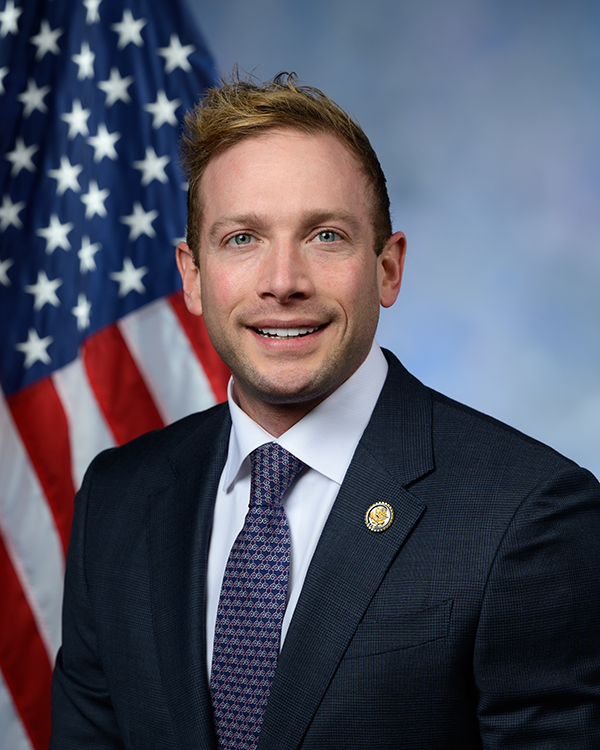
Rep. Max L. Miller
Sponsored bills
Maddy summaryThis bill requires the National Weather Service (NWS) to replace its outdated internal messaging system (NWSChat) with a commercial cloud-based solution to improve communication among staff. It mandates the NWS Director to implement this upgrade by 2027, using up to $3 million annually from existing NWS funding for fiscal years 2024-2027. The new system must support future growth and handle increased user demand. This directly affects NWS personnel who rely on internal communications for weather forecasting and public safety operations. The bill focuses solely on updating the technology infrastructure, not on new weather policies or public services.
Maddy summaryThe NWR Modernization Act of 2023 directs the National Oceanic and Atmospheric Administration (NOAA) to upgrade its Weather Radio network, which broadcasts critical weather and hazard alerts, to improve accessibility and reliability for all Americans. Key provisions include transitioning from older copper-based systems to internet-based communication, adding transmitters in rural and underserved communities (including Tribal lands and national parks), and developing backup systems to maintain alerts during outages. The bill also requires NOAA to consult with private partners to enhance mobile and online access to broadcasts, ensuring real-time alerts reach people in both urban and remote areas without relying solely on physical receiver proximity.
Maddy summaryHRES 363 is a resolution expressing support for recognizing National Police Week, an annual observance established by law to honor law enforcement officers who have died in the line of duty. The resolution acknowledges 556 officers killed in the line of duty during 2022 and calls for ensuring law enforcement officers have necessary equipment, training, and resources to protect both themselves and the public. It encourages the American public to observe National Police Week by honoring law enforcement personnel and recognizing their essential mission in serving communities across the United States. This resolution does not create new law but formally expresses congressional support for an existing observance.
Maddy summaryThe FIGHT Act (HR 2742) amends the Animal Welfare Act to specifically target animal fighting events, such as cockfighting, by defining "rooster" as any male chicken over six months old and banning the live broadcasting (simulcasting) of such events. It prohibits using the postal service or interstate transport to move roosters for animal fighting purposes and adds civil enforcement tools allowing citizens to sue violators after a 60-day notice period. Fines up to $5,000 per violation may be imposed, and property used in animal fighting ventures can be seized. These changes strengthen enforcement against animal fighting by expanding legal remedies for the public and authorities.
Maddy summaryHR 3238, the Affordable Housing Credit Improvement Act of 2023, updates the Low-Income Housing Tax Credit (LIHTC) program to increase the availability of affordable housing across the United States. The bill makes several key changes including increasing state funding formulas, modifying tenant eligibility rules to better serve vulnerable populations (such as domestic violence victims and students), and expanding credit eligibility for projects in rural and Native American communities. Specific provisions raise the credit for properties serving extremely low-income households, clarify rules around tenant income increases, and require housing providers to protect victims of domestic violence. The bill also updates terminology from "low-income" to "affordable" throughout the tax code and enhances program transparency through data sharing requirements. These changes aim to make the LIHTC program more effective at creating and preserving affordable housing units for low-income households nationwide.
Maddy summaryHR 3179, the Supporting Apprenticeship Colleges Act of 2023, provides federal grants to colleges offering construction and manufacturing apprenticeship programs. It funds two key initiatives: (1) Community Outreach Grants to help colleges recruit students and partner with employers, especially in rural areas and for underrepresented groups like first-generation, minority, and nontraditional students; and (2) Student Support Grants to improve retention through services like career advising, mental health resources, and childcare. The bill allocates $5 million annually (2024-2028) for these programs, with each college receiving up to $500,000 per grant. It directly affects apprenticeship colleges, their students, and local employers by expanding access to skilled trades careers.
Maddy summaryHR 1715 requires the Department of Energy (DOE) and National Oceanic and Atmospheric Administration (NOAA) to collaborate on research using artificial intelligence and high-performance computing to improve weather forecasting and climate models. The bill mandates a competitive funding process for research groups - including universities, labs, and nonprofits - to develop better modeling techniques, avoid duplication, and share data securely. It also requires both agencies to submit progress reports to Congress within two years and sets a five-year expiration for the initiative. This bill directly affects federal agencies, research institutions, and the development of more accurate weather prediction systems.
Maddy summaryHR 3148, the POWER Act, provides $20 million in federal grants to state, local, and Tribal law enforcement agencies to purchase chemical screening devices and train staff. The devices identify narcotics like fentanyl, methamphetamine, and synthetic opioids, helping officers quickly and safely analyze seized substances. Agencies must use funds to supplement, not replace, existing budgets and submit annual reports on device usage and effectiveness. The bill directly affects law enforcement agencies by enhancing their ability to investigate drug cases and share data with other agencies.
Maddy summaryThe SAFE Banking Act of 2023 would protect banks and financial institutions that provide services to state-legal marijuana businesses and hemp-related businesses by preventing federal regulators from taking adverse actions against them solely for serving these businesses. It clarifies that income from state-legal marijuana businesses can be considered for mortgage applications, and requires regulators to update guidance on suspicious activity reports related to these businesses. The bill does not require financial institutions to serve these businesses, but ensures they won't face penalties for doing so. It extends similar protections to hemp-related businesses, which have faced banking challenges despite being federally legal under the 2018 Farm Bill.