

Maddy summaryHR 4522, the Ensuring Military Recruitment Access Act, requires high schools to allow military recruiters on campus during the same hours as other recruiters. This directly affects public and private secondary schools by mandating access for military recruiters under the Elementary and Secondary Education Act. The bill also requires the Education Secretary, in consultation with the Defense Secretary, to notify school leaders annually about these access requirements and enforcement actions. The key mechanism ensures consistent recruiter access while providing schools with clear communication about the policy.
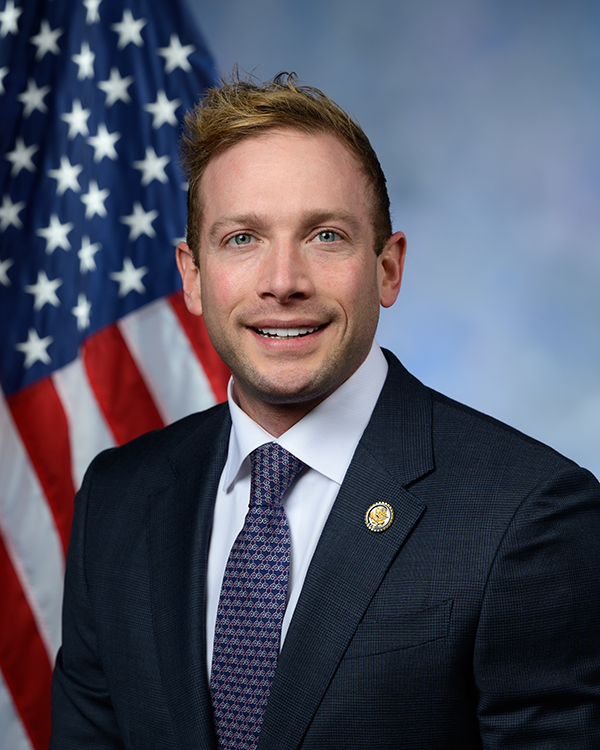
Rep. Max L. Miller
Sponsored bills
Maddy summaryHR 4373, the Weather Information for Agriculture Act, updates the National Integrated Drought Information System to improve drought forecasting and data collection for agricultural operations. It requires the use of AI, machine learning, and cloud technologies for better drought predictions, expands soil moisture monitoring networks (including ground-level measurements), and mandates partnerships with federal agencies and private sectors for data sharing. The bill authorizes $15 million annually (2024-2028) to fund these upgrades, including developing user-friendly public data platforms and increasing nationwide soil moisture monitoring stations. Directly affecting farmers, ranchers, and agricultural businesses, it aims to provide more accurate, accessible drought information for decision-making.
Maddy summaryHJRES 44 is a congressional resolution seeking to block a 2021 rule by the Bureau of Alcohol, Tobacco, Firearms, and Explosives (ATF). The rule classified firearms with stabilizing braces as "short-barreled rifles," which would have required additional licensing and regulation. This resolution uses a specific legal process (under Title 5, U.S. Code) to formally disapprove the ATF rule, meaning the rule would no longer be in effect. It directly affects firearm owners, manufacturers, and dealers who would have been subject to the rule’s requirements.
Maddy summaryHJRES 45 is a congressional disapproval resolution targeting a specific Department of Education rule about federal student loans. It seeks to block the rule implementing "One-Time Federal Student Loan Debt Relief" (including modifications to Perkins, FFEL, and Direct Loan programs) by invoking the Congressional Review Act. If passed, this resolution would nullify the rule, preventing the Department of Education from using it to modify or waive student loan obligations. The bill directly affects borrowers who might have qualified for debt relief under the targeted rule.
Maddy summaryHR 277 would require Congress to approve major federal regulations before they take effect. Major rules are defined as those with significant economic impact ($100 million+ annually), major cost increases for consumers or industries, or significant adverse effects on competition, employment, or innovation. Agencies must submit detailed information about these rules to Congress, including cost-benefit analyses, before they can take effect. Congress would have 70 session days to approve the rule with a joint resolution; if they don't act within that timeframe, the rule would not take effect. This would increase congressional oversight of federal regulations and require more detailed information about proposed rules before they become law.
Maddy summaryHR 4076 establishes a joint U.S.-Israel program to fund health technology development, authorizing $4 million annually (2024-2026) through the U.S. Health and Human Services Department. It requires Israel to match U.S. funding and focuses on collaborative projects in artificial intelligence, vaccines, telemedicine, diagnostic tests, and data-driven personalized medicine for emerging infectious diseases. The program can either build on an existing U.S.-Israel agreement or create a new one under a 2008 science cooperation framework. This bill directly affects U.S. federal health agencies and the Israeli government, with funds restricted to joint projects meeting specific technological and health priorities.
Maddy summaryHR 3099 establishes a new Special Envoy for the Abraham Accords within the State Department, directly affecting U.S. diplomatic efforts and coordination. The envoy, appointed by the President with Senate confirmation, will coordinate U.S. government activities to expand diplomatic, economic, and security ties between Israel and Muslim-majority countries, including encouraging nations without formal relations with Israel to establish them. Key duties include strengthening existing Accords partnerships, fostering regional cooperation on issues like trade and water security, and providing diplomatic support for Israel’s regional engagement. The envoy must submit annual reports to Congress detailing specific diplomatic efforts and progress with partner countries.
Maddy summaryThis bill prohibits federal agencies from using government funds to purchase or operate drones (unmanned aircraft systems) made by "covered foreign entities," primarily targeting entities linked to foreign governments, especially those tied to China as defined in the bill. It directly affects federal agencies and contractors receiving federal funding for drone acquisitions or operations. Key provisions include specific exemptions for national security research, counterterrorism, or cybersecurity needs, and a waiver process requiring approval from Homeland Security or Defense. The law aims to reduce reliance on potentially risky foreign drone technology by restricting federal funding for such systems.
Maddy summaryHR 3980 establishes the National Oceanic and Atmospheric Administration (NOAA) as an independent agency within the executive branch, headed by an Administrator appointed by the President with Senate confirmation. The bill defines NOAA's core functions, including conducting scientific research across atmospheric, oceanic, climate, and space weather domains, maintaining the National Weather Service, and managing oceanic and coastal resources. It requires the Administrator to develop a reorganization plan within 18 months to improve efficiency and coordination across NOAA's operations, and mandates a study on consolidating Endangered Species Act and Marine Mammal Protection Act management functions. The bill also creates a Science Advisory Board to provide scientific advice to NOAA and Congress, while ensuring existing NOAA functions and authorities continue without disruption.
Maddy summaryThis bill requires large credit card issuers (with over $100 billion in assets) to allow merchants to choose which payment networks process credit card transactions, ending restrictions that previously forced merchants to use only one network. It prohibits issuers from blocking merchants from routing transactions through competing networks or penalizing them for choosing non-exclusive processing options. The Federal Reserve must create rules within one year to implement these changes, ensuring merchants have more choice in payment processing. The law does not apply to credit cards issued in a "3-party payment system" model.