

Maddy summaryThis bill creates a user fee system for facilities that manufacture over-the-counter (OTC) monograph drugs, which are medications generally recognized as safe and effective. The fees will be assessed for fiscal years 2026 through 2030, with specific payment schedules and revenue targets that account for inflation and other factors. The bill requires the Secretary of Health and Human Services to report on the use of these fees annually. The fee system will end on October 1, 2030, with reporting requirements continuing until January 31, 2031.
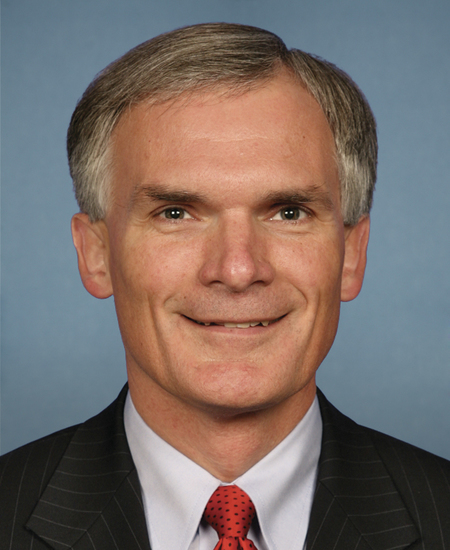
Rep. Robert E. Latta
Sponsored bills
Maddy summaryHRES 716 is a symbolic resolution designating September 15-19, 2025, as "National Clean Energy Week" to raise awareness about clean energy. It encourages voluntary actions like investing in clean energy technologies but does not create new laws, funding, or requirements. The resolution cites the clean energy sector's economic role (noting 8.5 million U.S. jobs in 2024 per the Department of Energy) and applauds national laboratories. As a non-binding gesture, it directly affects no individuals or entities but aims to promote existing clean energy initiatives.
Maddy summaryThe House of Representatives passed HRES 681 to commemorate General Lafayette's service during the American Revolution and the bicentennial of his 1824-25 farewell tour. The resolution expresses gratitude for his contributions, including his diplomatic role in securing French military and financial support during the Revolutionary War, and acknowledges his lifelong advocacy for human rights and the Franco-American alliance. This is a ceremonial resolution with no legislative effect, solely honoring historical figures and events.
Maddy summaryHR 5147, the WIRELESS Leadership Act, amends federal law to clarify local governments' authority over cell tower and wireless facility permits while setting clear rules for approval. It requires local governments to approve or deny requests within strict timeframes (60-150 days depending on facility size), prohibits discrimination against wireless providers, and mandates written justifications for denials. The bill directly affects wireless providers (like telecom companies) and local governments handling permits for cell towers, small cell installations, and related infrastructure. If local governments miss deadlines, requests are automatically approved, ensuring faster deployment of wireless services without altering FCC regulations on radio frequency emissions.
Maddy summaryHR 4620 amends federal law to include rioting as a form of racketeering activity under Title 18, United States Code. This change would allow prosecutors to charge individuals who organize or participate in riots as part of a larger criminal enterprise under federal racketeering laws. The bill specifically targets coordinated riot activities linked to organized crime, not isolated or spontaneous protests.
Maddy summaryHR 1919, the "Anti-CBDC Surveillance State Act," prohibits the Federal Reserve from developing, testing, or issuing any central bank digital currency (CBDC) or similar digital assets. It specifically bans the Fed from offering direct financial products to individuals, maintaining individual accounts, or issuing CBDCs directly or indirectly through intermediaries like banks. The bill also blocks the Fed from using any digital asset for monetary policy and clarifies that physical currency's privacy protections remain intact. This policy directly affects the Federal Reserve System's ability to create or manage digital monetary tools.
Maddy summaryHR 4448, the Restoring Equal Opportunity Act, prohibits lawsuits alleging discrimination based on "disparate impact" in employment and housing. It amends the Civil Rights Act of 1964 and Fair Housing Act to ban claims where a neutral policy (like a test or screening rule) unintentionally disadvantages protected groups (such as race or gender), even if there was no discriminatory intent. The bill also nullifies specific federal regulations implementing civil rights laws, removing legal grounds for such claims under current enforcement rules. This directly affects employers, housing providers, and federal agencies that enforce civil rights laws, changing how discrimination claims can be brought in court.
Maddy summaryThis bill directs the Federal Communications Commission (FCC) to review its satellite communication rules to identify potential changes that could better support precision agriculture. The FCC must consult a task force established under the 2018 farm bill and, if changes are possible, develop recommendations for implementation. The FCC must submit a report to Congress within 15 months detailing the findings and any proposed rule changes. This review specifically targets rules for fixed, mobile, and earth exploration satellite services to improve connectivity for farmers using precision agriculture technologies.
Maddy summaryHR 4382 authorizes the U.S. Mint to produce commemorative coins for the 2028 Los Angeles Olympics/Paralympics and 2034 Salt Lake City Winter Olympics/Paralympics. It specifies gold, silver, and half-dollar coin designs with defined mintage limits (e.g., up to 100,000 $5 gold coins for each event), all bearing inscriptions like "2028" or "2034" and standard coin features. A surcharge ($5-$50 per coin) is added to sales, with all funds directed to the respective Olympic committees to support event hosting and legacy programs like youth sports. The bill ensures no net cost to the government by requiring surcharge revenues to cover all design, production, and marketing expenses before funds are disbursed.
Maddy summaryHR 4370, the SAMS Act of 2025, codifies five existing executive orders into law to strengthen U.S. mineral supply chains. It gives legal force to orders focused on securing critical minerals (like lithium and rare earths) for national security and economic resilience, directly affecting federal agencies implementing these strategies. Key provisions require agencies to follow these established policies - addressing reliance on foreign mineral sources, supporting domestic mining, and prioritizing national security in mineral processing - without creating new regulations. The bill does not alter current mineral policies but formally enshrines them as binding federal requirements.