

Maddy summaryThis bill (HR 4635) designates the U.S. Postal Service facility at 890 East 152nd Street in Cleveland, Ohio, as the "Technical Sergeant Alma Gladys Minter Post Office Building." It updates all official references to the location to use this new name, with no policy changes or direct impact on residents or services beyond the ceremonial renaming.
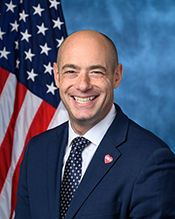
Rep. Greg Landsman
Sponsored bills
Maddy summaryThis bill, titled the No TSA Data for ICE Act, prohibits the Transportation Security Administration from sharing passenger data with U.S. Customs and Border Protection or U.S. Immigration and Customs Enforcement. It specifically bars these agencies from using TSA information or data from private brokers to perform immigration enforcement functions. Additionally, the legislation prevents the denial, suspension, or early termination of Trusted Traveler programs like PreCheck and Global Entry if an individual's participation in First Amendment-protected activities is the reason. The law defines the restricted data as personally identifiable information about flight passengers obtained from the TSA or private sector entities.
Maddy summaryThis bill requires the Secretary of State to submit annual reports examining whether the Polisario Front, a group involved in the Western Sahara conflict, has exchanged military support or intelligence with Iranian-backed terrorist organizations. If such cooperation is confirmed, the President must designate the Polisario Front as a foreign terrorist organization and freeze its assets under existing sanctions laws. The legislation focuses on specific military aid like weapons, drones, and intelligence, aiming to increase transparency regarding potential links between the two groups without advocating for a specific political outcome.
Maddy summaryThe Head Start Expansion and Improvement Act of 2026 broadens eligibility for early childhood education services by including recipients of various public assistance programs, such as food stamps and Medicaid, in the definition of qualifying families. The bill authorizes $36 billion annually from fiscal years 2027 through 2032 to support these expanded operations and creates a separate grant program providing $1 billion per year until 2030 for agencies to repair or upgrade aging facilities with safety hazards. Additionally, the legislation establishes a loan forgiveness program that cancels federal student loans for childcare workers who complete three years of full-time service in Head Start or Early Head Start programs. Finally, it authorizes $6.8 billion annually through 2032 to provide salary supplements to Head Start employees, with funding allocated based on local wage gaps and cost-of-living factors.
Maddy summaryThis bill establishes federal protections and funding to expand access to in vitro fertilization and intrauterine insemination for individuals, military service members, and veterans. It requires most private health plans, Medicaid programs, and Medicare to cover these fertility treatments without imposing higher cost-sharing than other medical services. Additionally, the legislation mandates that the Department of Defense and the Department of Veterans Affairs provide specific fertility preservation and treatment benefits to uniformed service members and eligible veterans. The bill also includes preemption clauses that override state laws restricting these procedures and prohibits discrimination based on marital status, sex, or sexual orientation in the provision of care.
Maddy summaryThis bill reauthorizes and expands the Accelerating Access to Critical Therapies for ALS Act through 2031, extending funding for research into treatments for amyotrophic lateral sclerosis. It requires drug manufacturers to share interim clinical trial data with the FDA to better assess the progress of investigational drugs and clarifies that phase 3 clinical trial definitions include combined phase 2/3 trials and planned trials not yet enrolling participants. The legislation also mandates the FDA to publish an updated five-year action plan for ALS and other rare neurodegenerative diseases, including resource needs and coordination strategies with broader disease communities. Additionally, the bill requires the Government Accountability Office to submit a report on the program's implementation four years after enactment.
Maddy summaryThis concurrent resolution formally recognizes the persistent wage gap between Black women and white, non-Hispanic men in the United States. It highlights data showing that Black women earn significantly less than their male counterparts and reaffirms Congress's support for existing laws that prohibit pay discrimination based on sex or race. The document does not create new laws or change policy but serves as a symbolic statement to raise awareness about the economic disparities faced by Black women.
Maddy summaryThe EMRTAI Authorization Act of 2026 directs the Environmental Protection Agency to create a program that investigates methods for finding and recovering critical materials from contaminated sites. This initiative allows the EPA to provide funding to states, local governments, tribes, nonprofits, and private entities to support these recovery efforts and monitor environmental cleanup. The program is limited to a total of $10 million per year, with no single recipient receiving more than $3 million, and grants are evaluated based on their potential to strengthen domestic supply chains and protect human health. The authority to run this program will end ten years after the bill is enacted.
Maddy summaryHR 6529, the Protecting Families from AI Data Center Energy Costs Act, mandates the Federal Energy Regulatory Commission (FERC) to hold a technical conference within 90 days of enactment. The conference will include AI data centers, utilities, and ratepayer advocates to develop strategies protecting residential and small commercial customers from rising energy costs caused by large energy users. FERC must then submit a report with recommendations to Congress within 180 days. This procedural bill directly affects households and small businesses facing potential rate increases due to AI data center energy demands.
Maddy summaryThe AADAPT Act reauthorizes and expands Project ECHO grants to improve Alzheimer’s and dementia care through technology-enabled training. It specifically funds grants for healthcare providers in rural, frontier, or medically underserved areas to enhance early diagnosis, quality care, and provider retention for dementia patients. The bill authorizes $1 million annually (2027-2032) for these dementia-focused training programs, requiring funds to supplement - not replace - existing resources. This directly supports primary care providers licensed to serve underserved communities, using collaborative online learning to address care gaps.