

Maddy summaryThis bill establishes the United States-Israel Defense Technology Cooperation Initiative to accelerate joint development and integration of defense technologies between the two countries. It directs the U.S. Secretary of Defense, with Israel’s agreement, to identify Israeli-origin technologies for rapid adoption into U.S. military systems, focusing on areas like counter-drone systems, missile defense (including "Golden Dome for America"), AI, cyber defense, and directed energy. The initiative requires annual congressional reporting on progress, partnerships with industry, and technology transitions, while authorizing $150 million annually for fiscal years 2027-2029. It aims to strengthen bilateral defense innovation and streamline the use of Israeli technologies within U.S. military programs.
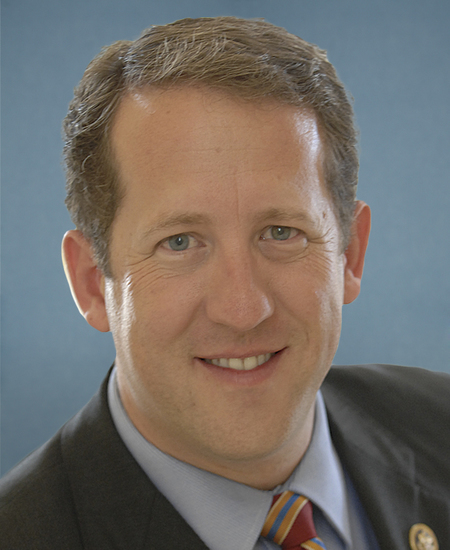
Rep. Adrian Smith
Sponsored bills
Maddy summaryHR 7409, the Defend Rural Health Act of 2026, prevents rural hospitals from being reclassified as urban Medicare facilities after October 1, 2029, unless they met specific criteria before October 1, 2026. The bill amends Medicare rules to block hospitals from retaining rural status beyond 2029, even if they applied for reclassification earlier. It also prohibits the Medicare Geographic Classification Review Board from approving new reclassification requests for hospitals already treated as rural under current rules for fiscal years starting after October 1, 2026. This directly affects rural hospitals that rely on higher Medicare payments tied to their geographic classification. The law aims to maintain stable funding for rural hospitals by restricting future reclassifications.
Maddy summaryThis bill increases the home sale exclusion for surviving spouses from $250,000 to $500,000 under specific conditions. It directly affects individuals who sell their primary residence after their spouse's death, provided they met the original home sale exclusion requirements before the spouse's death and have not remarried at any time after the spouse's death until the sale occurs. The key provision amends the Internal Revenue Code to substitute $500,000 for $250,000 in calculating the exclusion for qualifying sales. The change applies to taxable years beginning after the bill's enactment date.
Maddy summaryThe PASTEUR Act of 2026 creates a new government contracting program to incentivize development of new antimicrobial drugs for treating drug-resistant infections. The Health and Human Services Secretary would award contracts to pharmaceutical sponsors meeting specific criteria on clinical benefits, innovation, and public health impact, with annual payments ranging from $75 million to $300 million (adjusted for inflation). Contract requirements include ensuring drug availability, tracking resistance data, promoting appropriate use, and maintaining supply chains. The bill also establishes antimicrobial stewardship programs for hospitals and outpatient facilities and improves surveillance of antimicrobial use and resistance. This legislation aims to address antibiotic resistance by creating financial incentives for new treatments and improving how antimicrobials are used and monitored.
Maddy summaryThis bill modifies federal budget rules for unspent agency funds. It requires federal agencies to allocate 49% of unused funds to the next fiscal year, 49% toward paying the national debt, and 2% for retention bonuses (capped at 10% of an employee's base pay). Agencies must also limit future budget requests to the previous year's amount adjusted for inflation. The bill directly affects all executive branch agencies (excluding the Red Cross), altering how they manage leftover budget authority. It does not create new savings programs for individuals but changes government fiscal management procedures.
Maddy summaryThis bill prevents state or local governments from banning or restricting energy connections (like installation, modification, or access) based on the type or source of energy, such as electricity, natural gas, or renewable fuels. It directly affects consumers choosing energy providers and energy companies seeking to offer services. The key provision prohibits local laws, regulations, or policies that limit energy services sold in interstate commerce, covering all energy types listed in the bill’s definitions. It does not create new programs but limits regulatory authority at the state or local level. The law aims to ensure open access to diverse energy sources without source-based restrictions.
Maddy summaryThe Make Elections Great Again Act (HR 7300) would require voters to present photo identification to cast ballots in person or by mail for federal elections, with limited exceptions for religious objections or military voters. It would establish new requirements for proving U.S. citizenship during voter registration, including documentary proof of citizenship and proof of state residency. The bill would change mail-in ballot procedures by requiring voters to request mail-in ballots (rather than universal mail-in voting), implementing barcode tracking for mail-in ballots, and setting strict deadlines for ballot receipt. These provisions would apply to all states for federal elections held in 2027 or later, affecting how voters register, vote in person, and submit mail-in ballots for federal office elections.
Safeguard American Voter Eligibility Act or the SAVE America Act This bill requires individuals to provide documentary proof of U.S. citizenship when registering to vote, and requires photo identification to vote, in federal elections. Specifically, the bill prohibits states from accepting and processing an application to register to vote in a federal election unless the applicant presents documentary proof of U.S. citizenship. The bill specifies what documents are considered acceptable proof of U.S. citizenship, such as identification that complies with the REAL ID Act of 2005 that indicates U.S. citizenship. Further, the bill (1) prohibits states from registering an individual to vote in a federal election unless, at the time the individual applies to register to vote, the individual provides documentary proof of U.S. citizenship; and (2) requires states to establish an alternative process to demonstrate U.S. citizenship. Each state must take affirmative steps on an ongoing basis to ensure that only U.S. citizens are registered to vote, which shall include establishing a program to identify individuals who are not U.S. citizens using information supplied by certain sources. Additionally, states must remove noncitizens from their official lists of eligible voters. The bill (1) provides for a private right of action for certain violations, and (2) establishes criminal penalties for certain offenses. Individuals voting in federal elections must present an eligible photo identification document. An individual who votes by absentee ballot must submit a copy of their identification document with both the request for, and the submission of, the absentee ballot.
Maddy summaryHRES 375 is a symbolic resolution designating May 2025 as "Renewable Fuels Month" to recognize renewable fuels' role in reducing carbon emissions, lowering consumer fuel prices, supporting rural economies, and decreasing reliance on foreign energy sources. The resolution expresses the House's support for this designation without creating new laws or funding. It highlights renewable fuels' economic contributions (e.g., jobs, GDP impact) and environmental benefits as context for the recognition, but does not alter existing policies. As a non-binding resolution, it has no direct legal effect on consumers, industries, or government programs.
This bill designates a portion of Interstate Route 680 in Omaha, Nebraska, as the Hal Daub Freeway. Harold John Daub Jr. served in the House of Representatives from 1981-1989 and as the mayor of Omaha, Nebraska, from 1995-2001.