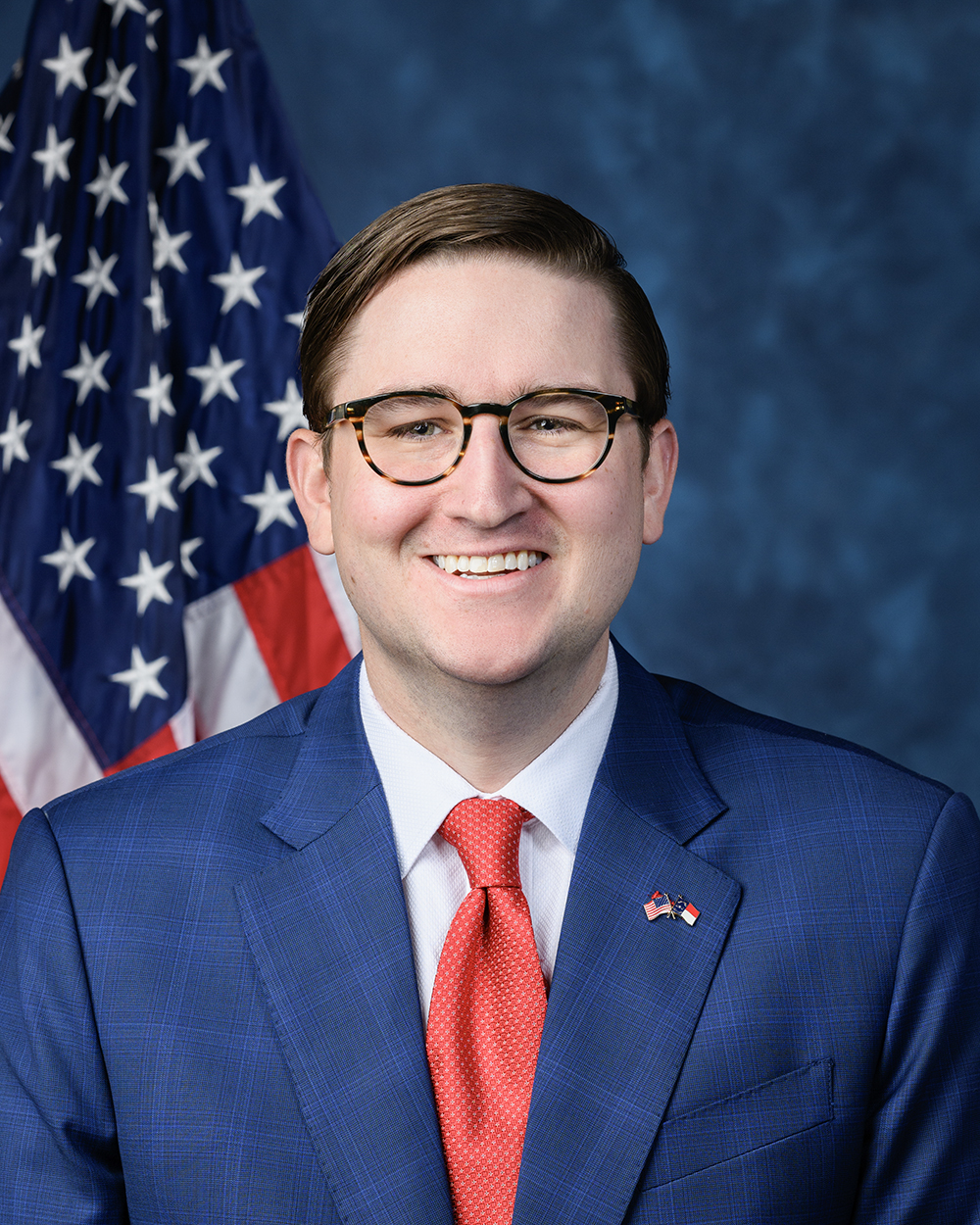
Photo of Addison P. McDowell
R United States House · District 6 · North Carolina On the 2026 ballot

Rep. Addison P. McDowell

Compare
Total votes
650
all sessions
Attendance
99%
8 missed
Near the chamber average
With party
97%
of cast votes
Near the chamber average
Bipartisan score
2%
crosses aisle rarely
Near the chamber average
Sponsored
300
bills & resolutions
Near the chamber average
Committees
8
assignments
300 bills and resolutions

Sponsored bills

Total
300
Primary
18
Co-sponsor
282
This page
300
matching current filters
Co-sponsor HRES 1034
In committee · Florida House · Co-sponsor
Relating to questions of privilege in the House of Representatives during the One Hundred Nineteenth Congress.

Maddy summaryHRES 1034 modifies House rules for "questions of privilege" resolutions during the 119th Congress. It requires that any privilege resolution offered by the Majority Leader or Minority Leader must have at least one-fifth of all House members as cosponsors when introduced. Additionally, Members must maintain this one-fifth cosponsorship threshold for at least one legislative day after a resolution's introduction before making an oral announcement about it. This procedural change affects how Members can formally raise conduct issues involving other Members, Delegates, or Resident Commissioners.

In committee Feb 3, 2026 1 co-sponsor
Co-sponsor HR 1458
Passed · Florida House · Co-sponsor
VETS Opportunity Act of 2025

Maddy summaryHR 1458, the VETS Opportunity Act of 2025, amends VA education benefits rules to ensure veterans using these benefits for independent study courses receive meaningful instruction. It requires that such courses include regular, substantive interaction between students and instructors, and limits eligibility to programs at institutions approved for federal student aid under the Higher Education Act. This directly affects veterans pursuing online or self-paced courses using VA education benefits. The changes apply to courses starting August 1, 2025, and aim to standardize benefit access for qualifying educational programs.

Passed Feb 3, 2026 1 co-sponsor
Co-sponsor HR 7296
In committee · Florida House · Co-sponsor
SAVE America Act

Safeguard American Voter Eligibility Act or the SAVE America Act This bill requires individuals to provide documentary proof of U.S. citizenship when registering to vote, and requires photo identification to vote, in federal elections. Specifically, the bill prohibits states from accepting and processing an application to register to vote in a federal election unless the applicant presents documentary proof of U.S. citizenship. The bill specifies what documents are considered acceptable proof of U.S. citizenship, such as identification that complies with the REAL ID Act of 2005 that indicates U.S. citizenship. Further, the bill (1) prohibits states from registering an individual to vote in a federal election unless, at the time the individual applies to register to vote, the individual provides documentary proof of U.S. citizenship; and (2) requires states to establish an alternative process to demonstrate U.S. citizenship. Each state must take affirmative steps on an ongoing basis to ensure that only U.S. citizens are registered to vote, which shall include establishing a program to identify individuals who are not U.S. citizens using information supplied by certain sources. Additionally, states must remove noncitizens from their official lists of eligible voters. The bill (1) provides for a private right of action for certain violations, and (2) establishes criminal penalties for certain offenses. Individuals voting in federal elections must present an eligible photo identification document. An individual who votes by absentee ballot must submit a copy of their identification document with both the request for, and the submission of, the absentee ballot.


In committee Jan 30, 2026 1 co-sponsor
Co-sponsor HR 7286
In committee · Florida House · Co-sponsor
To amend the Internal Revenue Code of 1986 to revoke the tax-exempt status of organizations that provide, or provide funding for, abortion.

Maddy summaryThis bill would revoke the tax-exempt status of nonprofit organizations (like charities or health groups) that provide or fund abortions, except in specific cases. It directly affects organizations currently classified under Section 501(c)(3) of the tax code, such as some healthcare providers or advocacy groups. Key provisions define "abortion" as intentionally terminating a pregnancy (excluding cases where the mother’s life is at risk, or the pregnancy resulted from rape or incest), and deny tax exemption to groups meeting this definition. The change would take effect for tax years starting after the bill’s enactment date.

In committee Jan 30, 2026 1 co-sponsor
Co-sponsor HR 7040
In committee · Florida House · Co-sponsor
SAFE KIDS Act

Maddy summaryThe SAFE KIDS Act would void surrogacy contracts between U.S. surrogates and foreign nationals from designated "foreign entities of concern" (nations listed under 10 U.S.C. §4872(f)(2)), except for married couples where at least one prospective parent is a U.S. citizen or lawful permanent resident. It prohibits surrogacy brokers from facilitating such contracts, imposing fines or up to one year in prison for knowingly arranging these agreements. If a contract is voided, custody decisions for the child would be determined by state courts based solely on the child’s best interests, disregarding the invalid agreement. The bill aims to address what Congress identifies as a national security threat involving exploitation of U.S. surrogacy laws and potential human trafficking.

In committee Jan 21, 2026 1 co-sponsor
Co-sponsor HR 7156
In committee · Florida House · Co-sponsor
SCAM Act

Maddy summaryHR 7156, the SCAM Act, would expand grounds for revoking U.S. citizenship (denaturalization) for naturalized citizens who commit specific offenses within 10 years of becoming citizens. It targets individuals convicted of defrauding federal, state, or local governments (e.g., $10,000+ in public benefit fraud), affiliating with foreign terrorist organizations, or committing aggravated felonies or espionage. If convicted in these categories, the government could automatically revoke citizenship retroactively (as if it never existed) based on evidence that the person lacked good moral character or loyalty to the U.S. at the time of naturalization. This bill directly affects naturalized citizens who commit these offenses within a decade of gaining citizenship, with revocation triggering immediate deportability.

In committee Jan 20, 2026 1 co-sponsor
Co-sponsor HR 7112
In committee · Florida House · Co-sponsor
Veterans’ Bill of Rights Act of 2026

Maddy summaryHR 7112, the Veterans’ Bill of Rights Act of 2026, requires the Department of Veterans Affairs (VA) to clearly inform veterans about their rights regarding VA healthcare, benefits, and services. It codifies 10 specific rights, including access to care (from VA or community providers), respect and dignity, informed consent, awareness of benefits, and the right to file complaints without retaliation. The bill mandates that the VA integrate these rights into all policies, train employees annually, prominently display them at facilities and online, include them in transition programs, and make them accessible via VA apps and portals within 180 days of enactment. This law focuses on improving transparency and accountability in VA interactions but does not create new legal rights or change eligibility requirements for benefits.

In committee Jan 15, 2026 1 co-sponsor
Co-sponsor HR 6998
In committee · Florida House · Co-sponsor
Renewed Hope Act

Maddy summaryThe Renewed Hope Act (HR 6998) requires the Department of Homeland Security to hire 200 new staff, including 40 forensics analysts and 30 child exploitation investigators for the Victim Identification Laboratory, plus 130 additional personnel for the Child Exploitation Investigations Unit, to improve identification and rescue efforts for victims of child sexual exploitation. It establishes a mandatory training program for law enforcement and related organizations to use updated victim identification techniques and mandates coordination between DHS and the National Center for Missing and Exploited Children to streamline investigations. The bill also includes strict privacy rules to secure victim information and allows temporary hiring of experts for forensic analysis at specified rates.

In committee Jan 13, 2026 1 co-sponsor
Co-sponsor HR 6732
Passed · Florida House · Co-sponsor
Coercion and Sexual Abuse Free Environment Act

Maddy summaryThis bill creates new federal criminal penalties for intentionally coercing minors (under 18) through interstate means (like mail or online platforms) to engage in harmful acts. It specifically prohibits forcing minors to commit self-harm (including suicide attempts), animal cruelty, abusive nonsexual conduct, sexually explicit acts, or obscene speech. Violations carry fines and prison terms of up to 10 years, with harsher penalties (up to 20 years or life) if serious injury or death results. The law directly protects minors from coercion by perpetrators using interstate communication or commerce, with enforcement under existing federal criminal code.

Passed Jan 13, 2026 1 co-sponsor
Co-sponsor HR 909
Passed · Florida House · Co-sponsor
Crime Victims Fund Stabilization Act of 2025

Maddy summaryHR 909, the Crime Victims Fund Stabilization Act of 2025, modifies how funds from the False Claims Act are deposited into the Crime Victims Fund. It specifies that from 2025 through 2029, certain False Claims Act proceeds (specifically those for qui tam plaintiff payments and government damage reimbursements) cannot be deposited into the fund. This change directly affects the composition of the Crime Victims Fund by excluding these specific revenue streams during the specified period. The bill does not create new benefits or alter victim services; it only adjusts fund allocation rules for existing False Claims Act revenues.

Passed Jan 13, 2026 1 co-sponsor
Showing 91 to 100 of 300 bills
Previous 1 9 10 11 30 Next