

Maddy summaryHRES 447 is a non-binding House resolution condemning antisemitism and honoring Yaron Lischinsky and Sarah Milgrim, two Israeli Embassy employees killed during a peace-focused panel discussion in 2023. The resolution specifically condemns all forms of antisemitism - including violence, vandalism, and online harassment - and remembers the victims, who were killed by a far-left activist affiliated with the Party for Socialism and Liberation. It calls for enforcing existing hate crime laws and protecting religious freedom, without creating new legislation. This resolution symbolically supports Jewish communities and victims of antisemitic violence but does not alter legal requirements.
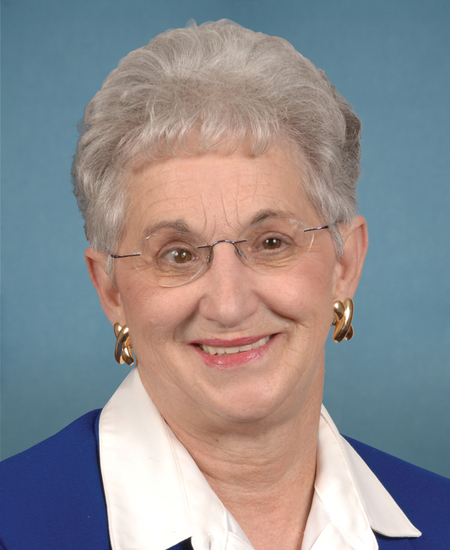
Rep. Virginia Foxx
Sponsored bills
Maddy summaryHR 2240 requires federal agencies to analyze data gaps related to law enforcement safety and wellness. Specifically, it mandates three reports within 270 days of enactment: one on attacks against officers (including ambushes), another on unreported aggressive incidents not meeting crime thresholds, and a third on officer mental health impacts and existing wellness resources. The reports will examine current data collection limitations, training effectiveness, and potential improvements to reporting systems like the Law Enforcement Officers Killed and Assaulted Data Collection. This bill focuses on gathering information to inform future policy decisions, not on creating new programs or funding. It directly affects federal agencies (Attorney General, FBI, National Institute of Justice) and aims to improve understanding of officer safety challenges.
Maddy summaryHRES 352 is a non-binding House resolution calling on elected officials, faith leaders, and civil society leaders to condemn antisemitism and educate the public about Jewish American contributions to U.S. culture, innovation, and society. It specifically urges the executive branch and local leaders to uplift Jewish stories and ensure safety for Jewish Americans in public spaces, workplaces, and on campuses. The resolution references rising antisemitism since October 7, 2023, including reported increases in hate incidents and safety concerns among Jewish communities. It does not create new laws or allocate funds but serves as a formal statement urging existing leaders to take action through education and safety measures.
Maddy summaryThe REG Budgeting Act of 2025 establishes annual limits on federal agencies' "additional unfunded regulatory costs" - costs imposed on individuals or businesses by new rules without prior funding. Agencies must submit proposed limits to the Office of Management and Budget (OMB), which sets annual caps requiring Congressional approval for any limit allowing a net cost increase. Rules exceeding these limits cannot take effect without Congressional approval (via joint resolution), except for emergencies, national security, or international trade agreements. The bill also creates a new OMB position to oversee implementation and mandates annual reports to Congress on compliance.
Maddy summaryHRES 337 is a symbolic House resolution honoring linemen for their critical role in maintaining power infrastructure and responding to emergencies. It recognizes them as first responders who work in dangerous conditions 24/7 to keep electricity flowing, supporting schools and businesses during storms. The resolution formally supports designating April 18, 2025, as "National Lineman Appreciation Day" to publicly acknowledge their contributions. As a non-binding resolution, it has no direct policy impact or effect on affected individuals.
Maddy summaryHRES 294 is a procedural resolution that sets rules for the House to debate and vote on four specific legislative items. It enables consideration of two disapproval resolutions targeting Consumer Financial Protection Bureau rules (one on overdraft fees for large banks, another on digital payment app regulations), a bill limiting court injunctions (H.R. 1526), and a voting rights bill requiring citizenship proof for federal elections (H.R. 22). The resolution waives objections to these items and specifies debate time and amendment procedures. It does not change policy itself but streamlines the process for the House to act on these proposals. This is a procedural step, not a substantive policy change.
Maddy summaryHR 2688, the Protecting Student Athletes’ Economic Freedom Act of 2025, prevents student athletes (and former athletes) from being classified as employees under federal or state law solely due to their participation in varsity intercollegiate athletics. The bill explicitly states that institutions, conferences, or associations cannot treat athletes as employees based on their athletic involvement, competition, or team membership. This directly affects current and former college athletes participating in NCAA or similar varsity sports programs. The law overrides conflicting state or federal employment laws to maintain their non-employee status, focusing solely on clarifying legal classification without altering athletic eligibility or compensation rules.
Maddy summaryThe DETERRENT Act requires higher education institutions receiving federal funding to disclose foreign gifts and contracts meeting certain value thresholds ($50,000 or more for regular foreign sources, all for "foreign countries of concern" or "foreign entities of concern"). Institutions must report details including the foreign source's identity, purpose, and financial value, with all disclosures made public through a searchable database. The bill prohibits contracts with designated "foreign countries of concern" or "foreign entities of concern" without a specific waiver, and includes enforcement mechanisms with fines for non-compliance. Institutions must also maintain policies requiring faculty and staff to disclose foreign connections that meet certain criteria.
Maddy summaryThis bill amends the Food and Nutrition Act of 2008 to change work requirements for SNAP (Supplemental Nutrition Assistance Program) recipients. It adds new exemptions for individuals under 18, over 65, medically certified as unfit for work, parents with children under 7, or pregnant women. It also allows states to request waivers from work requirements in counties with unemployment rates exceeding 10%. These changes directly affect SNAP participants who may qualify for exemptions or live in high-unemployment areas.
Maddy summaryHJRES 82 disapproves the District of Columbia Council's approval of the Insurance Regulation Amendment Act of 2024 (D.C. Act 25-699), a local law that would have amended insurance regulations in Washington, D.C. This procedural resolution, submitted under the District of Columbia Home Rule Act, allows Congress to reject the District's legislative action. The bill itself does not change insurance regulations but formally expresses disapproval of the District's law, preventing it from taking effect.