

Maddy summaryThis is a procedural resolution (HRES 566) that sets the rules for the House to consider the Senate's amendment to H.R. 1, a bill focused on budget reconciliation. It allows the House to debate and vote on the Senate amendment without restrictions, allocating one hour of debate equally between the Budget Committee leadership and the Ways and Means Committee leadership. The resolution itself does not change policy but streamlines the legislative process for this specific budget bill. It directly affects House members during the debate and voting on the Senate amendment.
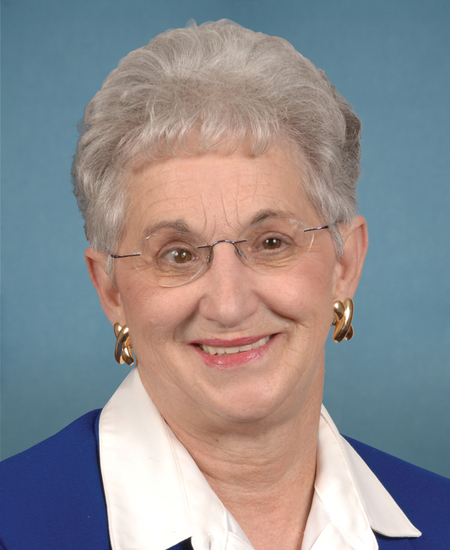
Rep. Virginia Foxx
Sponsored bills
Maddy summaryHR 4148 disapproves a Department of Labor regulation (88 Fed. Reg. 57526) that would have updated wage requirements under the Davis-Bacon Act for federal construction projects. The bill states this regulation "shall have no force or effect," preventing federal contractors from being subject to the proposed changes. This is a procedural measure targeting a specific regulatory update, directly affecting contractors working on federally funded construction projects.
Maddy summaryThis bill makes technical corrections to the Camp Lejeune Justice Act of 2022 to streamline claims for individuals harmed by water contamination at Camp Lejeune. It clarifies the evidence required (30+ days at the base plus a link between contaminants and health harm), specifies that cases must be handled in North Carolina courts (with limited transfer options), and sets attorney fee caps (20% before suit, 25% after). These changes directly affect veterans and civilians who lived at Camp Lejeune and filed claims under the 2022 law. The bill does not create new eligibility but aims to improve the legal process for existing cases.
Maddy summaryHRES 499 is a procedural resolution that establishes the rules for debating and voting on H.R. 4, a bill proposing to rescind certain budget authority. The resolution waives points of order against H.R. 4 and its provisions, limits debate to one hour equally divided between the Majority and Minority Leaders, and allows one motion to recommit. It also specifies that the usual budget process rules (section 1017 of the Impoundment Control Act) do not apply to H.R. 4. This resolution directly affects House procedures for considering the budget-related bill, not the policy outcome itself.
Maddy summaryHR 3913, the "Putting American Students First Act," amends the Higher Education Act to establish specific eligibility requirements for Federal TRIO programs. It requires participants to be U.S. nationals, lawful permanent residents, certain aliens with intent to become permanent residents, citizens of Freely Associated States, CNMI residents under specific compacts, or lawful residents of Freely Associated States. The bill explicitly prohibits waiving these requirements under any current or future appropriations laws or performance partnership pilot authorities. This change directly affects students seeking TRIO program support, which assists low-income, first-generation, and disabled college students. The policy alters who qualifies for these federally funded educational support programs.
Maddy summaryThis resolution (HRES 488) is a symbolic House of Representatives statement condemning an antisemitic terrorist attack in Boulder, Colorado, on June 1, 2025. It specifically denounces Mohammed Sabry Soliman for attacking peaceful demonstrators supporting Hamas hostage release with Molotov cocktails, injuring 14 people (including a Holocaust survivor). The resolution affirms the importance of law enforcement cooperation to prevent such attacks but does not create new laws or policies. As a non-binding resolution, it expresses condemnation and gratitude to law enforcement without altering immigration or security procedures.
Maddy summaryHRES 481 is a symbolic resolution condemning recent antisemitic attacks in the U.S., specifically referencing the June 1, 2025, Boulder, Colorado, assault on a Jewish community gathering and other incidents like the May 2025 Washington, D.C., embassy shooting. It formally recognizes a pattern of violence targeting Jewish individuals and institutions, including attacks during religious events. The resolution calls on law enforcement to thoroughly investigate and prosecute such incidents and urges elected officials to publicly oppose antisemitism and politically motivated violence. As a non-binding resolution, it does not create new laws or allocate funding but serves to affirm congressional stance against antisemitism.
Maddy summaryHR 649, the Whole Milk for Healthy Kids Act of 2025, amends the National School Lunch Act to allow schools participating in the program to offer students both organic and non-organic whole milk, in addition to reduced-fat, low-fat, and fat-free options. Key provisions include clarifying that milk fat in whole milk should not count toward saturated fat limits for meal compliance, prohibiting schools from purchasing milk from Chinese state-owned enterprises, and ensuring schools cannot be barred from offering the full range of milk types listed. The bill directly affects public and private schools serving the National School Lunch Program by expanding their milk options for students. It focuses on concrete policy changes to dietary offerings and sourcing restrictions within the school nutrition program.
Maddy summaryHRES 472 is a symbolic House resolution condemning an antisemitic terrorist attack in Boulder, Colorado, on June 1, 2025, which targeted Jewish individuals. The resolution explicitly condemns the attack - where the perpetrator used Molotov cocktails against victims aged 52-88, including a Holocaust survivor - and calls for prosecuting the perpetrator. It also expresses concern about rising antisemitism on campuses and online, while urging Congress to secure borders and deport visa overstayers (though this is a symbolic call, not a new law). The resolution directly affects the Boulder Jewish community and victims of the attack, with no new policy changes enacted.
Maddy summaryThis bill would reform immigration parole by requiring the Secretary of Homeland Security to grant temporary entry only on a case-by-case basis for urgent humanitarian needs or significant public benefit, reversing what the bill describes as systemic overuse. It imposes a strict annual cap of 3,000 paroles starting in fiscal year 2029, restricts parole for nationals of designated "countries of concern" without a State Department waiver, and allows states to sue if they claim financial harm exceeding $100 from parole decisions. The bill directly affects immigrants seeking temporary entry and DHS officials administering the program. Key mechanisms include the new cap, country restrictions, and state lawsuit provisions to enforce compliance.