

Maddy summaryThe Corporate Prosecution Reform Act establishes a new Office of Corporate Enforcement within the Department of Justice to oversee agreements with companies accused of federal crimes. It restricts the use of deferred and non-prosecution agreements by banning them for offenses involving loss of life, serious injury, or specific crimes like terrorism and human trafficking, while requiring courts to ensure these deals adequately compensate victims and prevent future misconduct. To increase transparency, the bill mandates that the Attorney General publish the full text of all such agreements on a public website and submit annual reports to Congress detailing their terms and compliance. Additionally, the legislation creates standardized guidance for prosecutors to ensure consistent penalties for similar corporate offenses and updates federal crime categories to include cyber and financial crimes.
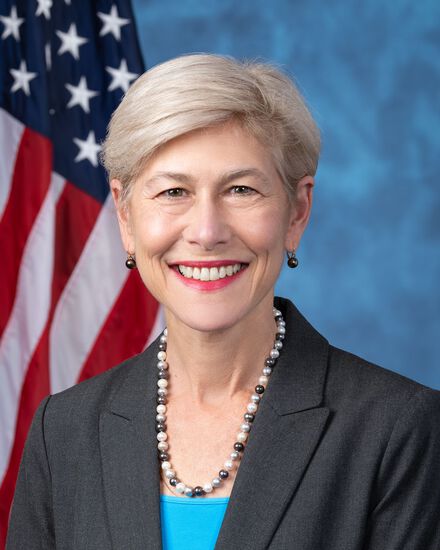
Rep. Deborah K. Ross
Sponsored bills
Maddy summaryThis non-binding resolution expresses the House of Representatives' view that the FDA should regulate mifepristone, a medication used for abortion, based on scientific evidence rather than political pressure. It highlights over 25 years of data showing the drug is safe and effective when prescribed via telemedicine or dispensed by mail and pharmacy. The bill advocates for policies that ensure equitable access to this care, particularly for marginalized communities facing barriers due to state-level restrictions. By citing numerous studies and medical organizations, the resolution calls for transparent, science-based decisions to maintain current access methods.
Maddy summaryThe Supporting Women COPS Act of 2026 creates a 12-member Task Force to study and recommend national hiring standards for law enforcement that do not disadvantage women based on sex. This group will also provide advice on improving retention for female officers and helping them advance to leadership positions. States that adopt these recommendations will receive an additional 5 percent of their federal crime control funding, and the Attorney General will offer technical assistance to help states implement the standards. The Task Force must submit its findings and recommendations to Congress within 18 months of the bill's enactment.
Maddy summaryThe Protecting Our Democracy Act is a comprehensive legislative bill designed to prevent abuses of presidential power, restore checks and balances, and defend elections against foreign interference. Key provisions include prohibiting the President from granting self-pardons, requiring congressional oversight for pardons involving the President or their family, and banning the President from accepting payments from individuals who have received clemency. The bill also strengthens enforcement of the Hatch Act and ethics rules for political appointees, mandates greater transparency in presidential tax returns and campaign finances, and restricts the use of federal property for political conventions. Additionally, it expands reporting requirements for foreign contacts in federal campaigns and imposes stricter penalties for violations of election laws.
Maddy summaryThe Moms Matter Act directs the Department of Health and Human Services to create two main grant programs aimed at improving maternal mental health and reducing health disparities among pregnant and postpartum individuals. The first program provides funding to community organizations and healthcare providers to expand services that integrate mental health care into prenatal and postpartum settings, with a specific focus on groups facing higher risks of mortality and morbidity. The second program offers grants to educational institutions to train and recruit a diverse workforce of mental health professionals who specialize in caring for pregnant and postpartum patients. Both initiatives require recipients to submit annual reports on their activities and outcomes, while the legislation authorizes $25 million and $15 million respectively for each program from fiscal years 2027 through 2031.
Maddy summaryThis resolution honors the 75th anniversary of the American College of Obstetricians and Gynecologists, a professional organization representing over 62,000 doctors who provide essential reproductive and women's health care. The text acknowledges the group's long-standing contributions to improving maternal health, reducing mortality rates, and offering reliable medical information to patients nationwide. While the measure does not alter laws or funding, it formally expresses the House of Representatives' appreciation for the organization's leadership and reaffirms a commitment to supporting women's health and research.
Maddy summaryThis bill establishes a compensation fund to provide financial support to law enforcement officers who actively defended the U.S. Capitol on January 6, 2021, and suffered injuries, emotional distress, or death as a result. The program is administered by a Special Master appointed by the Attorney General, who will review individual claims for economic and non-economic losses while ignoring any questions of negligence. Eligible officers can receive specific payments for their injuries or the death of a colleague, with a guaranteed minimum of $4.975 million for death claims, plus an additional equal distribution to all qualifying officers regardless of injury status. The legislation also includes provisions to reduce payouts by any other compensation the claimant has already received and grants the federal government the right to recover funds if they are later paid out in related legal settlements.
Maddy summaryThe Universal School Meals Program Act of 2026 mandates that all public schools provide free breakfast and lunch to every enrolled student, regardless of income. It establishes specific funding rates for these meals, adjusts payments based on the use of locally sourced food, and eliminates the ability of schools to collect debt for unpaid charges. Additionally, the bill expands free meal access to summer programs, afterschool care, and incarcerated juveniles while updating poverty measurement standards across various federal education and nutrition laws.
Maddy summaryThe Criminal History Access Act expands the types of government entities that can receive criminal history records from the Federal Bureau of Investigation (FBI) for official use. It specifically allows the FBI to share these records with the United States Sentencing Commission, State sentencing commissions, Indian tribes, and State peace officer standards and training agencies. These State agencies are defined as those with statutory authority to set standards for law enforcement hiring, training, and ethical conduct. The bill also broadens the definition of "State" for these purposes to include U.S. territories, and requires the Attorney General to update regulations to reflect these changes within 180 days.
Maddy summaryThis bill would amend federal law to strengthen penalties for organized retail crime by expanding definitions of theft to include digital goods, gift cards, and setting a $5,000 aggregate value threshold for charges over a 12-month period. It would establish a new "Organized Retail and Supply Chain Crime Coordination Center" under Homeland Security to coordinate Federal, State, local, and Tribal law enforcement efforts against cross-jurisdictional theft groups. The Center would share information with retailers, transportation companies, and law enforcement agencies, track crime trends, and produce annual reports on organized retail crime. This legislation directly affects retailers, supply chain businesses, and law enforcement agencies, while targeting organized crime groups responsible for a 93% increase in larceny incidents and rising safety concerns for retail employees. The bill aims to address significant financial losses and supply chain disruptions noted in the National Retail Federation's 2023 data.