

Maddy summaryThe Hydropower Licensing Affordability Act amends the Federal Power Act to modify how federal licenses for hydropower projects are issued. Specifically, it requires that license conditions include measures to reasonably mitigate direct adverse effects on federal reservations and fish populations within applicable river systems. These changes aim to ensure that new or existing hydropower projects address environmental impacts on protected lands and aquatic species before a license is granted. The bill directly affects hydropower project developers and federal agencies responsible for licensing and environmental oversight.
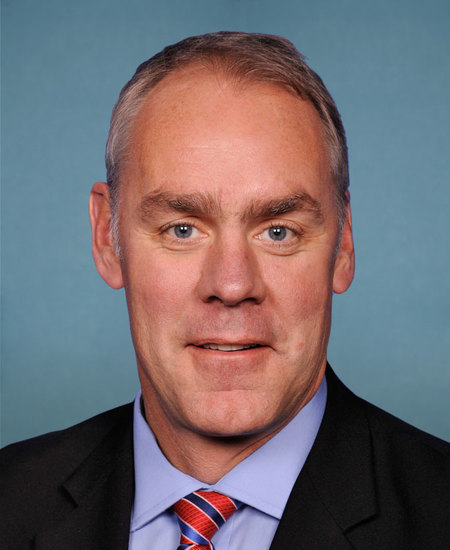
Rep. Ryan K. Zinke
Sponsored bills
Repealing Big Brother Overreach Act This bill repeals the Corporate Transparency Act. The act requires existing companies and newly created companies to report beneficial ownership information to the Department of the Treasury’s Financial Crimes Enforcement Network for purposes of addressing the financing of terrorism and money laundering.
Maddy summaryThis bill requires the Secretary of State to develop a strategy encouraging foreign nations to jointly purchase defense equipment and services from the United States. The legislation mandates the government to identify lead buyers, address licensing challenges, and explore ways to speed up approval processes for these shared procurement efforts. Officials must submit regular reports to Congress every six months for three years, detailing the strategy's progress and any obstacles encountered. The policy aims to streamline how the U.S. sells defense articles to a lead nation who then distributes them to other allied partners under specific agreements.
Maddy summaryThe Public Lands Integrity Act modifies the rules used to determine whether certain budget items are considered "extraneous" or outside the scope of a budget resolution. Specifically, it adds the sale, disposal, or transfer of federal lands to the list of actions that must be treated as extraneous under the Byrd Rule. This change directly affects how Congress evaluates and processes legislation involving the sale of public lands by making it more likely that such provisions will be excluded from budget reconciliation bills. The bill does not authorize the sale of any specific land but instead alters the procedural framework governing how these transactions are handled in the legislative process.
Maddy summaryHR 1041, the Veterans 2nd Amendment Protection Act, prevents the Department of Veterans Affairs (VA) from automatically sending veterans' personal information to the national background check system (NICS) solely because a court has appointed a fiduciary (like a guardian) to manage their benefits. This directly affects veterans who have a fiduciary appointed due to mental health or cognitive challenges but are not deemed a danger to themselves or others. The bill requires a court order finding the veteran poses a danger before any such information can be shared with the NICS. It changes VA procedures to block unnecessary barriers to firearm ownership for veterans who qualify for fiduciary support without a judicial determination of danger.
Maddy summaryHRES 1314, the America 250 Commemorative Flag Act, designates a special flag featuring the number 250 within the circle of stars as an official United States flag for the 250th anniversary of the Declaration of Independence. This resolution authorizes the America 250 flag to be flown alongside the national flag and POW/MIA flags at all government buildings, embassies, and official U.S. locations worldwide during the commemoration year. The bill serves as a ceremonial measure to honor the nation's history and the sacrifices made by patriots, without altering any existing laws or policies.
Maddy summaryThis bill establishes a framework for the Department of the Interior to work with Indian Tribes and Tribal organizations to restore and manage buffalo populations on Indian lands. It authorizes the Secretary of the Interior to provide contracts, grants, and technical assistance to support tribal buffalo restoration programs, commercial buffalo activities, and mobile meat processing facilities. The legislation also requires ongoing consultation between the Department and tribes on buffalo management initiatives and ensures that culturally sensitive tribal information remains confidential. Additionally, the bill allows for the transfer of surplus buffalo from federal lands to Indian lands and explicitly preserves existing treaty rights of Indian Tribes, with all provisions set to expire seven years after enactment.
Maddy summaryThis bill authorizes the U.S. Mint to produce commemorative $5 gold and $1 silver coins marking the 25th anniversary of the September 11, 2001, terrorist attacks. The coins must feature designs honoring victims and first responders (including the inscription "Never Forget") and will be sold only during 2027-2028. All surcharges ($35 per gold coin, $10 per silver coin) collected from sales will fund the National September 11 Memorial and Museum at the World Trade Center, with no net cost to the federal government. The coins are legal tender but primarily intended for collectors, not circulation.
Maddy summaryHRES 64 is a non-binding House resolution affirming the U.S.-South Korea alliance. It highlights historical ties (dating to 1882), economic partnerships (including 2023 trade data), and security cooperation (like the 1953 Mutual Defense Treaty), while celebrating Korean American contributions to U.S. society. The resolution formally supports strengthening security, economic, and cultural ties between the two nations and notes the 2025 anniversary of Korean liberation. It does not create new laws or funding, but serves as a symbolic statement of congressional support for the alliance.
Maddy summaryThis bill would amend federal law to strengthen penalties for organized retail crime by expanding definitions of theft to include digital goods, gift cards, and setting a $5,000 aggregate value threshold for charges over a 12-month period. It would establish a new "Organized Retail and Supply Chain Crime Coordination Center" under Homeland Security to coordinate Federal, State, local, and Tribal law enforcement efforts against cross-jurisdictional theft groups. The Center would share information with retailers, transportation companies, and law enforcement agencies, track crime trends, and produce annual reports on organized retail crime. This legislation directly affects retailers, supply chain businesses, and law enforcement agencies, while targeting organized crime groups responsible for a 93% increase in larceny incidents and rising safety concerns for retail employees. The bill aims to address significant financial losses and supply chain disruptions noted in the National Retail Federation's 2023 data.