

Love Lives On Act of 2025 This bill extends entitlement for various benefit programs and services for surviving spouses of deceased members of the Armed Forces or veterans. The bill provides that the remarriage of a surviving spouse must not bar the furnishing of dependency and indemnity compensation or special pension benefits to such spouse. Additionally, the Department of Defense may not terminate the payment of an annuity for a surviving spouse under the Survivor Benefit Plan solely because the surviving spouse remarries. The bill also expands the definition of a dependent under TRICARE to include a remarried widow or widower whose subsequent marriage has ended due to death, divorce, or annulment.
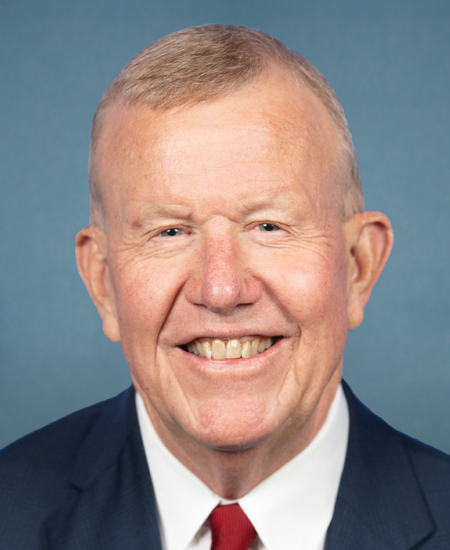
Rep. Mike Ezell
Sponsored bills
Maddy summaryThis bill would prohibit federal laws from requiring manufacturers to install emissions control devices or onboard diagnostic systems on diesel trucks and other motor vehicles. It removes the Environmental Protection Agency's authority to enforce existing emissions regulations and eliminates liability for anyone who manufactures, sells, or modifies vehicles without these devices. The legislation also repeals current federal regulations related to emissions controls and would erase criminal or civil penalties for past violations of these rules.
Maddy summaryHR 1799, the Financial Reporting Threshold Modernization Act, raises reporting thresholds for financial institutions handling large cash transactions. It increases the threshold for currency transaction reports from $10,000 to $30,000 and adjusts suspicious activity report thresholds from $5,000/$2,000 to $10,000/$3,000. The bill requires automatic updates to these thresholds every five years using the Consumer Price Index to account for inflation. This directly affects banks, money services businesses, and other entities that must file these reports under U.S. financial regulations.
Maddy summaryHR 5688, the Non-Domiciled CDL Integrity Act, changes rules for issuing commercial driver's licenses (CDLs) to people who don't live in the state where the license is issued. It allows states to issue CDLs to foreign nationals with lawful U.S. immigration status and work-related visas (valid for up to one year or until their stay ends), requiring states to verify status before issuing and keep records for two years. For residents of U.S. territories like Puerto Rico, it requires proof of U.S. citizenship or permanent residency before issuing CDLs, with similar verification and record-keeping rules. The bill directly affects commercial drivers from foreign countries and U.S. territories seeking CDLs in states where they are not residents.
Vicksburg National Military Park Boundary Modification Act This bill directs the Department of the Interior to convey approximately 7 acres of specified land (in two parcels) within the Vicksburg National Military Park to Mississippi for an interpretive center. The conveyed land must facilitate public access to the park, may not be used in a manner that adversely impacts the park's resources or visitor experience, and remains subject to any use restriction that Interior determines is appropriate. Interior must convey the land by quitclaim deed and without consideration, such as payment. Upon the conveyance of the land, Interior must modify the park's boundary to exclude the land.
Maddy summaryHR 2294 reauthorizes the Integrated Coastal and Ocean Observation System Act of 2009, extending funding and updating governance for the nation's ocean and coastal observation network. It changes references from "Council" to "Committee" throughout the law and adds requirements for federal agencies to collaborate with regional coastal observing systems on data sharing. The bill specifically directs agencies to conduct operational oceanography measurements and establishes $56 million annually for fiscal years 2026 through 2030 to support this system. This bill directly affects federal agencies managing ocean observation programs and regional coastal data networks.
Enhanced Iran Sanctions Act of 2025 This bill imposes sanctions on certain foreign persons (individuals and entities) that are involved in Iran's petroleum sector as well as certain associated persons. The bill also requires or authorizes actions to facilitate the enforcement of sanctions on Iran. Specifically, the bill requires the President to impose visa- and property-blocking sanctions on any foreign person that, after the bill's enactment, knowingly engages in any transaction related to the processing, export, or sale of oil, condensates, gas, liquefied natural gas, or other petrochemical products in whole or in part from Iran. The President must also impose sanctions on certain foreign persons associated with a sanctioned individual or entity. For example, the President must sanction the subsidiaries and corporate officers of a sanctioned business. The bill provides certain exceptions to these sanctions, including specifying that sanctions do not apply to the importation of goods or to conducting or facilitating transactions for humanitarian assistance. The Department of State must establish an interagency working group that shall seek to establish a multilateral contact group to coordinate international efforts to enforce sanctions on Iran. The bill expands the State Department rewards program to authorize a reward payment to any individual who furnishes information leading to the identification of a person (1) subject to sanctions under this bill, or (2) that has attempted or is attempting to evade sanctions under this bill.
Maddy summaryHR 7678, the Gun Owner Registration Information Protection Act, prohibits federal funding for state or local databases that track lawfully owned firearms or their owners. The bill allows federal funding for databases recording lost or stolen firearms but bans it for databases listing legal gun ownership. This means states cannot use federal money to create or maintain systems that compile information about legally owned guns. The bill directly affects state and local governments that rely on federal funds for firearm ownership databases.
Maddy summaryThe Stop Illegal Alien Cops Act amends federal law to modify exemptions for government entities regarding firearms. Currently, federal, state, and local government agencies are generally exempt from many federal prohibitions when acquiring or supplying firearms for official use. This bill would remove that exemption for specific prohibitions, making it unlawful for government entities to provide firearms to or employ individuals who are unlawfully in the United States. Additionally, the bill removes the
Maddy summaryThis bill updates administrative procedures for the Public Safety Officers' Benefits Program to speed up claim processing and expand disability coverage. It requires the Bureau of Justice Assistance to notify claimants about missing information within 90 days and issue interim payments if claims aren't resolved within 270 days, while also mandating annual audits of backlogged claims. The legislation adds benefits for permanent partial disabilities that prevent officers from working in their previous capacity and creates a faster approval process for claims supported by World Trade Center health certifications.