

Maddy summaryHR 6029 amends the Bank Secrecy Act to exempt cash reward payments by nonprofit crime stopper organizations from currency transaction reporting requirements. Specifically, it directs the Treasury Secretary to exempt transactions between a bank and a crime stopper organization when the payment is for a cash reward offered for crime information. This change would eliminate the need for banks to file currency transaction reports for these specific payments. The exemption applies only to nonprofit organizations operating as crime stopper programs that provide cash rewards for crime tips.
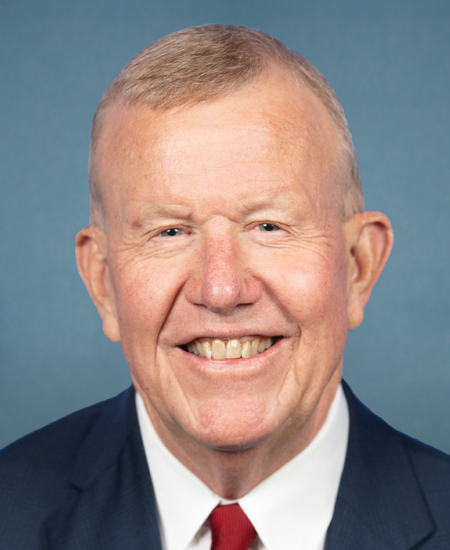
Rep. Mike Ezell
Sponsored bills
Maddy summaryThis bill requires all new passenger vehicles manufactured for sale in the U.S. to include AM radio as standard equipment (not an optional add-on) by 2027-2028, depending on manufacturer size. It mandates that AM radio receivers must be easily accessible to drivers and allows compliance through digital AM broadcast technology. During a transition period, manufacturers must clearly label vehicles without AM radio but cannot charge extra for this feature. The bill also mandates a GAO study on AM radio's role in emergency alerts and includes a 10-year sunset provision for the rule. It preempts state laws regarding AM radio access in vehicles.
Maddy summaryHRES 864 is a ceremonial resolution honoring U.S. veterans on Veterans Day 2025. It does not create new laws or policies but formally recognizes veterans' service and sacrifice, calling on all Americans to observe Veterans Day. The resolution references historical context about Veterans Day's origins (from Armistice Day to honoring all veterans) but contains no concrete policy changes. It directly addresses the general public, urging them to participate in the observance. As a non-binding resolution, it affects no specific individuals or groups through legislative action.
Maddy summaryThis bill ensures that critical firearm-related government operations continue during federal shutdowns. It designates background checks (via the FBI's National Instant Criminal Background Check System), Bureau of Alcohol, Tobacco, Firearms and Explosives enforcement, and firearm export licensing (handled by Commerce and State Departments) as essential services that must remain operational. These functions would be treated as "excepted" under federal law, meaning their employees would continue working even if other government services halt. The bill affects how background checks and firearm export licenses are processed during shutdowns but does not change gun ownership laws or eligibility.
Maddy summaryThis bill extends the Digital Coast program through 2030, amending the existing Digital Coast Act. It requires NOAA to make coastal data "fully and freely available" (not just accessible) and explicitly includes underground infrastructure data in the types of information collected. The changes directly affect NOAA, which manages the program, and entities relying on its coastal data for planning and development. The bill focuses on updating program requirements rather than creating new policies.
Maddy summaryThis bill extends the National Flood Insurance Program (NFIP) through December 31, 2026, by amending key deadlines in the law. It directly affects homeowners and property owners in flood-prone areas who rely on NFIP insurance policies. The bill changes the program's funding expiration date from September 30, 2023, to December 31, 2026, and adds a retroactive provision ensuring the extension applies as if effective September 30, 2025, if enacted after that date. This provides continued access to federally backed flood insurance without immediate disruption.
Maddy summaryThe MARA Act of 2025 establishes a framework for developing sustainable offshore aquaculture (seafood farming in U.S. ocean waters beyond coastal zones). It creates an Office of Aquaculture within NOAA to coordinate research, permit demonstration projects, and develop environmental standards. The bill requires demonstration projects to use native species, minimize environmental impacts, and collaborate with educational institutions, while collecting socioeconomic data. It also creates Aquaculture Centers of Excellence to train workers and support workforce development in coastal communities, aiming to expand domestic seafood production and reduce the U.S. seafood trade deficit.
Maddy summaryThis bill adds Medicare coverage for multi-cancer early detection screening tests (blood or biological tests analyzing cell-free DNA) starting January 1, 2028. It directly affects Medicare beneficiaries aged 68 and older (starting in 2028, with the age limit increasing by 1 year annually), requiring tests to be FDA-cleared and deemed reasonable/necessary by the Secretary for early cancer detection across multiple organ sites. Payment will initially match current stool DNA test rates before 2031, then shift to a lower rate or new payment system after 2031, with limits preventing more than one test per year. The bill explicitly states it does not alter coverage for existing cancer screenings like breast, colorectal, or prostate cancer tests.
Maddy summaryHR 744, the Disaster Management Costs Modernization Act, amends the Robert T. Stafford Disaster Relief Act to allow state and local governments receiving federal disaster funds to reuse "excess" management funds. Specifically, it permits the President to redirect unused funds - defined as the difference between authorized and actual management costs - to support future disaster preparedness, recovery, or mitigation activities. The bill also requires a GAO study within 180 days of enactment to review historical management costs for major disasters over the past five years. No new federal funding is authorized for these changes.
Maddy summaryThis bill would require all states to recognize valid concealed carry permits issued by other states, allowing permit holders to carry concealed handguns (excluding machine guns) in any state that either issues such permits or doesn't prohibit concealed carry. It directly affects law-abiding gun owners with valid permits from their home state, ensuring they can carry in states with similar permit systems or no prohibitions. Key provisions include treating valid permit documents as proof of legal carry (reducing officer stops), shifting the burden of proof to prosecutors if challenged, and allowing civil lawsuits for violations with attorney's fee awards. The bill does not override state laws restricting firearms on private property or government land, nor does it affect federal gun restrictions like those in section 922(q).