Go Woke, Go Broke Act This bill abolishes the Advisory Committee on Racial Equity in the Department of the Treasury. The bill also prohibits Treasury from reestablishing this advisory committee or establishing any substantially similar advisory committee.
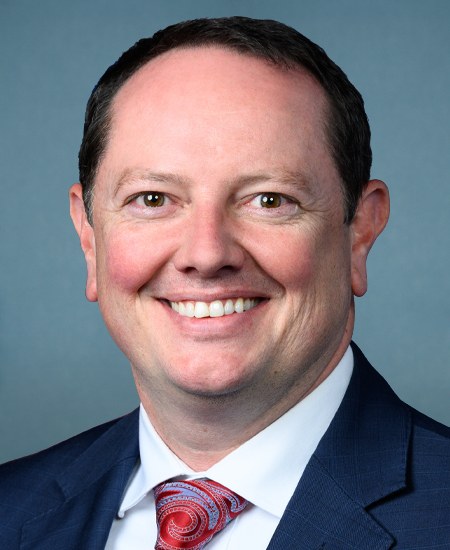
Rep. Eric Burlison
Sponsored bills
Maddy summaryHR 2743 prohibits large financial institutions (over $100 billion in assets) from denying banking services to lawful businesses based on subjective political reasons, industry type, or reputational concerns. It requires these institutions to use objective, risk-based assessments for service decisions and provide written justifications for denials. The law applies to banks, credit unions, and payment networks, with civil penalties for violations including fines up to $10,000 per incident. It specifically ensures businesses operating legally under federal law receive fair access to financial services without discrimination. The bill mandates that denials be based on documented risk factors, not political bias or category-based exclusion.
Maddy summaryThe Freedom from Government Competition Act of 2023 requires federal agencies to obtain most goods and services from private companies through competitive bidding instead of providing them through government operations. Exceptions apply only when the law mandates government provision, for national defense or homeland security, for inherently governmental functions, or when no private source exists. Agencies must conduct competitive analyses to confirm private sector provision offers the best value to taxpayers and submit annual reports to Congress with a 5-year plan to transition commercial activities to private companies. This policy directly affects federal agencies and private sector providers by shifting procurement responsibilities away from government-run services.
Maddy summaryHJRES 27 is a congressional resolution seeking to block a federal rule that redefined which waterways fall under the Clean Water Act's protections. It targets a rule submitted by the Army Corps of Engineers, Department of Defense, and Environmental Protection Agency (EPA) on January 18, 2023, which aimed to revise the "Waters of the United States" definition. The resolution would formally disapprove this rule under a specific federal procedure (Chapter 8 of Title 5), preventing it from taking effect. This would directly affect how federal agencies regulate pollution and development near water bodies, including wetlands and smaller streams.
Ensuring United Families at the Border Act This bill addresses the treatment of children who are non-U.S. nationals ( aliens under federal law), including by statutorily establishing that there is no presumption that such a child (other than an unaccompanied child) should not be detained for immigration purposes. Specifically, the bill states that the detention of such minors shall be governed by specified sections of the Immigration and Nationality Act and not any other provision of law, judicial ruling, or settlement agreement. (A 1997 settlement agreement, commonly known as the Flores agreement, imposes requirements relating to the treatment of detained alien minors, including requiring such minors to be released or placed in a nonsecure facility after a certain amount of time in detention.) If an adult enters the United States unlawfully with their child, DHS must detain the adult and child together if the only criminal charge against the adult is a misdemeanor for unlawful entry. This bill also prohibits states from imposing licensing requirements on immigration detention facilities used to detain minors or families with minors.
Maddy summaryHR 2620, the Federal Firearms Licensee Protection Act of 2023, increases penalties for crimes targeting firearms licensees. It amends Section 924 of Title 18 to impose mandatory minimum sentences of 3 years for burglaries or 5 years for robberies committed at the business premises of licensed firearms dealers, manufacturers, or importers. The bill specifically targets violations of Section 922(u), which prohibits unauthorized access to these premises, and adds "attempts to do so" to the penalties. This directly affects licensed firearms businesses by strengthening legal protections against theft or violence at their locations. The law creates clearer, harsher consequences for crimes committed during burglaries or robberies at these specific business sites.
Maddy summaryHR 2581, the ALVIN Act, prohibits all federal funding for the Manhattan District Attorney’s Office. It cancels unspent federal funds allocated to the office and requires the office to repay all federal money spent since January 1, 2022. The bill directly affects the Manhattan DA’s Office by cutting its federal financial support and mandating reimbursement for past expenses. It does not change any laws or policies but alters the funding relationship with the federal government.
Maddy summaryThis bill terminates the national emergency declared by the President on March 13, 2020, under the National Emergencies Act. It ends the executive branch's authority to use emergency powers related to that specific declaration. The resolution passed both chambers in early 2023 and took effect April 10, 2023, without creating new policies or affecting specific groups.
Maddy summaryThe Safe Students Act (HR 2502) repeals the Gun-Free School Zones Act of 1990, which had prohibited possessing firearms in federally designated school zones under federal law. It also amends related sections of Title 18 (U.S. Code) to remove references to the repealed law and adjust section numbering. This bill does not establish a new federal rule for school zones; it solely eliminates the existing federal prohibition on firearms in school zones. The repeal means the federal government would no longer enforce this specific ban, though state laws may continue to regulate firearms in schools.
Maddy summaryHR 1768, the NIH Reform Act, reorganizes the National Institutes of Health (NIH) by splitting the existing "National Institute of Allergy and Infectious Diseases" into three distinct institutes: the National Institute of Allergic Diseases, the National Institute of Infectious Diseases, and the National Institute of Immunologic Diseases. The bill updates titles, responsibilities, and leadership structures in the Public Health Service Act, including requiring presidential appointments with Senate confirmation for directors of the new institutes, each serving 5-year terms (with one possible reappointment). It mandates a transition period where the NIH Director oversees the new institutes until their directors are appointed, and updates all references to the former institute in federal law. This change directly affects NIH’s internal structure, leadership appointments, and administrative documentation, without altering research funding or policy priorities.