

Maddy summaryThis concurrent resolution directs the President to withdraw U.S. military forces from active hostilities with Iran. The measure relies on the War Powers Resolution, requiring the President to end combat operations unless the forces are needed to defend the United States or its allies from an immediate attack. Any continued use of troops in such defensive scenarios must still follow specific reporting and notification rules, and full military engagement is only permitted if Congress explicitly authorizes it through a formal declaration of war or a specific authorization for force.
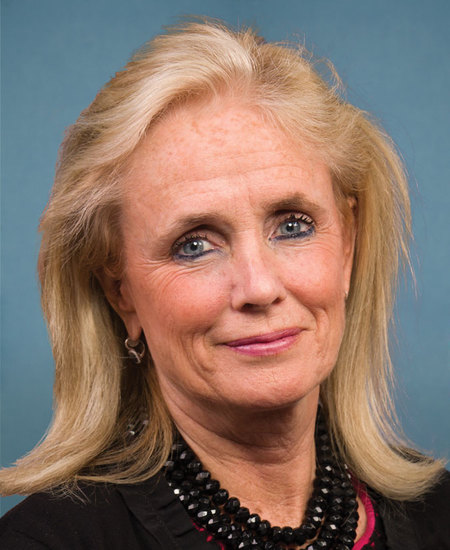
Rep. Debbie Dingell
Sponsored bills
Maddy summaryThis bill nullifies a specific decision made by the Endangered Species Committee regarding oil and gas operations in the Gulf of America. It immediately cancels any exemptions previously granted to these activities under the Endangered Species Act and bars federal agencies from using funds to enforce the canceled order. For a three-year period starting when the bill is enacted, the committee is prohibited from issuing any new exemptions for Gulf oil and gas projects. Consequently, all standard environmental protections required by the Endangered Species Act will continue to apply fully to these activities.
Maddy summaryThis bill creates federal programs to advance alternative protein production through biomanufacturing and bioprocessing. It authorizes $15 million annually for research centers focused on protein diversification, $50 million for grants to companies building food biomanufacturing facilities, and $25 million for workforce development programs. The bill also requires a national strategy on protein security coordinated across multiple federal agencies. These provisions aim to strengthen food supply chains, create jobs in the growing protein sector, and reduce reliance on foreign commodities. The bill explicitly excludes insect-based food production from its scope.
Maddy summaryThis bill expands access to Fisher Houses - temporary lodging near VA medical facilities - for veterans receiving care at non-VA locations who travel significant distances, and for family members providing support during treatment. It adds specific rules allowing these groups to use available space in Fisher Houses on a space-available basis, without changing existing funding or facility construction. Fisher Houses are privately donated facilities managed by the Fisher House Foundation and located near VA medical centers. The bill clarifies eligibility under current VA lodging programs but does not create new housing or alter costs.
Maddy summaryThis bill protects funding and staffing at the Department of Veterans Affairs (VA). It prevents the government from holding back or redirecting VA funds without new law, and requires the VA to notify Congress if funding shortfalls approach. The bill exempts the VA from hiring freezes through 2029, mandates reinstating veterans fired between 2025 and the bill’s enactment, and requires special legal authorization for layoffs (including probationary employees). The VA must also submit annual compliance reports to Congress.
Dental Care for Veterans Act This bill expands eligibility for veterans for dental care provided by the Department of Veterans Affairs (VA). Specifically, the bill makes all veterans who are enrolled in the VA health care system eligible for VA-provided dental services. Currently, only veterans who have a service-connected dental issue or meet other narrow criteria are eligible for certain dental services. The bill phases in eligibility over four years based upon existing eligibility, degree of service-connected disability or other disability, prisoner of war status, award of a Purple Heart, financial need, or VA health care eligibility.
Maddy summaryThe IMPACT to Save Moms Act directs the Centers for Medicare & Medicaid Services to run a five-year demonstration project from 2027 to 2031, allowing states to test new payment models for maternity care under Medicaid and state child health plans. This initiative aims to improve health outcomes for pregnant and postpartum individuals, with a specific focus on reducing disparities among groups that experience higher rates of maternal mortality and severe complications. To achieve these goals, the project requires states to consider alternative payment structures that account for pregnancy risk levels, include diverse care teams with training on bias, and address social factors affecting health. The bill also mandates that the federal government evaluate the project's impact on health outcomes and spending, and submit a final report to Congress with recommendations on whether to expand the program nationwide.
Maddy summaryThis bill prohibits Members of Congress and their survivors from receiving federal retirement benefits if they are convicted of specific sexual offenses committed on or after the law's enactment. It also bars pension payments for individuals who are under indictment for these crimes and willfully remain outside the United States for more than a year to avoid prosecution. Additionally, the legislation allows funds that would have gone to a convicted member's pension to be redirected to pay court-ordered restitution to victims of the sexual offenses.
Maddy summaryThis bill strengthens safety standards for dams and hydropower facilities by requiring the Federal Energy Regulatory Commission (FERC) to ensure that licensees can maintain and operate these structures safely. It mandates that new licenses are only issued if a dam meets current safety requirements or includes a specific plan to fix existing non-compliance issues. Additionally, the legislation establishes procedures to evaluate an applicant's financial ability to meet safety standards and requires FERC to hold a technical conference with states to discuss dam maintenance and climate risks. The bill also improves communication between FERC and states by notifying them when repairs are required or when a license is revoked, and by sharing detailed records about the dam's condition and history upon license termination.
Maddy summaryH.R. 1295 is a non-binding resolution that expresses support for designating May 17, 2026, as DIPG Awareness Day to highlight diffuse intrinsic pontine glioma, a rare and aggressive brain tumor affecting children. The bill aims to increase public awareness of this condition and encourage research into treatments and cures for pediatric cancers. It calls on the public to learn more about DIPG and urges both government and private funding sources to consider the high mortality rates and lost life years associated with the disease when allocating research grants.