

In committee Sep 10, 2026
0 co-sponsors
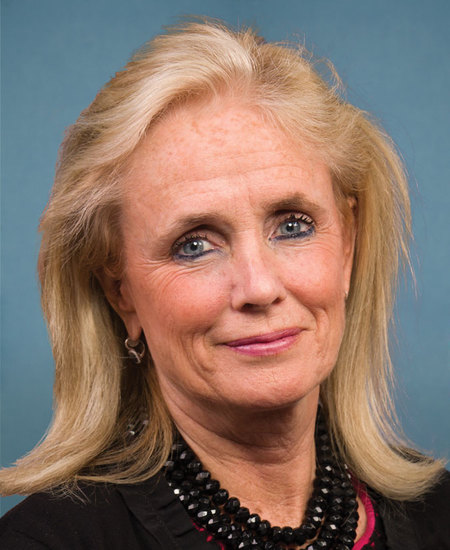
Rep. Debbie Dingell
Total votes
2,818
all sessions
Attendance
97%
89 missed
Near the chamber average
With party
98%
of cast votes
Higher than 93% of chamber peers
Bipartisan score
1%
crosses aisle rarely
Lower than 94% of chamber peers
Sponsored
1,784
bills & resolutions
Higher than 92% of chamber peers
Committees
7
assignments
1,784 bills and resolutions
Sponsored bills
Total
1,784
Primary
189
Co-sponsor
1,595
This page
1,784
matching current filters
Recognizing suicide as a serious public health problem, expressing support for the designation of September 8, 2026, as "988 Day" and the role of the 988 Suicide and Crisis Lifeline, and for other purposes.
Maddy summaryThis House resolution formally recognizes suicide as a significant public health issue in the United States and highlights the impact of the 988 Suicide and Crisis Lifeline on individuals and communities. It commends the establishment of the 988 number as a nationwide three-digit dialing code for crisis support, noting its role in connecting people to mental health resources. The bill supports the designation of September 8, 2026, as "988 Day" to raise awareness about the service and promote access to mental health care. Additionally, it encourages continued public education and federal, state, and local efforts to expand crisis intervention programs for high-risk populations.
In committee Sep 8, 2026
1 co-sponsor
National Fossil Act of 2026
Maddy summaryThis bill designates the American mastodon as the national fossil mammal and the Tyrannosaurus rex as the national fossil dinosaur for the United States. It achieves this by amending Title 36 of the U.S. Code to officially recognize these specific species within the legal framework for national symbols. The changes update the relevant chapter heading to include "fossil" and add a new section to formally establish these designations.
In committee Sep 8, 2026
1 co-sponsor
Recognizing the 25th anniversary of the terrorist attacks of September 11, 2001, honoring the memory of the victims, recognizing the courage and sacrifice of the heroes who answered the call to serve, acknowledging the charitable organizations that continue to support survivors and victims' families, and reaffirming the enduring commitment of the United States to never forget.
Maddy summaryThis House resolution marks the 25th anniversary of the September 11, 2001 terrorist attacks by formally honoring the memory of the nearly 3,000 victims and recognizing the sacrifices made by first responders, military personnel, and the passengers of United Airlines Flight 93. The bill acknowledges the ongoing health challenges faced by survivors and responders, highlighting the role of the World Trade Center Health Program in providing long-term medical support. It also credits charitable organizations and community groups that have continued to assist victims' families and veterans over the past two decades. Finally, the resolution urges the American public to observe the anniversary with ceremonies and reaffirms Congress's commitment to remembering the events and lessons of that day.
In committee Sep 3, 2026
1 co-sponsor
9–8–8 Implementation Act of 2026
Maddy summaryThe 9-8-8 Implementation Act of 2026 expands federal funding and mandates insurance coverage for behavioral health crisis services, directly affecting individuals experiencing mental health or substance use emergencies as well as the providers who serve them. The bill authorizes grants to upgrade local lifeline call centers, build new crisis stabilization facilities, and train a larger workforce of behavioral health professionals. It requires Medicare, Medicaid, private group health plans, TRICARE, and other federal insurance programs to cover crisis response services with financial terms no more restrictive than standard medical care. Additionally, the legislation establishes a federal panel to develop training protocols for 9-1-1 dispatchers to better connect callers to appropriate crisis care rather than law enforcement responses.
In committee Sep 3, 2026
1 co-sponsor
Launching with Healthcare Act
Maddy summaryThe Launching with Healthcare Act extends the period during which young adults must be covered under their parents' health insurance plans from age 26 to age 31. This change directly affects individuals up to age 31 and the employers or insurers providing these family coverage plans. The bill amends the Public Health Service Act to implement this new age limit, with the provision taking effect for plan years that begin after December 31, 2026.
In committee Sep 3, 2026
1 co-sponsor
National Emergency Medical Services Memorial Extension Act
National Emergency Medical Services Memorial Extension Act This bill reauthorizes the National Emergency Medical Services Memorial Foundation to establish in Washington, DC, a monument to commemorate the commitment and service represented by emergency medical services. This authorization expires seven years after enactment of the bill.
Passed Sep 3, 2026
1 co-sponsor
Automotive National and Economic Security Act of 2026
Maddy summaryThe Automotive National and Economic Security Act of 2026 directs the Secretary of Commerce to conduct a study on commercial partnerships between U.S. automotive manufacturers and entities controlled by foreign adversaries. The bill defines these covered activities to include ownership interests, joint ventures, technology sharing agreements, and investments involving critical hardware or software for vehicles and automated driving systems. The study must assess potential impacts on national security, economic competitiveness, and intellectual property protection, including any involvement of state-directed investment vehicles from adversary nations. Within two years of enactment, the Secretary is required to submit a report to Congress and publish an unclassified summary online while protecting confidential business information and trade secrets.
In committee Sep 1, 2026
1 co-sponsor
GUARD Act of 2026
Maddy summaryThe GUARD Act of 2026 requires U.S. national security agencies to evaluate whether humanoid or quadruped robots made by foreign entities pose a risk to national security. If a robot is determined to be unsafe or comes from a country of concern, the Federal Communications Commission will add it to a banned list, preventing its use in U.S. communications networks. The law mandates that agencies report their findings to Congress within specific timeframes, ensuring transparency about these security assessments. Importantly, the rule does not apply to allies such as NATO members or designated Major Non-NATO Allies.
In committee Sep 1, 2026
1 co-sponsor
Strategic Task Force on Scam Prevention Act
Maddy summaryHR 5967 establishes a federal task force led by the FTC and DOJ to combat scams. The task force, including agencies like the FBI, SEC, and Social Security Administration, will develop a national strategy using existing tools such as the Consumer Sentinel Network and Internet Crime Complaint Center. Key actions include public education, coordination with industry (like banks and social media platforms), and enforcement using current laws against fraud and money laundering. The task force must report to Congress within one year and dissolve after 10 years.
In committee Sep 1, 2026
1 co-sponsor
Ask Maddy
·
AI policy assistant
Ask Maddy about Debbie Dingell
Scope: florida
Hi! I can help you understand Debbie Dingell's legislative record. What would you like to know?
Try one of these
i
Maddy answers using official bill text and legislative records. Always verify before sharing.
Sources cited inline