

Maddy summaryThis bill amends the Federal Funding Accountability and Transparency Act of 2006 to require faster public access to information about federal awards. It directly affects government agencies that issue federal funding and the public seeking transparency on how those funds are used. The key provision changes the posting deadline from 30 days after an award is given to just 3 days, ensuring more immediate public availability of award data. This change aims to improve real-time transparency without altering the underlying funding process or eligibility requirements. The bill focuses solely on accelerating the timing of information disclosure rather than changing how awards are distributed or managed.
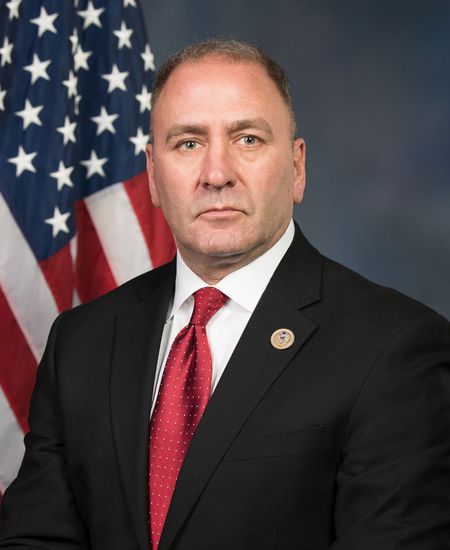
Rep. Clay Higgins
Sponsored bills
Maddy summaryThis bill, titled the National Guard Protective Zone Act, creates a new federal crime for knowingly entering or staying within a designated area around National Guard members during authorized deployments. The law defines a protective zone as a 15-foot perimeter marked by signs, tape, or verbal warnings, making it illegal to enter with the intent to impede, intimidate, or interfere with the Guard member's duties. Penalties include fines and up to one year in prison, increasing to five years if the offender makes physical contact, throws an object, or spits on the service member. The legislation explicitly states that it does not prohibit First Amendment activities conducted outside the established protective zone.
Maddy summaryThis bill, titled the Interstate Milk Freedom Act of 2026, would prevent federal agencies from blocking the sale of unpasteurized milk and milk products across state lines. It allows such products to be shipped interstate if they are packaged for direct human consumption, produced in a state that permits their sale, and intended for another state that also allows their distribution. The legislation defines specific terms like "cowshare" to include ownership interests in dairy animals and clarifies what constitutes pasteurization. Importantly, the bill does not override state laws and only restricts federal interference when the product meets the stated conditions.
Maddy summaryThis bill, known as the Mail Ballot Integrity Act, would require states to stop sending unsolicited mail-in ballots to voters for federal elections. Under the law, individuals must actively request a mail-in ballot by submitting a written or electronic request that includes a sworn statement confirming they meet specific eligibility criteria. The bill limits who can receive these ballots to groups such as active-duty military personnel, students living away from home, clergy, people with disabilities, seniors aged 65 and older, and others with temporary mobility or residency issues. States could maintain lists of voters who previously qualified for mail-in voting, but only if those voters continue to meet the established eligibility requirements. The changes would take effect for federal elections occurring on or after the bill is enacted.
Maddy summaryThis bill, titled the Protect Liberty and End Warrantless Surveillance Act of 2026, reforms the Foreign Intelligence Surveillance Act and adds protections for data brokers to limit how law enforcement and intelligence agencies can access personal information. The legislation prohibits warrantless queries of communications belonging to U.S. persons, requires court orders before accessing certain data from third-party providers, and mandates greater transparency in surveillance directives. It also expands the role of independent advocates in surveillance court proceedings and restricts the use of illegally obtained data from data brokers in legal proceedings.
Maddy summaryThis bill, titled the Alien Banking Act, requires individuals opening bank accounts in the United States to attest, under penalty of perjury, to their lawful immigration status. Financial institutions would be prohibited from opening or maintaining accounts for individuals who do not provide this attestation or are determined to be unlawfully present. The bill establishes significant civil and criminal penalties, including fines, imprisonment, and asset forfeiture, for individuals who knowingly make a false attestation regarding their immigration status. It also mandates that financial institutions report any suspected false attestations to federal authorities.
Maddy summaryThis bill, known as the No Free Rides Act of 2026, would prohibit federal public transportation funding recipients from offering universal free fare policies that allow all riders to use transit services without paying. The law would still permit targeted fare policies that provide free or reduced-cost rides for specific groups such as seniors, low-income riders, students, or employees with employer-paid agreements. Additionally, the Secretary of Transportation could grant waivers if a transit agency can demonstrate a dedicated non-federal revenue source to support universal free fare programs. The measure directly affects public transportation agencies that receive federal assistance under Title 49 of the United States Code.
Maddy summaryHR 7678, the Gun Owner Registration Information Protection Act, prohibits federal funding for state or local databases that track lawfully owned firearms or their owners. The bill allows federal funding for databases recording lost or stolen firearms but bans it for databases listing legal gun ownership. This means states cannot use federal money to create or maintain systems that compile information about legally owned guns. The bill directly affects state and local governments that rely on federal funds for firearm ownership databases.
Maddy summaryThe Stop Illegal Alien Cops Act amends federal law to modify exemptions for government entities regarding firearms. Currently, federal, state, and local government agencies are generally exempt from many federal prohibitions when acquiring or supplying firearms for official use. This bill would remove that exemption for specific prohibitions, making it unlawful for government entities to provide firearms to or employ individuals who are unlawfully in the United States. Additionally, the bill removes the
Maddy summaryHRES 1076 is a House resolution recognizing the 10th anniversary of the first U.S. liquefied natural gas (LNG) export shipment from the lower 48 states, which occurred on February 24, 2016. The resolution celebrates this milestone as a historic achievement in American energy production, highlighting its role in supporting over 273,000 annual jobs and $400 billion in economic growth over the past decade. It honors the workers and communities involved and acknowledges LNG exports' contribution to U.S. economic growth, energy security, and global partnerships. The resolution has no binding effect or policy changes - it solely expresses recognition of a past event.