

In committee Jul 22, 2026
1 co-sponsor
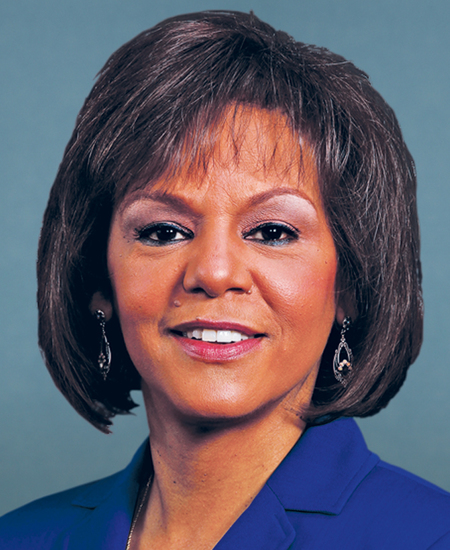
Rep. Robin L. Kelly
Total votes
2,818
all sessions
Attendance
98%
67 missed
Near the chamber average
With party
98%
of cast votes
Higher than 84% of chamber peers
Bipartisan score
1%
crosses aisle rarely
Lower than 84% of chamber peers
Sponsored
1,321
bills & resolutions
Higher than 80% of chamber peers
Committees
4
assignments
1,321 bills and resolutions
Sponsored bills
Total
1,321
Primary
72
Co-sponsor
1,249
This page
1,321
matching current filters
Get Foreign Money Out of United States Elections Act
Maddy summaryThis bill expands federal election laws to prevent foreign nationals from influencing U.S. elections by tightening restrictions on domestic companies with significant foreign ownership or control. It requires businesses that are at least 50% owned by foreign individuals, or those with specific foreign influence, to file a sworn certification proving they are not foreign-controlled before making any political donations or spending money on election activities. Additionally, the law clarifies that these rules apply to state and local ballot initiatives and mandates that corporate political action funds certify their managers and board members are U.S. citizens or permanent residents. The legislation also prohibits recipients of funds from these businesses from using the money for further political contributions unless they receive and verify the required compliance certification.
In committee Jul 22, 2026
1 co-sponsor
Tuskegee Airmen Memorial Act of 2026
Maddy summaryThe Tuskegee Airmen Memorial Act of 2026 authorizes the organization Tuskegee Airmen, Inc. to build a commemorative monument on federal land in Washington, D.C., honoring the original Tuskegee Airmen who served in World War II. This legislation allows the group to accept private donations and cover all costs for the project without using federal funds, while requiring any leftover money to be deposited into specific government accounts. The bill also mandates that the memorial be constructed in compliance with existing federal standards for commemorative works.
In committee Jul 22, 2026
1 co-sponsor
Medicare Dental Benefit Act of 2026
Maddy summaryThis bill amends Medicare to cover dental and oral health services for the first time, affecting all current and future Medicare beneficiaries. It defines covered services to include routine cleanings, fillings, extractions, root canals, crowns, dentures, and emergency care. For most individuals, federal payment for these services will gradually increase from 0% to 80% over an eight-year period, while low-income individuals eligible for prescription drug subsidies will receive 80% coverage immediately. The legislation also establishes frequency limits, such as two cleanings and exams per year and a five-year limit on full dentures, and requires the U.S. Preventive Services Task Force to include at least one oral health professional.
In committee Jul 22, 2026
1 co-sponsor
Recognizing the significance of equal pay and the disparity in wages paid to men and to Black women.
Maddy summaryThis concurrent resolution formally recognizes the persistent wage gap between Black women and white, non-Hispanic men in the United States. It highlights data showing that Black women earn significantly less than their male counterparts and reaffirms Congress's support for existing laws that prohibit pay discrimination based on sex or race. The document does not create new laws or change policy but serves as a symbolic statement to raise awareness about the economic disparities faced by Black women.
In committee Jul 21, 2026
1 co-sponsor
Action for Dental Health Act
Maddy summaryHR 2001 increases annual funding for a grant program supporting dental workforce development from $13.9 million to $15 million, extending the program through fiscal years 2026-2030 (previously 2019-2023) under the Public Health Service Act. The bill modifies existing funding levels to maintain support for addressing dental workforce shortages, with funds remaining available until expended. This change directly affects the operation of the grant program and its ability to fund dental workforce initiatives.
Budget & TaxesSupports Budget & TaxesIncreases dental workforce grant funding from $13.9M to $15M, extending program support through 2030, directly advancing public health funding.
HealthcareSupports HealthcareIncreases dental workforce grant funding ($13.9M→$15M) to address workforce shortages, directly advancing healthcare access under Public Health Service Act.
Labor & EmploymentSupports Labor & EmploymentBill increases funding for dental workforce development grants, directly advancing employment standards and workforce training in healthcare sector.
Passed Jul 21, 2026
0 co-sponsors
Tyler’s Law
Maddy summaryHR 2004, titled "Tyler’s Law," requires the Secretary of Health and Human Services to study how often hospital emergency departments test for fentanyl during overdose cases (beyond standard drug tests), including associated costs, patient benefits/risks, and impacts on privacy and patient-physician relationships. The study must be completed within one year of the bill's enactment. Based on the study results, the Secretary must issue guidance within six months on whether emergency departments should routinely test for fentanyl, how to inform clinicians about test contents, and how such testing may affect future overdose risks and health outcomes. This bill directly affects hospital emergency departments and patients experiencing overdoses by shaping future testing protocols.
In committee Jul 21, 2026
1 co-sponsor
Combating Illicit Xylazine Act
Maddy summaryHR 1266, the Combating Illicit Xylazine Act, adds xylazine - a veterinary sedative increasingly found in illicit drug mixtures - to Schedule III of the Controlled Substances Act, regulating its use and trafficking. It directly affects veterinarians, animal owners, and manufacturers by allowing xylazine to be legally dispensed for animal use under specific veterinary prescriptions, while prohibiting non-veterinary human use. The bill includes transition periods (60 days for practitioners, 1 year for labeling) to ease compliance for manufacturers and practitioners, and requires the DEA and FDA to expedite necessary applications. It also mandates two congressional reports on xylazine's illicit use and trafficking patterns, and directs the Sentencing Commission to review penalties for offenses involving xylazine.
In committee Jul 21, 2026
1 co-sponsor
Of inquiry requesting the President and directing the Secretary of Health and Human Services to transmit, respectively, certain documents to the House of Representatives relating to the freeze on State-based Temporary Assistance for Needy Families, Child Care and Development Fund, and Social Services Block Grant payments for California, Colorado, Illinois, Minnesota, and New York.
Maddy summaryThis resolution asks the President and the Secretary of Health and Human Services to provide the House of Representatives with specific documents regarding a freeze on federal payments to five states. The requested materials include communications about how the payment freeze was decided, records of the tweet that announced it, and details on funding drawdowns, disciplinary actions, and data sharing plans related to those states. The bill specifically targets documents concerning Temporary Assistance for Needy Families, Child Care, and Social Services Block Grant programs in California, Colorado, Illinois, Minnesota, and New York. If the agencies possess the records, they must submit them to Congress within 14 days of the resolution's adoption.
In committee Jul 15, 2026
1 co-sponsor
Mamas First Act
Maddy summaryThe Mamas First Act aims to reduce maternal mortality rates by expanding Medicaid coverage to include support services from doulas, midwives, tribal midwives, and lactation providers. This legislation modifies the Social Security Act to allow these professionals to bill Medicaid for prenatal, labor, and postpartum care delivered in various settings, including homes, hospitals, and clinics. To qualify for reimbursement, doulas must hold a certification requiring continuing education and gather specific client or provider recommendations, while midwives and lactation support providers must meet defined state or international standards. The bill also prohibits Medicaid programs from charging copayments or deductibles for these essential services, with the changes taking effect on January 1, 2027.
In committee Jul 15, 2026
1 co-sponsor
Ask Maddy
·
AI policy assistant
Ask Maddy about Robin L. Kelly
Scope: florida
Hi! I can help you understand Robin L. Kelly's legislative record. What would you like to know?
Try one of these
i
Maddy answers using official bill text and legislative records. Always verify before sharing.
Sources cited inline