

Maddy summaryThe ARMAS Act of 2025 transfers control of certain firearms export regulations from the Department of Commerce to the Department of State to better regulate exports to Mexico, Central America, and the Caribbean. It designates specific countries (including Mexico, Guatemala, Honduras, and El Salvador) as "covered countries" requiring stricter export oversight, including mandatory annual reports on firearms exports and end-use monitoring to prevent diversion to criminal groups. The bill requires the Department of State to develop a strategy to disrupt illegal firearm trafficking, including increased participation in the eTrace program for tracking U.S.-sourced firearms and improved data sharing with foreign governments. Based on findings that U.S.-sourced firearms are commonly used in crimes in these regions, the act aims to reduce the flow of weapons that fuel violence and crime.
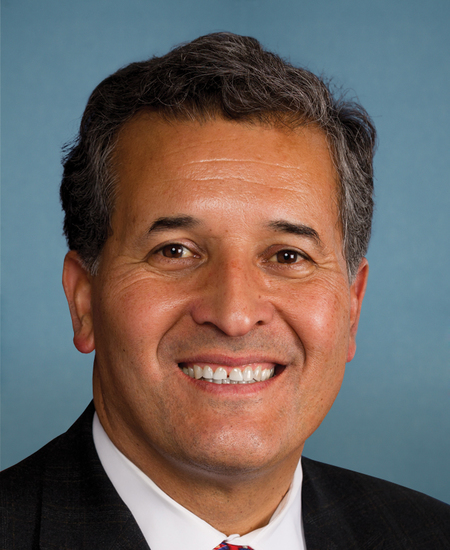
Rep. Juan Vargas
Sponsored bills
Maddy summaryThe Protect America's Workforce Act cancels an executive order issued on March 27, 2025, that excluded certain groups from federal labor-management relations programs, making it legally unenforceable. It also ensures that all collective bargaining agreements between federal agencies and labor unions, which were active as of March 26, 2025, remain fully effective until their agreed terms expire. This directly affects federal agencies, labor unions, and the employees covered by these agreements. The bill prevents federal funds from being used to implement the canceled executive order while preserving existing labor agreements.
Maddy summaryHRES 948 is a commemorative resolution honoring the 50th anniversary of Southeast Asian refugee resettlement in the United States, directly affecting over 3 million Southeast Asian Americans. It recognizes their contributions to U.S. society, including military service during the Vietnam War era and ongoing cultural, economic, and social impacts. The resolution specifically commemorates key historical milestones (like the fall of Saigon and Khmer Rouge genocide) and acknowledges challenges these communities continue to face, such as health disparities and language barriers. It does not create new policies but affirms the nation's commitment to supporting refugees and immigrants. The resolution was introduced by Representatives Tran, Meng, Barragán, and others in December 2025.
Maddy summaryHR 6682, the Endometriosis CARE Act, requires federal agencies to advance research, improve treatment access, and increase awareness for people with endometriosis - a chronic condition causing pelvic pain and fertility challenges affecting an estimated 10% of reproductive-age individuals. The bill mandates $50 million annually for NIH research on endometriosis treatments and cures, directs HHS to analyze barriers like insurance coverage and provider shortages in accessing care, and funds public education campaigns targeting underserved racial, ethnic, and minority groups. It also requires HHS to develop provider training materials on diagnosis and care, and to commission a National Academies study on disparities in endometriosis treatment across race, geography, and insurance status. The legislation focuses on data collection, education, and research rather than altering existing insurance coverage or treatment protocols.
Maddy summaryThis concurrent resolution (HCONRES 65) is a symbolic congressional commendment of state and local governments that have affirmed reproductive rights as human rights. It recognizes efforts by jurisdictions like Carrboro, North Carolina; Austin, Texas; and Fulton County, Georgia, which passed resolutions or proclamations declaring abortion access a human right and condemning criminalization of pregnancy outcomes. The resolution urges states to repeal restrictive abortion laws and protect access to reproductive care, but it does not create new legal requirements or fund programs. As a procedural resolution, it has no binding effect on federal or state law.
Maddy summaryHR 6565, the Reuniting Families Act, would significantly reform family-based immigration by reclassifying spouses, permanent partners, and minor children of legal permanent residents as "immediate relatives," eliminating current visa backlogs for these family members. The bill creates a new legal definition of "permanent partner" to provide equal treatment for same-sex partners in immigration processes, expanding eligibility for family-based visas. It increases the worldwide level of family-sponsored immigrant visas and adjusts allocation numbers to reduce processing delays, while also providing specific relief for orphans, widows, widowers, and certain Filipino veterans. The bill also expands refugee family reunification provisions and increases diversity visa numbers from 55,000 to 80,000. These changes would directly affect family members seeking to reunite with U.S. citizens or legal permanent residents through family-based immigration pathways.
Maddy summaryThis bill prohibits Department of Homeland Security (DHS) officers from arresting or detaining immigrants at immigration court facilities during hearings or while arriving/departing for hearings, except with a judicial warrant. It applies to all pending immigration cases, appeals, and motions to reopen, covering anyone whose removal order isn't final. Exceptions allow arrests only to prevent imminent threats to life, safety, or national security. The bill also requires DHS to report scheduled check-in arrests to the Inspector General and mandates annual oversight reports to Congress on compliance.
Maddy summaryHR 6497, the Temporary Immigration Judge Integrity Act, establishes specific rules for appointing temporary immigration judges to handle cases while permanent judges are being hired. It limits temporary judges to 6-month terms (renewable up to four times for a maximum of 24 months), requires them to have at least 10 years of immigration law experience (e.g., former judges, DOJ attorneys, or experienced administrative law judges), and mandates 8 weeks of initial training plus weekly training unless they recently served as permanent judges. The bill also requires the Attorney General to oversee caseloads and performance, ensuring temporary judges have the same authority as permanent judges but emphasizing they should not replace permanent positions. This directly affects immigration courts and the temporary judges appointed under these new standards.
Maddy summaryThe Dignity for Detained Immigrants Act establishes minimum standards for detention facilities operated by the Department of Homeland Security, requiring them to follow the American Bar Association's Civil Immigration Detention Standards. It mandates annual unannounced inspections by the DHS Inspector General, with penalties including fines for noncompliant private facilities and transfers of detainees from noncompliant facilities. The bill requires DHS to publicly report on facility compliance, phase out private detention facilities over three years, and prohibit solitary confinement. It also ensures detainees have access to legal orientation, counsel, and more frequent custody review hearings. The bill directly affects all individuals detained in DHS custody, including immigrants, asylum seekers, and refugees held in facilities operated by or contracted to DHS.
Maddy summaryThis bill creates several tax credits to increase housing affordability for individuals and families. It establishes a first-time homebuyer credit of up to $25,000 (or $50,000 for first-generation homebuyers) for purchasing a principal residence, with income limits based on household size. It also creates a starter home construction credit for building homes under 1,200 square feet priced below 80% of local median home prices, and a renter tax credit for tenants paying more than 30% of their income in rent. Additionally, it provides a credit for converting non-residential buildings to affordable housing that meets specific income and rent restrictions. The bill includes provisions for inflation adjustments and reporting requirements for these tax credits.