

Safeguard American Voter Eligibility Act or the SAVE Act This bill requires individuals to provide documentary proof of U.S. citizenship when registering to vote in federal elections. Specifically, the bill prohibits states from accepting and processing an application to register to vote in a federal election unless the applicant presents documentary proof of U.S. citizenship. The bill specifies what documents are considered acceptable proof of U.S. citizenship, such as identification that complies with the REAL ID Act of 2005 that indicates U.S. citizenship. Further, the bill (1) prohibits states from registering an individual to vote in a federal election unless, at the time the individual applies to register to vote, the individual provides documentary proof of U.S. citizenship; and (2) requires states to establish an alternative process under which an applicant may submit other evidence to demonstrate U.S. citizenship. Each state must take affirmative steps on an ongoing basis to ensure that only U.S. citizens are registered to vote, which shall include establishing a program to identify individuals who are not U.S. citizens using information supplied by certain sources. Additionally, states must remove noncitizens from their official lists of eligible voters. The bill allows for a private right of action against an election official who registers an applicant to vote in a federal election who fails to present documentary proof of U.S. citizenship. The bill establishes criminal penalties for certain offenses, including registering an applicant to vote in a federal election who fails to present documentary proof of U.S. citizenship.
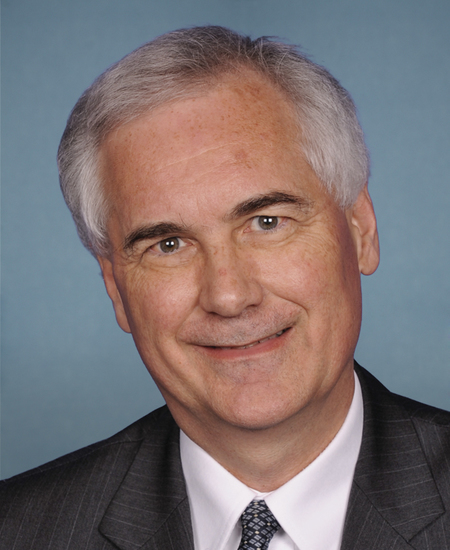
Rep. Tom McClintock
Sponsored bills
Nuclear Family Priority Act This bill imposes limits on various types of family-sponsored immigration visas. The non-U.S. national ( alien under federal law) parents of U.S. citizens shall not qualify for visas for immediate relatives, which are not subject to any direct numerical limits. Currently, the spouses, unmarried children under 21, and parents of citizens are considered immediate relatives. The bill also creates a nonimmigrant visa for such parents of citizens. Such non-U.S. nationals shall not be eligible for employment or any public benefits. The bill also reduces the baseline annual cap for family-sponsored visas from 480,000 to 88,000, and revises the methods for calculating the cap. Currently, the 480,000 cap may be adjusted depending on various factors but shall not be less than 226,000. The bill eliminates preference allocations (visa categories subject to various annual caps) for various family-sponsored visas, including those for the siblings and married children of citizens. The bill provides for a preference allocation for the unmarried children under 21 and spouses of permanent residents, subject to the 88,000 annual cap.
Maddy summaryHR 2694, the Election Results Accountability Act, sets strict deadlines for states to count ballots and certify results in federal elections. It requires states to count at least 90% of ballots within 72 hours of polls closing and complete full counting with official certification within two weeks. Exceptions apply for major disasters, cyberattacks, technical issues, or recounts, but states missing deadlines risk losing federal election administration funds unless they submit a compliance plan. This bill directly affects all states administering federal elections, aiming to standardize and expedite the certification process while maintaining flexibility for genuine emergencies.
Maddy summaryThis bill, HR 2102 (Major Richard Star Act), allows veterans with combat-related disabilities to receive both full military retired pay and veterans' disability compensation simultaneously, without the previous offset that reduced retired pay. It directly affects veterans already eligible for both benefits due to combat-related injuries, removing the requirement that their retired pay be reduced by the disability compensation amount. The key provision amends Title 10 and Title 38 to eliminate the offset rule (sections 5304 and 5305 of Title 38) for these veterans. The change applies to payments starting after the bill’s enactment date, effective for all qualifying veterans. This is a policy change to increase financial support for affected veterans, not a new benefit.
Maddy summaryHR 2566, the "End Taxpayer Subsidies for Electric Vehicles Act," would repeal the federal tax credit that currently allows consumers to reduce their income tax when purchasing new electric vehicles. This credit, known as the clean vehicle credit under Section 30D of the Internal Revenue Code, has directly affected buyers of qualifying electric vehicles by lowering their purchase costs. The bill removes this credit entirely, meaning future buyers would no longer receive this tax benefit for new electric vehicle purchases. The repeal would apply to vehicles placed in service after the bill's enactment date, with minor technical adjustments to other tax code sections referencing the repealed credit.
Maddy summaryThe SHORT Act (HR 2395) redefines federal firearm definitions to exclude antique and collector firearms from being classified as firearms, and removes distinctions between short-barreled rifles and shotguns in federal regulations. It prevents state laws from imposing taxes or registration requirements on short-barreled rifles and shotguns, requiring state rules to align with federal compliance instead. The bill also mandates the federal government to destroy specific records related to these firearms within one year of enactment.
Maddy summaryHR 2443, the NPR and PBS Act, would ban all federal funding for National Public Radio (NPR) and the Public Broadcasting Service (PBS), including funds used indirectly by public broadcast stations. This bill directly affects NPR, PBS, and any future organizations replacing them, as it prohibits government money from supporting them through any channel - like station dues or programming purchases. The key provision blocks all federal funds, both direct and indirect, from flowing to these entities after the bill's enactment. This would require NPR and PBS to find new funding sources, as they currently rely on federal support. The bill does not change how public broadcasting operates but eliminates its primary government funding stream.
Maddy summaryHR 2460 would repeal the Renewable Fuel Standard (RFS), a Clean Air Act requirement mandating that fuel producers blend renewable fuels like ethanol into gasoline. This repeal would directly affect oil refiners and fuel distributors who currently must meet these blending quotas. The bill removes Section 211(o) of the Clean Air Act and updates related provisions in the Clean Air Act and Petroleum Marketing Practices Act to eliminate references to the RFS program. If enacted, the measure would eliminate the federal mandate for renewable fuel blending in transportation fuels.
Fairness for High-Skilled Americans Act of 2025 This bill eliminates the Optional Practical Training Program or any successor program, unless Congress expressly authorizes such a program. (The program provides an F-1 student visa holder temporary employment authorization before or after completion of the student's studies, or both.)
Maddy summaryThe FOCA Act of 2025 prohibits federal agencies from requiring or banning contractors from using union agreements in construction project bids or contracts. It directly affects federal agencies, contractors, and subcontractors working on federally funded or assisted construction projects (like buildings or infrastructure). The law requires bid documents to not favor or penalize contractors based on whether they have union agreements, aiming to promote open competition and prevent discrimination. This changes how agencies structure bids but does not affect union agreements themselves. The bill applies to all new contracts and subcontracts after enactment, with limited exemptions only for public health/safety emergencies or national security.