

Maddy summaryHR 1688, the Hatch Act Enforcement Transparency and Accountability Act, requires the Office of Special Counsel (OSC) to provide greater transparency about enforcement actions against federal employees for prohibited political activities. It mandates annual reports to Congress detailing investigations and outcomes for noncareer employees (political appointees), including anonymized demographic data on race, gender, and other factors. The bill also requires the OSC to publish detailed written explanations for decisions not to pursue cases against noncareer employees, excluding those in Senate-confirmed positions. These provisions aim to increase accountability in enforcing the Hatch Act, which restricts political activities by federal workers, while focusing on noncareer appointees rather than career civil servants.
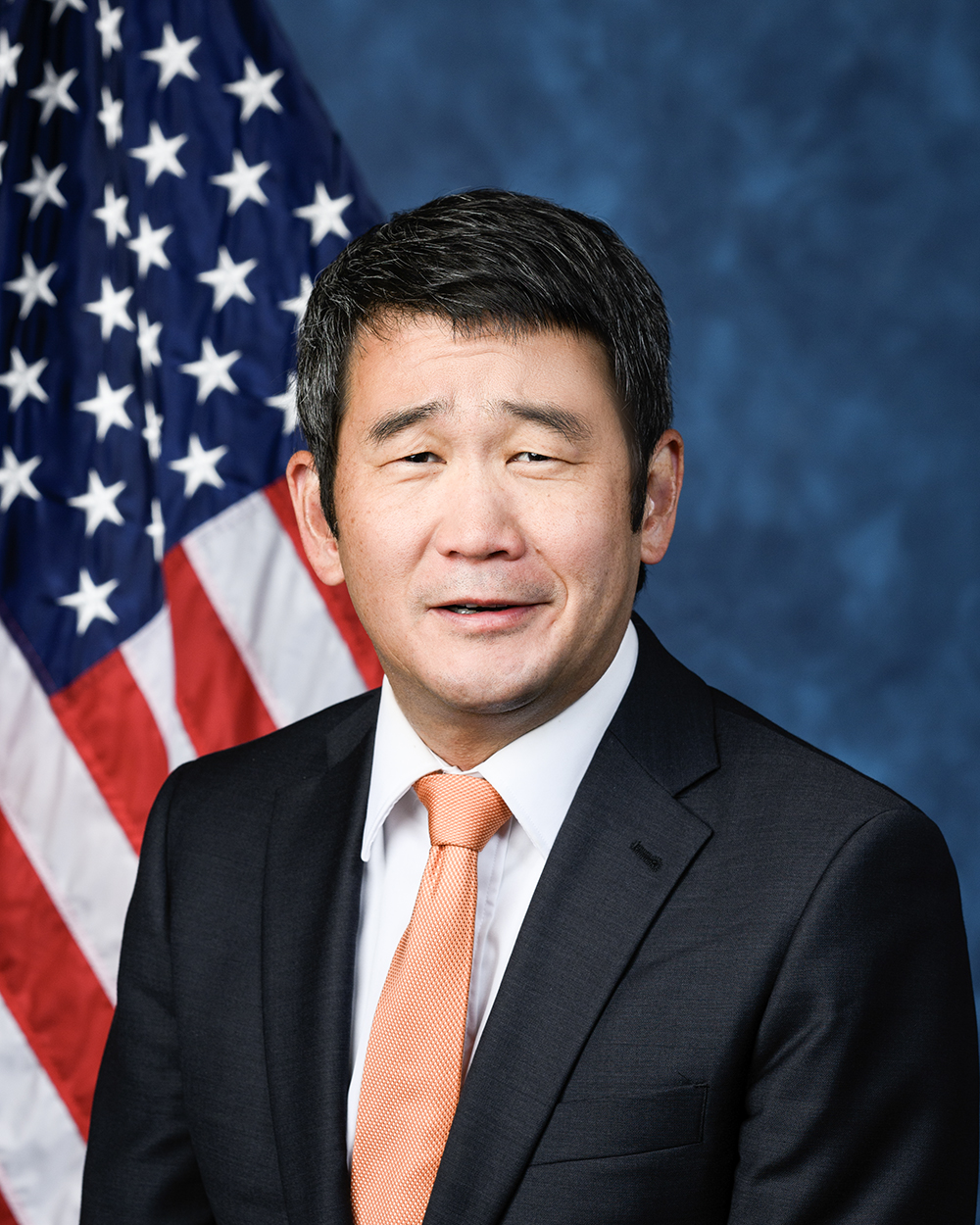
Rep. Dave Min
Sponsored bills
Maddy summaryThe Keep Americans Safe Act (HR 1674) restricts the sale, transfer, and possession of large capacity ammunition feeding devices (LCFDs) - defined as magazines or similar devices holding more than 15 rounds of ammunition - for most individuals. Exceptions allow law enforcement officers (including campus law enforcement), retired officers, and nuclear security personnel to possess LCFDs under specific conditions. The bill requires new LCFDs to have serial numbers and manufacturing dates, permits federal seizure of violative devices, and authorizes federal grant programs to fund buy-back initiatives for LCFDs. It directly affects gun owners and manufacturers while preserving access for covered law enforcement and security personnel.
Maddy summaryHR 1667, the Acupuncture for Our Seniors Act of 2025, would expand Medicare coverage to include acupuncture services provided by qualified practitioners. It adds "qualified acupuncturist services" to Medicare’s coverage under Section 1861 of the Social Security Act, defining a qualified acupuncturist as a state-licensed practitioner or a physician legally authorized to perform acupuncture. The bill establishes payment rules by including these services in the physician fee schedule and adjusting hospital billing procedures to allow separate billing for acupuncture in inpatient settings. This change would directly affect Medicare beneficiaries receiving acupuncture, as well as acupuncturists and healthcare providers who would now bill Medicare for these services. The provisions would take effect 270 days after the bill’s enactment.
Maddy summaryThe PAST Act of 2025 amends the Horse Protection Act to ban harmful practices known as "soring," which deliberately cause pain to horses to exaggerate their gait for shows. It specifically prohibits devices like action devices (e.g., boots causing friction) and weighted shoes on Tennessee Walking Horses, Racking Horses, and Spotted Saddle Horses at events. The bill increases penalties, including escalating disqualifications for repeat offenses (180 days → 1 year → 3 years) and raises fines for violations to $5,000 per offense. It also requires stricter licensing for inspectors and mandates public posting of violation records to help event organizers enforce rules.
Maddy summaryThe American Dream and Promise Act of 2025 would create pathways to permanent residency for certain immigrant youth who entered the U.S. as children (Dream Act component) and for individuals from countries with Temporary Protected Status or Deferred Enforced Departure (American Promise Act component). To qualify, applicants must meet continuous physical presence requirements (since January 1, 2021 for Dream Act applicants, and for 3+ years for American Promise applicants), pass background checks, and satisfy educational or employment criteria. Conditional permanent resident status would be granted initially, with the option to convert to full permanent residency after meeting additional requirements like earning a degree, serving in the military for two years, or demonstrating three years of earned income. The bill includes fee exemptions for low-income applicants, establishes a grant program to assist applicants with legal help, and creates specific procedures for background checks and appeals.
Maddy summaryHR 1637, the Protect Veteran Jobs Act, allows veterans who were involuntarily dismissed without cause from federal civil service positions between January 20, 2025, and the bill’s enactment date to seek reinstatement to their former role or a qualified position. It directly affects eligible veterans dismissed during this period and requires federal agencies to report quarterly on veteran removals, including the number and reasons for each dismissal. Agencies must submit these reports to specified congressional committees until January 20, 2029, when the reporting requirement ends. The bill aims to restore employment opportunities for affected veterans while increasing transparency around federal hiring and dismissal practices.
Maddy summaryEthan's Law requires gun owners to store firearms securely in homes where minors live or where residents are legally prohibited from owning guns. It makes it unlawful to leave firearms unsecured if a minor or ineligible person could access them, with fines of $500 per violation and harsher penalties if injury or death occurs. The bill creates a federal grant program to help states implement similar secure storage laws and treats unsafe storage as negligence in legal cases. It directly affects households with children or residents who cannot legally possess firearms, aiming to reduce accidental shootings and unauthorized access.
Maddy summaryHR 1535, the BAD DOGE Act, repeals Executive Order 14158, which created the U.S. DOGE Service (USDS) and the U.S. DOGE Service Temporary Organization (USDSTO). The bill targets the controversial structure led by Elon Musk, claiming it operated beyond legal authority by freezing federal payments, accessing personnel data without authorization, and attempting to dismantle agencies like USAID without congressional approval. Key provisions require ending the USDSTO and USDS as established under the repealed executive order, reversing actions deemed violations of federal law and the Constitution. The bill directly affects the USDS/USDSTO structure and its leadership, aiming to restore statutory compliance with government ethics and operational limits.
Maddy summaryHR 1456, the Gun Trafficker Detection Act, requires private firearm owners (non-licensed individuals) to report lost or stolen firearms to the Attorney General within 48 hours via a new web portal. It imposes civil penalties of up to $1,000 for first violations and $5,000 for repeat violations, and prohibits individuals with two or three penalty assessments from receiving firearms for 1 year or 5 years, respectively. The bill mandates law enforcement agencies to use 5% of crime grant funds to study lost/stolen firearm data collection and updates the National Instant Background Check System to include these new restrictions. It directly affects private gun owners and law enforcement agencies, focusing on reporting compliance and background check adjustments.
More Options to Develop and Enhance Remote Nutrition in WIC Act of 2025 or the MODERN WIC Act of 2025 This bill permanently allows individuals to remotely certify their eligibility for, and receive benefits through, the Special Supplemental Nutrition Program for Women, Infants, and Children (WIC). Specifically, the bill requires that a state agency allow an individual seeking a WIC certification, recertification, or a nutritional risk evaluation to do so by phone or through video teleconference, in addition to the in-person option. A state agency has 90 days to collect data for a nutritional risk evaluation for a remotely certified individual. Further, a state agency may consider an applicant who meets the income eligibility standards to be temporarily eligible on an interim basis to participate in the program and may certify the individual for immediate participation without waiting for a nutritional risk evaluation. The bill also allows states to provide benefits on WIC electronic benefit transfer cards through mail or remote issuance instead of requiring participants to pick up or reload benefits in person at a WIC office. Further, the Department of Agriculture must report to Congress about the use of remote technologies and other digital tools in the WIC program. Currently, individuals are generally required to be physically present to certify their WIC eligibility and receive benefits, with exceptions. The Food and Nutrition Service has temporarily waived these requirements and allowed remote certification and benefits using authorities that were provided by laws that were enacted to address COVID-19.