

Maddy summaryThe STOCK Act 2.0 requires Members of Congress, federal officials, Federal Reserve employees, Supreme Court justices, and their spouses and dependent children to report and divest certain financial interests, including investments in stocks, cryptocurrencies, commodities, and futures. It mandates that covered individuals report these financial interests within 120 days of taking office or upon the bill's enactment, and sell any existing investments that conflict with public duties. The bill establishes a fine of 10% of the value of unreported or undivested interests for noncompliance and requires electronic filing of financial disclosures with public online access to searchable reports. This legislation expands and strengthens the original STOCK Act by creating more comprehensive reporting requirements and improving public transparency about potential conflicts of interest. The provisions apply to a wide range of government officials and their families, with specific requirements for Federal Reserve officials added through this bill.
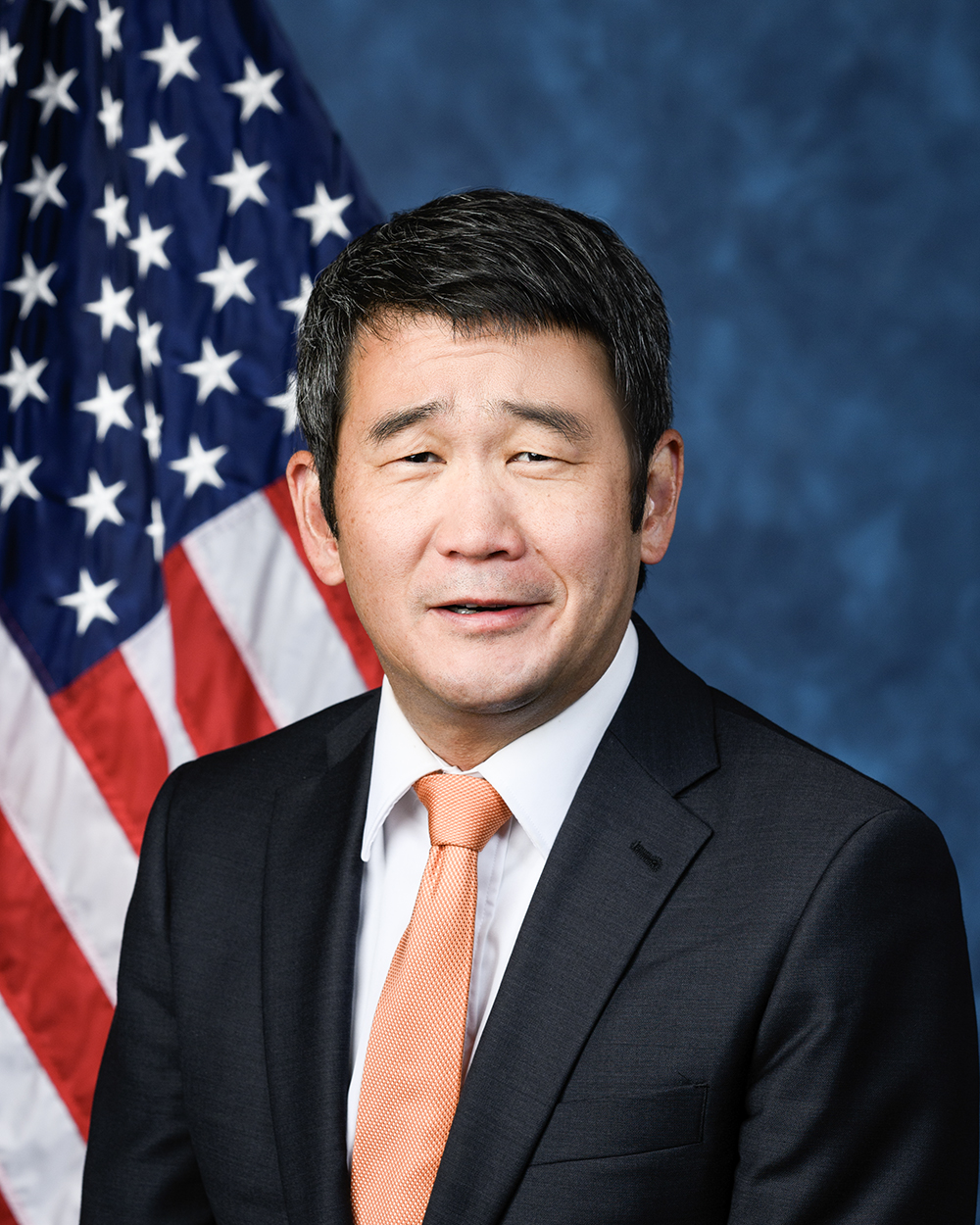
Rep. Dave Min
Sponsored bills
Maddy summaryHR 3757, the Pride In Mental Health Act of 2025, provides $20 million annually (2026-2030) to fund grants for mental health services targeting LGBTQ+ youth, including nonbinary, intersex, and Two Spirit youth, and their families/caregivers. The bill mandates grantees to provide trauma-informed care, cultural competency training, school bullying prevention guidelines, and evidence-based practices while explicitly prohibiting the use of funds for conversion therapy or its promotion. It also requires the federal government to restore mental health reports on LGBTQ+ youth, conduct a national survey measuring mental health distress, and produce a report on mental health services for LGBTQ+ youth in foster care. The law directly affects these youth populations by expanding access to tailored mental health resources and data collection, with funding administered through the Substance Abuse and Mental Health Administration.
Maddy summaryHRES 473 is a non-binding House resolution calling on the U.S. government to urgently use diplomatic efforts to ensure food and medical supplies reach civilians in Gaza. It directly addresses the needs of approximately 2.2 million Palestinians facing acute hunger, including 10,000 children identified with acute malnutrition, following a border blockade that blocked aid from March to May 2025. The resolution specifically urges the White House and State Department to secure "immediate and secure delivery and disbursement" of aid and a lasting end to the conflict, citing collapsed bakeries, exhausted food rations, and a near-total health system collapse.
Maddy summaryThis resolution (HRES 457) is a symbolic measure expressing congressional support for designating June 6, 2025, as "National Gun Violence Awareness Day" and June 2025 as "National Gun Violence Awareness Month." It does not create new laws or policies but encourages public awareness through specific actions: wearing orange on June 6, focusing on gun safety during summer months, and holding community discussions. The resolution references statistics on gun violence deaths and honors Hadiya Pendleton, a teen victim killed in 2013. It directly affects the public by calling for voluntary observance and community engagement, not government mandates.
Maddy summaryHRES 444 is a symbolic House resolution calling on all Americans to observe Memorial Day 2025 by honoring military personnel who died in service. It does not create new laws or affect specific groups, as it is a non-binding expression of national remembrance. The resolution states that Americans should commemorate the sacrifices of over one million service members who died pursuing freedom and peace, framing Memorial Day as a day to express respect for their ultimate sacrifice. This is a routine ceremonial resolution with no policy changes or concrete mechanisms beyond urging public observance.
Maddy summaryHouse Resolution 442 is a symbolic measure recognizing California's public higher education systems (University of California, California State University, and community colleges) and reaffirming the U.S. commitment to supporting them. It highlights their economic impact - such as generating billions in state revenue and supporting hundreds of thousands of jobs - and their role in providing accessible education, particularly for low-income and underrepresented students. The resolution does not create new policies or funding but formally acknowledges these systems' contributions to California's economy and workforce development. It serves as a statement of support without altering existing programs or obligations.
Maddy summaryHR 3607, the MARSHALS Act, restructures the U.S. Marshals Service by moving it from the Department of Justice to the judicial branch of the federal government. It requires the Chief Justice, in consultation with a new oversight Board, to appoint marshals for each judicial district (with four-year terms) and establishes a Director to lead the Service. The bill expands the Marshals Service’s duties to include protecting judges, court officers, and witnesses from intimidation, and adds specific roles in assisting with sex offender investigations and locating missing children at the Attorney General’s request. These changes directly affect federal marshals, judicial branch operations, and law enforcement coordination with the Department of Justice.
Maddy summaryThis bill prohibits the U.S. military from discriminating against service members or applicants based on gender identity. It bans policies that would deny service, involuntarily separate members, deny medically necessary healthcare, or require service in a gender different from one's identity. The law defines "gender identity" broadly to include a person's internal sense of gender, appearance, and mannerisms, regardless of sex assigned at birth. It directly affects transgender and gender-diverse individuals currently serving or seeking to serve in the Armed Forces.
Maddy summaryHR 3564, the Nuclear First-Strike Security Act of 2025, requires the President to notify key congressional leaders at least seven days before authorizing a first-use nuclear strike (using nuclear weapons without prior attack on the U.S. or allies). This applies unless the strike occurs under a congressional declaration of war, in response to a nuclear attack on the U.S. or an ally (defined as NATO, Japan, South Korea, or Australia), or during a launch-on-warning scenario. The bill mandates the Secretary of Defense to certify the strike's legality and necessity to congressional leaders before execution. It directly affects the President and Defense Department, adding a formal congressional notification step to nuclear decision-making. The law aims to create a deliberate review period for the most extreme military action.
Maddy summaryThis bill amends federal education law to require K-12 schools to include Asian American, Native Hawaiian, and Pacific Islander (AANHPI) history in American history and civics education. It directs the Department of Education to update curriculum standards, teacher training programs, and national assessments to ensure AANHPI contributions and experiences are integrated into existing history lessons. The policy affects all public schools receiving federal education funding by mandating specific inclusion of AANHPI history alongside traditional American history content. This change aims to address historical gaps in curricula that have excluded these communities' diverse roles and experiences.