

For the People Act of 2021 This bill addresses voter access, election integrity and security, campaign finance, and ethics for the three branches of government. Specifically, the bill expands voter registration (e.g., automatic and same-day registration) and voting access (e.g., vote-by-mail and early voting). It also limits removing voters from voter rolls. The bill requires states to establish independent redistricting commissions to carry out congressional redistricting. Additionally, the bill sets forth provisions related to election security, including sharing intelligence information with state election officials, supporting states in securing their election systems, developing a national strategy to protect U.S. democratic institutions, establishing in the legislative branch the National Commission to Protect United States Democratic Institutions, and other provisions to improve the cybersecurity of election systems. Further, the bill addresses campaign finance, including by expanding the prohibition on campaign spending by foreign nationals, requiring additional disclosure of campaign-related fundraising and spending, requiring additional disclaimers regarding certain political advertising, and establishing an alternative campaign funding system for certain federal offices. The bill addresses ethics in all three branches of government, including by requiring a code of conduct for Supreme Court Justices, prohibiting Members of the House from serving on the board of a for-profit entity, and establishing additional conflict-of-interest and ethics provisions for federal employees and the White House. The bill requires the President, the Vice President, and certain candidates for those offices to disclose 10 years of tax returns.
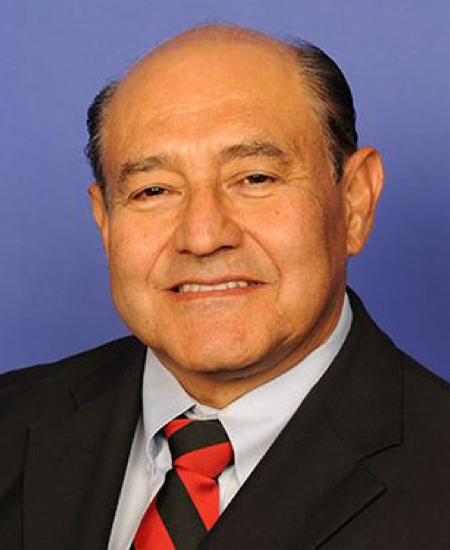
Rep. J. Luis Correa
Sponsored bills
George Floyd Justice in Policing Act of 2021 This bill addresses a wide range of policies and issues regarding policing practices and law enforcement accountability. It increases accountability for law enforcement misconduct, restricts the use of certain policing practices, enhances transparency and data collection, and establishes best practices and training requirements. The bill enhances existing enforcement mechanisms to remedy violations by law enforcement. Among other things, it does the following: lowers the criminal intent standard—from willful to knowing or reckless—to convict a law enforcement officer for misconduct in a federal prosecution, limits qualified immunity as a defense to liability in a private civil action against a law enforcement officer, and grants administrative subpoena power to the Department of Justice (DOJ) in pattern-or-practice investigations. It establishes a framework to prevent and remedy racial profiling by law enforcement at the federal, state, and local levels. It also limits the unnecessary use of force and restricts the use of no-knock warrants, chokeholds, and carotid holds. The bill creates a national registry—the National Police Misconduct Registry—to compile data on complaints and records of police misconduct. It also establishes new reporting requirements, including on the use of force, officer misconduct, and routine policing practices (e.g., stops and searches). Finally, it directs DOJ to create uniform accreditation standards for law enforcement agencies and requires law enforcement officers to complete training on racial profiling, implicit bias, and the duty to intervene when another officer uses excessive force.
Capitol Remembrance Act This bill requires the Architect of the Capitol (AOC) to design and install in a prominent location in the U.S. Capitol a permanent exhibit that depicts the January 6, 2021, attack on the Capitol. To the extent possible, the AOC must preserve property that was damaged during the attack and include it in the exhibit. The AOC must also include (1) existing photographic records relating to the attack; and (2) a plaque to honor the U.S. Capitol Police and other law enforcement agencies that protected the Capitol, the individuals who died or sustained injuries to protect the Capitol, and the staff who helped restore the Capitol complex after the attack.
Retired Pay Restoration Act This bill allows the receipt of both military retired pay and veterans' disability compensation with respect to any service-connected disability. Under current law, only individuals with service-connected disabilities rated at 50% or more receive both without offset. Individuals who were retired or separated after at least 20 years of military service due to a service-connected disability shall be eligible for the full concurrent receipt of both veterans' disability compensation and either military retired pay or combat-related special pay.
Northern Mariana Islands Legal Residents Relief Act of 2021 This bill expands eligibility for obtaining Commonwealth of the Northern Mariana Islands (CNMI) Resident status, provides a path for holders of such status to obtain U.S. permanent resident status, and makes CNMI-only transitional workers eligible to receive government relief or assistance in connection with a declared emergency. CNMI Resident status was available to qualifying individuals who applied for such status between February 19, 2020, and August 17, 2020. Among other requirements, a qualifying individual must have (1) been lawfully present in the CNMI on certain dates, and (2) continually and lawfully resided in the CNMI from November 28, 2009, through June 25, 2019. The bill reopens the period for applying for such status for 180 days and authorizes the Department of Homeland Security to waive this deadline in certain instances. The bill allows additional classes of individuals to qualify for CNMI Resident status, including an individual who (1) was admitted as a transitional worker during FY2015 and each subsequent fiscal year through FY2018, (2) is a qualified investor, or (3) resided in the CNMI as a guest worker for certain periods and is currently a transitional worker. The bill also waives the continual residence requirement for certain individuals and allows an individual lawfully present on December 31, 2020, to qualify. A qualifying alien with CNMI Resident status may obtain U.S. permanent resident status after holding CNMI Resident status for five years or after this bill has been enacted for five years, whichever is later.
New Way Forward Act This bill makes changes to immigration enforcement, including ending mandatory detention in certain cases. The Department of Homeland Security (DHS) shall not enter into or extend any contract with any public or private for-profit entity to own or operate a facility to detain aliens in DHS custody. The bill provides for various protections related to detaining aliens, such as (1) requiring DHS to make an initial custody determination and establish probable cause within 48 hours of taking an alien into custody, (2) establishing in hearings related to such determinations a presumption that the alien be released, and (3) requiring immigration judges to impose the least restrictive detention conditions necessary. A DHS officer may not interrogate a person as to immigration status based on factors such as the person's race, religion, sexual orientation, or spoken language. The bill removes mandatory detention requirements for certain aliens, such as asylum seekers with a credible fear of persecution. Removal proceedings against certain aliens previously admitted into the United States must commence within five years of the alien becoming deportable or inadmissible. The bill also removes certain crime-related grounds of inadmissibility and deportability. The bill gives immigration judges discretion to provide relief from removal if the removal is not based on certain crime-related grounds. State or local officers are prohibited from performing certain immigration enforcement functions, such as apprehending aliens. The National Crime Information Center database shall not contain an alien's immigration information. The bill repeals provisions providing criminal penalties for improper entry or reentry into the United States.
This joint resolution proposes a constitutional amendment authorizing Congress and the states to set reasonable limits on the raising and spending of money by candidates and others to influence elections. The amendment grants Congress and the states the power to implement and enforce this amendment by legislation. They are allowed to distinguish between natural persons and corporations or other artificial entities created by law, including by prohibiting such entities from spending money to influence elections.
This resolution censures and condemns President Donald J. Trump for asking the Georgia Secretary of State on January 2, 2021, to overturn the Georgia results of the November 2020 presidential election. It further calls on President Trump to (1) retract and disavow this behavior, and (2) acknowledge President-elect Joseph R. Biden as the victor of the November 2020 presidential election.
Providing Rational Options Toward the Elimination of Catastrophic Terrorism Act of 2021 or the PROTECT Act This bill directs (1) the Department of Homeland Security (DHS) to develop and provide guidance on terrorism preparedness and response to assist in the development of plans for addressing active shooter and mass casualty incidents, including in facilities identified by DHS as vulnerable targets; and (2) the Federal Emergency Management Agency (FEMA) to consider the threat from active shooters in allocating grant funds under the Urban Area Security Initiative and the State Homeland Security Grant Program.
Preventing Radical Extremist's Violent Endeavors Now and Tomorrow Act of 2021 or the PREVENT Act of 2021 This bill expands the duties of the Office for State and Local Government Coordination in the Department of Homeland Security to include, for purposes of countering violent extremist threats (1) providing training from specially trained clinical social workers, psychologists, religious and community leaders, and law enforcement personnel to assist local efforts in securing the homeland; and (2) in coordination with the Federal Bureau of Investigation, providing to state and local governments specialists, analysts, and agents trained to counter terrorism and white nationalism to assist local efforts at responding to such threats.