

Maddy summaryHR 2269, the WIPPES Act, requires manufacturers and retailers to clearly label certain premoistened wipes with "Do Not Flush" text and a specific symbol on packaging. It directly affects baby wipes, disinfecting wipes, and other household/personal care wipes (like feminine hygiene or hand sanitizing wipes) that contain petrochemical fibers and could be flushed. The bill mandates specific visibility requirements for labels - such as minimum size, high contrast, and placement on packaging - while banning any claims that these wipes are flushable. The Federal Trade Commission will enforce these labeling rules as deceptive practices under existing law.
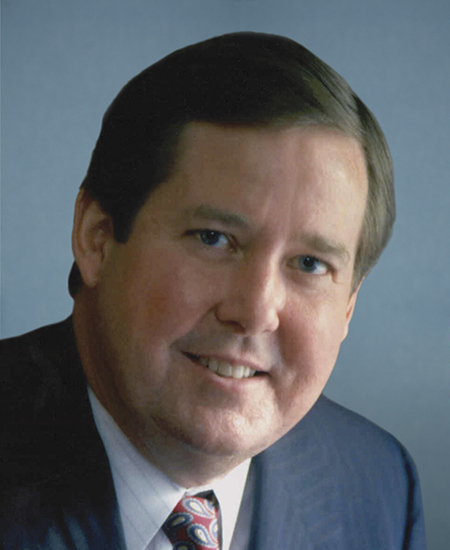
Rep. Ken Calvert
Sponsored bills
Maddy summaryHR 3946, the FIGHT Act of 2025, amends the Animal Welfare Act to specifically prohibit gambling on animal fighting events and restrict the interstate transport of roosters used in such ventures. It defines "rooster" as male chickens over six months old and makes it unlawful to sponsor, exhibit, attend (for those under 16), or gamble on animal fighting events - whether in-person or broadcast. The bill creates a civil enforcement mechanism allowing any person to file a lawsuit to stop violations after providing 60 days' notice to authorities, with potential fines up to $5,000 per violation. It also establishes seizure of property used to facilitate violations and clarifies that state laws on animal fighting remain in effect unless directly conflicting with federal provisions.
Maddy summaryHR 3981 would grant a federal charter to the Veterans Association of Real Estate Professionals (VAREP), a California-based nonprofit already recognized as a veterans service organization under IRS rules. This charter would formalize VAREP's status as a federally chartered entity under Title 36 of the U.S. Code, requiring it to maintain its tax-exempt status under the IRS Code to keep the charter. The bill outlines VAREP's purposes, including advocating for veterans' homeownership, providing financial literacy education, offering housing counseling, and connecting real estate professionals with veterans' needs, while prohibiting political activities, stock issuance, or profit distribution. This is a procedural bill focused on organizational structure, not policy changes.
Maddy summaryHRES 496 is a non-binding House resolution condemning violent riots in Los Angeles that occurred on June 6, 2025. It specifically addresses protests that turned violent after immigration enforcement actions, including arson, vandalism, attacks on officers, and burning American flags. The resolution recognizes the right to peaceful protest while unequivocally condemning violence against law enforcement and urging local/state leaders to collaborate with federal authorities to restore order. It also expresses gratitude to law enforcement agencies for protecting communities during the unrest. As a symbolic statement, it does not create new laws or directly affect any individuals or entities.
Maddy summaryThis bill prohibits U.S. port operators managing facilities with federal security plans (Area Maritime Transportation Security Plans) from contracting with Chinese, Russian, North Korean, or Iranian state-owned enterprises or any foreign entities with ownership ties to those countries. It directly affects port facilities subject to federal security requirements under 46 U.S.C. §70103. The key provision adds a new legal ban on contracts for port ownership, leasing, or operation with the specified foreign entities. This changes port contracting rules to exclude designated foreign state-owned or controlled entities from critical infrastructure management.
Maddy summaryHRES 481 is a symbolic resolution condemning recent antisemitic attacks in the U.S., specifically referencing the June 1, 2025, Boulder, Colorado, assault on a Jewish community gathering and other incidents like the May 2025 Washington, D.C., embassy shooting. It formally recognizes a pattern of violence targeting Jewish individuals and institutions, including attacks during religious events. The resolution calls on law enforcement to thoroughly investigate and prosecute such incidents and urges elected officials to publicly oppose antisemitism and politically motivated violence. As a non-binding resolution, it does not create new laws or allocate funding but serves to affirm congressional stance against antisemitism.
Maddy summaryHRES 483 is a House resolution recognizing the 250th anniversary of the U.S. Army's founding on June 14, 1775. It expresses appreciation for the Army's service over 250 years, honors soldiers' valor and core values, and calls for public observance through ceremonies and activities. The resolution has no policy impact or funding provisions - it is purely commemorative. It was introduced by 30 bipartisan House members and referred to the Armed Services Committee.
Maddy summaryHR 3773 (PROTECT Act of 2025) amends federal law to recognize tribal courts as having authority equivalent to state courts for certain electronic evidence cases. It requires that warrants for electronic communications stored 180 days or less must follow procedures from the Indian Civil Rights Act (25 U.S.C. 1302(a)(2)) when issued by tribal courts. The bill also expands tribal jurisdiction over controlled substance offenses (like drug trafficking or possession) and firearms offenses (such as possession by domestic violence offenders) by defining these terms for tribal courts. This directly affects tribal courts and tribal law enforcement by standardizing legal procedures for evidence handling and broadening their authority under federal law. The changes align tribal court processes with federal and state standards for digital evidence and criminal jurisdiction.
Maddy summaryThis resolution symbolically supports designating a specific month as "ALS Awareness Month" to raise public recognition of amyotrophic lateral sclerosis (ALS). It does not create new laws or funding but affirms the House's commitment to advancing treatments, reducing the physical/emotional/financial burdens of ALS, and supporting patients and caregivers. The resolution directly affects public awareness efforts and the ALS community by highlighting the disease's impact - such as its 2-5 year life expectancy after diagnosis and the 5,000 annual U.S. diagnoses - without altering policy or providing resources. It serves as a non-binding statement of support from the House.
Maddy summaryHR 3608, "Connor’s Law," requires commercial motor vehicle operators (like truck and bus drivers) to read and speak English well enough to converse with the public, understand English traffic signs, respond to officials, and complete reports. The bill adds this language requirement to existing federal safety rules for commercial drivers. Drivers found noncompliant with this rule would face an "out of service" order, meaning they cannot operate their vehicle until they meet the requirement. This directly affects commercial drivers operating in the U.S. under federal safety regulations.