

Maddy summaryHR 4469, the PRESUME Act, simplifies eligibility for veterans exposed to radiation during military service. It removes the requirement for veterans to provide specific radiation dose evidence to qualify as "radiation-exposed veterans" under VA benefits. This change directly affects veterans who participated in nuclear testing or other radiation-related military activities and previously had to prove exact exposure levels. The bill amends 38 U.S.C. § 1112(c) to state the VA Secretary "may not require evidence of a certain dose of radiation" for this classification, streamlining access to medical benefits.
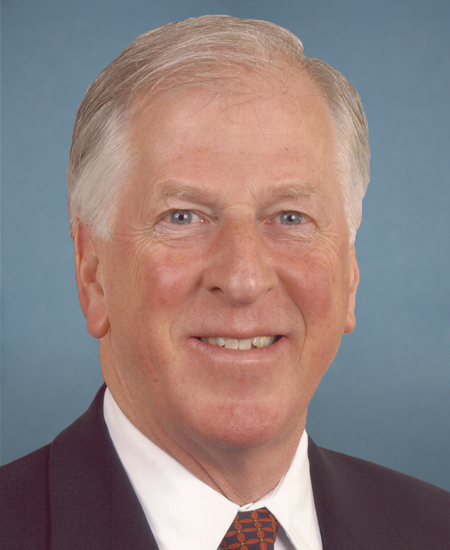
Rep. Mike Thompson
Sponsored bills
Maddy summaryThe Emergency Alert Grant Fairness Act requires the Federal Emergency Management Agency (FEMA) to open applications for its Next Generation Warning System grants for at least 30 days each year. It also explicitly includes public broadcasting entities (as defined in the Communications Act of 1934) as eligible recipients for these grants. This bill directly affects FEMA's grant administration process and public broadcasting organizations that provide emergency alert services. The key change is standardizing the application window and expanding eligibility to ensure public broadcasters can access funding for emergency alert systems.
Maddy summaryHJRES 144 is a congressional disapproval resolution targeting a specific rule issued by the Department of Veterans Affairs (VA) on December 31, 2025, which addressed "Reproductive Health Services" (90 Fed. Reg. 61310). This resolution directs Congress to disapprove the VA rule under Chapter 8 of Title 5, U.S. Code, meaning the rule would have no legal effect if passed. The bill directly affects the VA's implementation of reproductive health services for veterans, as it seeks to nullify the agency's existing policy. This is a procedural measure, not a substantive policy change, aimed solely at blocking the VA's rule through congressional action.
Maddy summaryThe Trafficking Survivors Relief Act (HR 4323) allows victims of human trafficking to petition courts to vacate convictions for non-violent federal crimes (level A offenses) or expunge arrest records if those offenses were directly related to their trafficking victimization. The bill establishes clear procedures for filing these motions, requires courts to consider testimony from anti-trafficking service providers, and ensures confidentiality for petitioners. It also adds a new "human trafficking defense" that permits defendants to claim duress due to trafficking victimization in criminal cases. The law mandates reports to Congress on implementation, including the number of petitions filed and outcomes, to assess its impact on trafficking survivors.
Maddy summaryHCONRES 68 would require the President to remove U.S. military forces from Venezuela unless Congress has explicitly authorized their use through a declaration of war or a specific law. This applies to any U.S. Armed Forces currently stationed in Venezuela without such authorization. The resolution is based on the War Powers Resolution, which mandates congressional oversight of military deployments. It directs the immediate withdrawal of unapproved forces without adding new time limits or conditions.
Maddy summaryHR 7100 establishes a Department of Justice Task Force on Anti-Sikh Hate and Discrimination to address systemic bias against Sikhs. The Task Force must draft a formal definition of anti-Sikh hate for DOJ use, develop educational programs for law enforcement and schools, and produce annual reports on hate crimes and trends. It requires quarterly collaboration with Sikh organizations and translation of materials into Punjabi. The bill directly affects Sikhs in the U.S. (who face disproportionate targeting as noted in FBI data) and mandates federal agencies to improve hate crime data collection and response. This is a policy-focused measure to standardize definitions, enhance reporting, and support community safety through DOJ action.
Maddy summaryHRES 1001 is a House resolution requesting the President and Secretary of State to provide the House with specific documents related to U.S. policy on Greenland. It directs them to submit all communications (including emails, meeting notes, and records) created since January 2025 about potential U.S. ownership of Greenland, U.S. relations with Denmark, security agreements under the 1951 defense pact, and diplomatic engagements concerning recent statements about Greenland. The resolution focuses on transparency regarding the Administration's stance, including discussions with Danish and Greenlandic authorities and assessments of legal implications under NATO and UN obligations. This procedural request does not change policy but seeks documentation for congressional oversight.
Maddy summaryHRES 996 is a resolution introduced by multiple House members to impeach Kristi Lynn Arnold Noem, the Secretary of Homeland Security, for alleged violations of law and the Constitution. It outlines three articles of impeachment: obstructing congressional oversight by denying access to detention facilities and withholding funds, violating public trust through warrantless arrests and excessive force (including tear gas on children), and self-dealing by awarding federal contracts to associates without competitive bidding. If approved by the House, this resolution would formally charge Noem, triggering a Senate trial to determine her removal from office. The resolution itself does not enact new policy but initiates the constitutional impeachment process against a sitting Cabinet official.
Maddy summaryThe Rural Recovery Act of 2025 establishes a federal technical assistance program to help rural communities recover after federally declared disasters. It directly affects eligible rural communities - defined as census-designated places with under 20,000 residents (or areas waived by the Agriculture Secretary) - that experience disasters covered by the Robert T. Stafford Act. The program provides free support for disaster recovery planning, applying for federal/state funding (e.g., FEMA, Economic Development Administration), addressing application denials, and implementing funded projects, with a focus on infrastructure like water systems, housing, energy, and local facilities. It allocates $50 million annually for 3 years per affected community, with funding distributed based on population impacted, as determined by census data. The assistance period begins when a disaster is declared and may be extended for an additional 3 years on a case-by-case basis.
Maddy summaryHR 6271, the Food Bank Emergency Support Act of 2025, appropriates $462.5 million to prevent cuts to food assistance benefits during funding shortfalls or government shutdowns. The funds are specifically designated under the Food and Nutrition Act of 2008 to maintain existing benefit levels for programs like SNAP (Supplemental Nutrition Assistance Program) and food bank commodity distributions. It ensures these services continue without interruption, including barring furloughs for personnel involved in food distribution during emergencies. The bill directly supports food banks, grocery retailers distributing benefits, and millions of low-income households relying on these services. It takes effect as if enacted on September 30, 2025.