

Affordable Housing Credit Improvement Act of 2021 This bill revises provisions of the low-income housing tax credit and renames it as the affordable housing credit . The bill increases the per capita dollar amount of the credit and its minimum ceiling amount beginning in 2021 and extends the inflation adjustment for such amounts. The bill modifies tenant income eligibility requirements and the average income formula for determining such income. It also revises rules for student occupancy of rental units and tenant voucher payments, and prohibits any refusal to rent to victims of domestic abuse. The bill further modifies the credit to increase state allocations of the credit; repeal the qualified census tract population cap; prohibit local approval and contribution requirements; increase the credit for certain projects designated to serve extremely low-income households; increase the credit for certain bond-financed projects designated by state agencies; eliminate the basis reduction for properties that receive certain energy-related tax benefits; and increase the population cap for difficult development areas (i.e., areas with high construction, land, and utility costs relative to area median gross income). The bill also includes Indian and rural areas as difficult development areas and modifies other requirements relating to casualty losses, acquisition credits, and foreclosures.
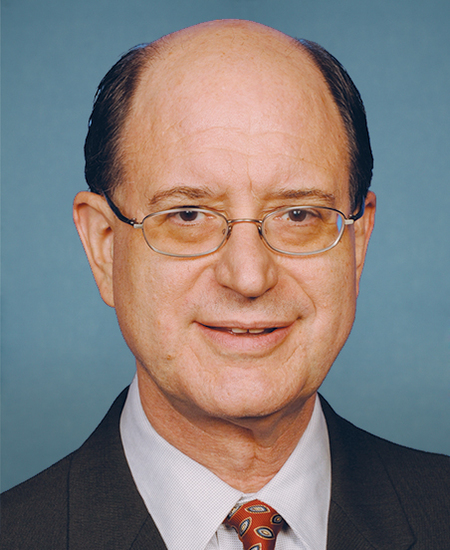
Rep. Brad Sherman
Sponsored bills
Martha Wright Prison Phone Justice Act This bill establishes requirements related to certain charges, practices, classifications, or regulations in connection with confinement facility (i.e., jail or prison) communications services. Specifically, the bill requires the Federal Communications Commission (FCC) to establish maximum rates and charges that a provider of prison communications services may charge for such services. The bill provides interim rate caps until the FCC establishes such rates and charges. The bill requires a provider of prison communications services to assess all charges for communications on a per-minute basis for the actual duration of the communication, and it prohibits a provider from charging a per-communication or per-connection charge. A provider also may not charge an ancillary service charge except in certain circumstances. Further, the bill prohibits a provider from assessing a site commission, which is a payment or donation made to certain entities that operate or oversee a confinement facility.
Commission to Study and Develop Reparation Proposals for African Americans Act This bill establishes the Commission to Study and Develop Reparation Proposals for African Americans. The commission shall examine slavery and discrimination in the colonies and the United States from 1619 to the present and recommend appropriate remedies. The commission shall identify (1) the role of the federal and state governments in supporting the institution of slavery, (2) forms of discrimination in the public and private sectors against freed slaves and their descendants, and (3) lingering negative effects of slavery on living African Americans and society.
This resolution recognizes the historic, cultural, and religious significance of the festival of Vaisakhi and expresses its respect for all communities that celebrate Vaisakhi.
Healthy Families Act This bill provides for paid and unpaid sick leave for employees to meet their own medical needs and those of their families. It requires employers with 15 or more employees to provide their employees with at least one hour of earned paid sick leave for every 30 hours worked, up to a maximum of 56 hours of paid sick leave in a year. An employer with fewer than 15 employees may also provide the same amount of paid sick leave, but may opt out of such requirement, in which case such employer must provide its employees at least 56 hours of unpaid leave in a year. An employee may use sick leave for absences (1) resulting from a physical or mental illness, injury or medical condition; (2) resulting from obtaining professional medical diagnosis or care, or preventive medical care; (3) to care for a child, parent, spouse, a domestic partner, or other blood or close relative; and (4) resulting from domestic violence, sexual assault, or stalking. The bill makes it unlawful for any employer to interfere with, restrain, or deny the exercise of an employee's right to accrue sick leave as provided by this bill. An employee may take legal action to enforce the right to sick leave granted by this bill and the Department of Labor must investigate complaints of violations of the requirements of this bill. Labor is authorized to conduct a public awareness campaign to educate and inform the public of the requirements for paid sick leave provided by this bill.
Providing Responsible Emergency Plans for Animals at Risk of E merging Disasters Act or the PREPARED Act This bill establishes requirements governing the care of animals by entities, such as zoos, in emergencies or disasters. Specifically, the bill requires each research facility, dealer, exhibitor, intermediate handler, and carrier to develop and follow a contingency plan to provide for the humane handling, treatment, transportation, housing, and care of their animals in the event of an emergency or disaster.
This resolution recognizes Nowruz (the Iranian New Year) and expresses support for Iranian Americans.
This resolution calls on the government of Azerbaijan to immediately return all Armenian prisoners of war and captured civilians. The resolution also urges the Department of State to engage with Azerbaijani authorities to bring about this result.
This resolution expresses the sense of the House of Representatives that it is U.S. policy to officially recognize and remember the Semele Massacre (the 1933 killing of up to 3,000 Assyrian Christian men, women, and children by the government of Iraq), to reject efforts to associate the U.S. government with denial of the massacre, and to encourage education and public understanding of the massacre and its relevance to modern-day crimes against humanity.
This resolution condemns Iranian state-sponsored terrorist attacks against U.S. citizens and officials and Iranian dissidents and expresses support for the people of Iran who are engaged in legitimate and peaceful protests against the Iranian regime.