

Maddy summaryThis bill is a non-binding resolution that expresses the House of Representatives' sentiment to honor public servants for their dedication to the United States. It specifically acknowledges the work of federal, state, and local government employees, as well as uniformed service members, who deliver essential services and support the economy. The resolution calls on the American public to observe Public Service Recognition Week with ceremonies and activities that recognize these contributions. Because it is a symbolic expression of the House's feelings rather than a law with enforceable rules, it does not create new policies or mandate specific actions.
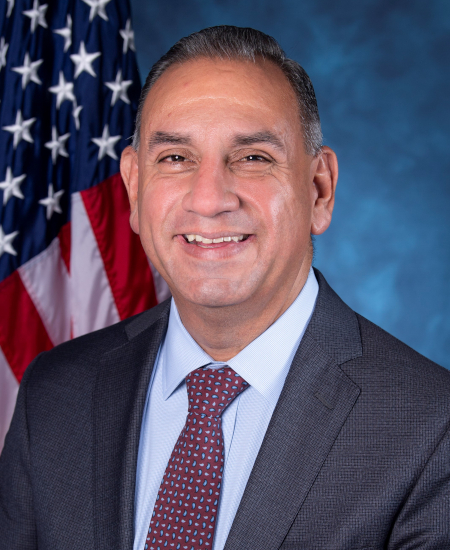
Rep. Gilbert Ray Cisneros, Jr.
Sponsored bills
Maddy summaryThis bill directs the Small Business Administration to create a plan for disclosing how it uses artificial intelligence in its operations and contracting. The agency must submit this implementation plan to Congress within 45 days of the law's enactment, outlining specific steps to define roles and document AI usage decisions. The requirements are based on a prior government report and existing federal guidelines aimed at increasing transparency in federal AI adoption. Ultimately, the legislation ensures the SBA formally reports its AI strategies and progress to legislative oversight committees.
Maddy summaryThe Afterschool for All Act significantly increases funding for the Community Learning Centers program, raising the annual appropriation from $1 billion to $10 billion for the fiscal years 2026 through 2035. This expansion aims to support after-school programs in elementary and secondary schools, directly benefiting students and educational institutions that rely on these grants. Additionally, the bill amends the name of the relevant section in the Elementary and Secondary Education Act to remove the term "21st Century," and it raises the corporate income tax rate from 21% to 22% for taxable years beginning after the law is enacted.
Maddy summaryH.R. 1243 is a House resolution that formally recognizes May as Asian American, Native Hawaiian, and Pacific Islander Heritage Month to celebrate the contributions of these communities to U.S. history. The bill highlights the diverse populations, historical milestones, and significant achievements of Asian Americans, Native Hawaiians, and Pacific Islanders in government, the military, and society. It also acknowledges the ongoing challenges faced by these groups, including a rise in hate crimes and historical discrimination. As a commemorative resolution, the measure does not create new laws or funding but serves to express official congressional appreciation and awareness.
Maddy summaryThe No WAR Act prohibits Congress from using budget reconciliation procedures to fund military hostilities against Iran unless such actions are explicitly authorized by a formal declaration of war or a specific authorization for the use of military force. This legislation directly affects the legislative process by establishing a point of order that blocks any reconciliation bill attempting to provide budget authority for offensive military operations, strikes, or covert actions targeting Iranian military forces, territory, or government institutions. The bill also defines proxy forces as any foreign military or irregular groups operating with U.S. direction or material support, ensuring these entities are included in the restrictions on unauthorized funding. By amending the Congressional Budget and Impoundment Control Act, the measure aims to prevent the use of budgetary shortcuts to bypass the constitutional requirement for congressional approval before engaging in armed conflict with Iran.
Maddy summaryThis bill, titled the Protecting Human Rights and Public Health in Foreign Assistance Act, aims to cancel specific regulations issued by the Department of State. It directly affects the federal government by prohibiting any department or agency from enforcing, implementing, or proposing rules related to protecting life, combating discriminatory equity ideology, and combating gender ideology in foreign aid programs. The legislation treats these cancelled rules as if they never existed, effectively nullifying their impact on future foreign assistance policies.
Maddy summaryHR 2488 designates the U.S. Postal Service facility at 3817 Marysville Boulevard in Sacramento, California, as the "Grantland Johnson Post Office." This bill updates all federal references in laws, maps, and documents to use the new name for that specific location. It directly affects the postal service facility and any federal records mentioning it. The bill is purely procedural, with no policy changes or financial impacts beyond the name designation.
Maddy summaryThe Investing in the American Dream Act expands eligibility for Small Business Administration loans to include small businesses owned by certain non-citizens. Specifically, it allows businesses to qualify if they are at least 51 percent owned and controlled by individuals who are lawfully present in the United States and authorized to work, such as refugees, asylees, permanent residents, and specific nonimmigrant visa holders. The bill also permits businesses owned by individuals living outside the United States to apply for these loans. This change aims to broaden access to federal financial support for small enterprises by removing previous restrictions based on the citizenship or permanent residency status of the business owners.
Maddy summaryThe Public Lands Workforce Stability Act prevents the Department of the Interior and the United States Forest Service from firing employees or cutting jobs between now and September 30, 2030, unless specific conditions are met. Under this law, agencies cannot reduce staff numbers or separate employees for reasons like poor performance or misconduct without first getting approval from the chairs and ranking members of both the House and Senate Appropriations Committees. This restriction applies to all federal funds used for these actions and aims to maintain workforce stability within these agencies for the next several years.
Maddy summaryHR 5543, the Baltic Security Assessment Act of 2025, requires the U.S. State and Defense Departments to submit a report within 180 days of enactment. The report will assess emerging military, cyber, hybrid, and political threats to Estonia, Latvia, and Lithuania, including the roles of Russia, Belarus, China, Iran, and other actors. It will also evaluate U.S. and NATO military presence in the region, opportunities for defense cooperation, and recommendations to strengthen deterrence, cybersecurity, and democratic resilience in the Baltic countries. This bill directly affects U.S. foreign policy and defense planning regarding the Baltics, but does not create new programs or funding.