

Safe from the Start Act of 2021 This bill directs the Department of State to direct U.S. foreign assistance to address humanitarian crises in a manner that aims to prevent and respond to gender-based violence at the onset of an emergency. The State Department shall focus on (1) preventing gender-based violence, (2) protecting survivors of humanitarian crises from the onset of the emergency, (3) promoting standards and activities to prevent and respond to gender-based violence, and (4) advancing and empowering survivors and at-risk individuals. Activities shall include improving access to post-sexual-assault medical and mental health services and ensuring such services are available to hard-to-reach populations. The State Department may provide support to local and international organizations to achieve its goals.
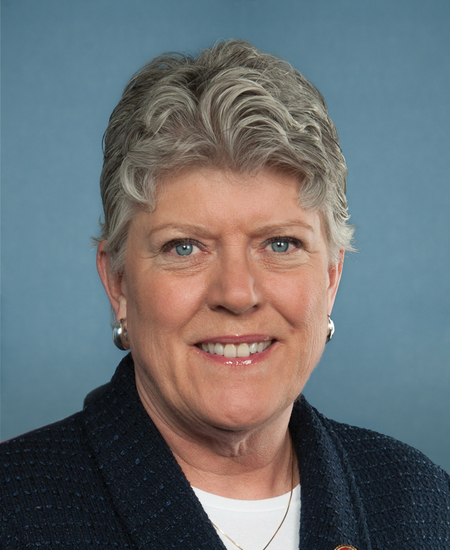
Rep. Julia Brownley
Sponsored bills
Global Health, Empowerment and Rights Act This bill establishes that a foreign nongovernmental organization shall not be disqualified from receiving certain U.S. international development assistance solely because the organization provides medical services using non-U.S. government funds if the medical services are legal in both the United States and the country in which they are being provided. Such foreign organizations shall not be subject to requirements relating to their use of non-U.S. funds for advocacy or lobbying activities, other than those that apply to U.S. nongovernmental organizations. Current U.S. policy prohibits various foreign assistance from going to a foreign nongovernmental organization unless it agrees to not perform or actively promote abortions.
Securing Access to Lower Taxes by ensuring Deductibility Act or the SALT Deductibility Act This bill repeals the temporary restrictions in taxable years 2018 through 2025 on the deductibility of state and local taxes.
Special Districts Provide Essential Services Act This bill makes special districts eligible for the Coronavirus Relief Fund and the Municipal Liquidity Facility program. Specifically, the bill makes special districts eligible for payments from amounts paid to states from any new appropriations to the fund. A special district must submit a request for payment to the state with information demonstrating that the special district has experienced or is likely to experience during the COVID-19 (i.e., coronavirus disease 2019) emergency reduced revenue or operational funding derived from provided services, taxes, fees, or other sources of revenue; reduced indirect funding from the federal government, the state, or a unit of general government below the state level; or as a result of the COVID-19 emergency, increased expenditures necessary to continue operations. The Board of Governors of the Federal Reserve System shall include special districts as eligible issuers in the Municipal Liquidity Facility program, which was created in response to the COVID-19 emergency to buy municipal securities.
Green Bus Tax Credit Act of 2021 This bill allows a manufacturer a zero-emission bus tax credit through 2026. The credit is equal to 10% of the sales price of a zero-emission bus. The credit only applies to the first $1 million of a vehicle's sales price and to buses used primarily in the United States and its possessions. The bill defines zero-emission bus as a motor vehicle that has a gross vehicle weight rating of not less than 14,000 pounds, is not powered or charged by an internal combustion engine, is propelled solely by an electric motor that draws electricity from a battery or fuel cell, and is designed to carry 15 or more passengers.
Raise the Wage Act of 2021 This bill increases the federal minimum wage for regular employees over a 5-year period, for tipped employees, and for newly hired employees who are less than 20 years old. The bill sets forth a schedule of annual increases in the federal minimum wage for individuals with disabilities. The Department of Labor shall no longer issue special certificates for the payment of subminimum wages to such individuals after the final wage increase under this bill for such individuals takes effect. Labor shall provide, upon request, technical assistance and information to employers to (1) help them transition their practices to comply with wage increases and other requirements under this bill for individuals with disabilities, and (2) ensure continuing employment opportunities for such individuals. The bill eliminates the separate minimum wage requirements for tipped, newly hired, and disabled employees. After a specified period, these employees shall be paid the same minimum wage as regular employees. Labor must publish any increase in the minimum wage in the Federal Register and on its website 60 days before it takes effect.
Health Care Fairness for Military Families Act of 2021 This bill modifies the extension of dependent coverage under TRICARE by allowing a dependent under the age of 26 to be covered without an additional premium. Additionally, the bill authorizes such coverage of dependents without a premium regardless of whether they are eligible to enroll in an employer sponsored plan.
This resolution expresses support for sustained dialogue between the United States, Russia, and China to reduce the threats posed by nuclear weapons. The resolution calls on the President to extend the New START Treaty for five years and urges the current administration to consider continued participation in the Treaty on Open Skies.
Bicycle Commuter Act of 2021 This bill modifies provisions relating to the tax exclusion for employer-provided fringe benefits for bicycle commuting. Specifically, the bill (1) repeals the suspension (for the period between 2018 and the end of 2025) of the exclusion, (2) includes bikeshare (a bicycle rental operation providing for pick up and drop off) and low-speed electric bicycle within the definition of bicycle for purposes of the exclusion, and (3) modifies the limitation on the exclusion to provide for a specified monthly limitation amount (i.e., 30% of the parking fringe benefit amount).
This resolution expresses the sense of the House of Representatives that the U.S. Postal Service should issue a commemorative stamp series honoring women veterans.