

FEMA Climate Change Preparedness Act This bill requires the Federal Emergency Management Agency (FEMA) to (1) revise its 2018-2022 Strategic Plan to ensure that the plan explicitly mentions climate change and addresses the implications of climate change on homeland security and near- and long-term national disaster risk, and (2) ensure that future strategic plans do likewise. The Department of Homeland Security must establish, as a subcommittee of the National Advisory Council, the Climate Change Subcommittee, which shall advise FEMA on how to best incorporate climate change, including risk assessments and strategies for adaptation and mitigation, into and throughout FEMA's policies, plans, programs, and operations. FEMA must publish as a report, submit to specified congressional committees, and make available to Congress and the public, a comprehensive assessment of climate change risks and preparedness.
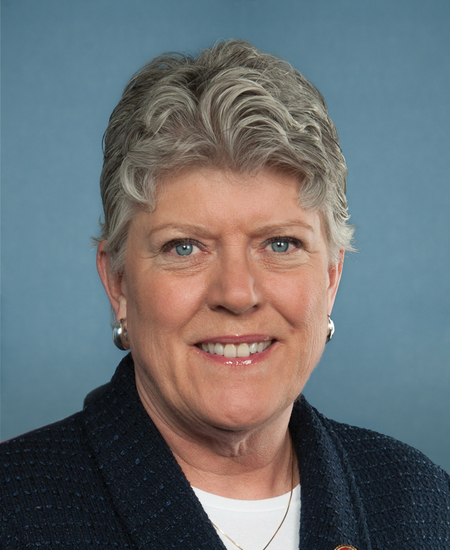
Rep. Julia Brownley
Sponsored bills
Air Traffic Noise and Pollution Expert Consensus Act of 20 21 This bill requires the Federal Aviation Administration to enter into an arrangement with the National Academies of Sciences, Engineering, and Medicine to examine and report on the various health impacts of air traffic noise and pollution.
Support Local Transportation Act This bill revises requirements for the surface transportation block grant program to increase the percentages of program funds required to be allocated to states for each of FY2022-FY2026 for surface transportation projects in urbanized areas with a population of over 200,000, non-urban areas with a population greater than 5,000, and other areas of the state.
Coast Guard Safety and Accountability Act This bill requires the U.S. Coast Guard to formally respond in writing to each recommendation about transportation safety from the National Transportation Safety Board (NTSB). The response must indicate whether the Coast Guard intends to (1) adopt the complete recommendation, (2) adopt a part of the recommendation, or (3) refuse to adopt the recommendation. The NTSB must make a copy of each recommendation and response available to the public at a reasonable cost.
Green Bus Act of 2021 This bill requires all buses purchased or leased with Federal Transit Administration funds to be zero-emission beginning on October 1, 2029. The Department of Transportation (DOT) must issue an annual best practices report on zero-emission bus programs to help states and transit agencies implement zero-emission bus fleets. DOT must give preference in awarding grants under the low or no emission program to transit agencies who have completed a full fleet transition plan. The federal share of the cost of any zero-emission bus purchased or leased in accordance with this bill shall be 90%.
National Multimodal Freight Network Improvement Act This bill revises the network components of the National Multimodal Freight Network (NMFN). Specifically, the bill requires the interim NMFN to include public ports of the United States that have a total annual cargo value of at least $1 billion, and the final NMFN to include all specified interim network components when the Department of Transportation designates or redesignates the network.
Safe And Friendly for the Environment Streets Act or the SAFE Streets Act This bill revises the Highway Safety Improvement Program to create special rules for vulnerable road users. The bill defines vulnerable road user as a nonmotorist such as a pedestrian, pedalcylcist, bicyclist, other cyclist, or person on personal conveyance. Specifically, the bill requires states and metropolitan planning organizations (MPOs) with above the median rate of vulnerable road user fatalities and serious injuries to dedicate at least 75% of funds under the program for projects to improve safety for such users, and states and MPOs to create vulnerable road user safety assessments that include locations and corridors where serious injuries and fatalities occur and strategies to reduce safety risks for such users in the corridors.
Flood Resiliency and Taxpayer Savings Act of 2021 This bill requires federal agencies to take specified actions to evaluate and mitigate the risk of floods to federally funded projects. Specifically, the bill directs federal agencies to evaluate the potential for flooding throughout the planned lifetime or duration of a federally funded project to reduce the risk of financial and property losses and prevent the disruption of critical services during floods. Further, federal agencies must consider certain data and information (e.g., the most recent flood insurance rate map published by the Federal Emergency Management Agency) when evaluating whether a federally funded project is in a floodplain. If the agency determines the data and information are not adequate for understanding the flood risks to the project, then the agency must use an alternative design standard outlined by the bill. Finally, the bill directs the Federal Interagency Floodplain Management Task Force to issue guidelines for federal agencies related to flood risk management.
Safe Routes to School Expansion Act This bill expands eligibility under the Highway Safety Improvement Program to include certain safety projects related to safe routes to school infrastructure improvements such as sidewalks, crosswalks, signage, bus stop shelters or protected waiting areas. The bill increases the federal share for the Department of Transportation (DOT) to fund improvements for pedestrian or bicyclist safety, safety of people with disabilities, and safe routes to school infrastructure. DOT must also carry out a safe routes to school program for the benefit of children in primary, middle, and high schools.
Child and Animal Abuse Detection and Reporting Act This bill requires the Children’s Bureau of the Administration for Children and Families to disseminate information through the National Clearinghouse on Child Abuse and Neglect Information about the incidence of cases of child abuse that involve abuse to animals.