

Maddy summaryThe Green New Deal for Public Housing Act directs the Department of Housing and Urban Development to provide grants to public housing agencies and tribal entities for the comprehensive rehabilitation, energy upgrades, and modernization of public housing stock. These funds are intended to transform properties into zero-carbon homes by installing renewable energy systems, electrifying appliances, and repairing infrastructure, while also establishing workforce development programs that offer training, apprenticeships, and stipends to residents and local low-income workers. The bill mandates strict labor standards, including prevailing wages and the use of U.S.-made materials, and requires agencies to maintain or increase the total number of public housing units while prioritizing resident participation through elected councils and community engagement processes.
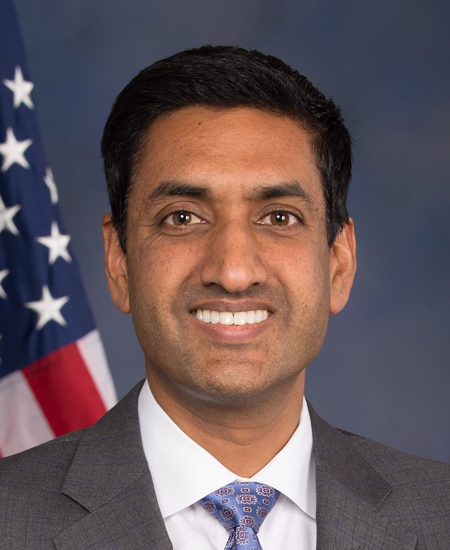
Rep. Ro Khanna
Sponsored bills
Maddy summaryThe AI Tax and Work Protection Act imposes a new excise tax on companies that develop or sell artificial intelligence foundation models, with rates that increase based on the national unemployment level. The revenue generated from this tax is placed into a dedicated trust fund to finance a new federal jobs program administered by a newly created Office of Job Creation within the Department of Labor. This program awards grants to state, local, and tribal governments to hire permanent, full-time workers for specific public service roles, such as in education, healthcare, infrastructure, and community safety. To ensure the jobs created do not replace existing workers, the bill includes strict nondisplacement rules and mandates that grant recipients provide employees with strong labor protections, including collective bargaining rights, competitive wages, and paid leave. Additionally, the legislation directs the Bureau of Labor Statistics to study the impact of AI on the workforce and establishes an advisory committee to guide the implementation of the job creation initiatives.
This bill designates the facility of the United States Postal Service located at 6444 San Fernando Road in Glendale, California, as the "Paul Ignatius Post Office".
Maddy summaryHR 2175 designates the U.S. Postal Service facility at 130 South Patterson Avenue in Santa Barbara, California, as the "Brigadier General Frederick R. Lopez Post Office Building." The bill updates all official U.S. government references to this location to reflect the new name. This is a ceremonial naming bill with no policy changes or direct impact on residents or services.
Maddy summaryThis resolution expresses the sense of the House that communities impacted by artificial intelligence data centers should have the right to transparency and local control over their development. It outlines a proposed set of guidelines that would allow local governments to ban data centers near homes and schools, require public impact reports on water and energy use, and mandate that operators pay their fair share in taxes. The bill also suggests mechanisms for communities to pause construction until protections against higher electricity bills and water shortages are established, while ensuring developers provide affordable housing and environmental safeguards. Ultimately, the measure aims to empower local authorities to regulate data center operations without being overruled by state laws, focusing on health, environmental, and economic concerns.
Maddy summaryThe AI Ads Act expands existing federal election laws to prohibit the use of artificial intelligence-generated content for fraudulent purposes in political campaigns. Specifically, it requires candidates and committees to disclose when they use generative AI to create materials that misrepresent their authority or solicit donations. The bill also broadens the definition of who can be held liable for such fraud, extending protections to any political committee or organization, whether real or fictitious, rather than just candidates and their direct employees. These changes aim to prevent deceptive practices involving AI in political advertising and fundraising without altering the underlying penalties for violations.
Maddy summaryThe Green New Deal for Health Act establishes a comprehensive federal framework to address the health impacts of climate change by creating new offices, expanding funding, and mandating specific actions across the health care sector. It directly affects hospitals, medical facilities, health care workers, and communities, with a specific focus on protecting environmental justice and low-income populations from climate-related health risks. Key provisions include the creation of an Office of Climate Change and Health Equity to develop a national strategic plan, requirements for hospitals to provide extended notice before closing or reducing essential services, and significant grants to upgrade medical facilities for climate resilience. The bill also mandates that the health care sector reduce its own carbon emissions through new disclosure rules for medical supplies and grants for green manufacturing, while simultaneously funding education to train health professionals on climate-related health threats. Additionally, the legislation authorizes Medicare coverage for home resiliency services, such as heat pumps and solar batteries, for individuals at risk during climate disasters, and allocates billions of dollars to expand the community health workforce and support mental health resilience programs.
Maddy summaryThis bill, known as the No Campaign Funded Cover-Ups Act, restricts how candidates and federal officials can use campaign money or legal expense funds when facing accusations of sexual assault, abuse, or harassment. Under the new rules, these funds cannot pay for legal fees, settlements, court judgments, or private investigations aimed at discrediting the accuser. The legislation also requires detailed reporting of any legal expenses paid from these sources and applies retroactively to payments made in the two years before the law takes effect.
Maddy summaryThis resolution directs the Speaker of the House to file a lawsuit on behalf of Congress against the President and other executive officials who have failed to follow constitutional duties regarding military actions in Iran. The bill specifically targets the continuation of hostilities that exceed the time limits set by the War Powers Resolution and ignores a prior congressional order to withdraw troops. If passed, the House of Representatives would intervene in federal court to seek legal relief, with the Office of the General Counsel representing the institution in these civil actions.
Maddy summaryThis bill establishes federal protections and funding to expand access to in vitro fertilization and intrauterine insemination for individuals, military service members, and veterans. It requires most private health plans, Medicaid programs, and Medicare to cover these fertility treatments without imposing higher cost-sharing than other medical services. Additionally, the legislation mandates that the Department of Defense and the Department of Veterans Affairs provide specific fertility preservation and treatment benefits to uniformed service members and eligible veterans. The bill also includes preemption clauses that override state laws restricting these procedures and prohibits discrimination based on marital status, sex, or sexual orientation in the provision of care.