

Maddy summary# Summary of "Dignity for Immigrants while Guarding our Nation to Ignite and Deliver the American Dream Act" This comprehensive immigration bill proposes multiple pathways to legal status and permanent residency for undocumented immigrants while creating new employment and workforce development programs. ## Key Provisions: 1. **Dignity Program (Subtitle III)**: - Creates a 7-year program for eligible undocumented immigrants requiring $7,000 in restitution payments to an H-1B fund - Provides deferred action on removal, work authorization, and travel privileges - Requires participants to maintain employment/education, pay taxes, and comply with all laws - Upon completion, participants receive "Dignity Status" valid for 7 years with renewal options 2. **Workforce Development (Division C)**: - Directs restitution payments to fund apprenticeships and work-based learning programs - Establishes industry partnerships to support small- and medium-sized businesses - Focuses on "in-demand industry sectors" with targeted training programs - Requires 12 months of post-employment support services for participants 3. **Family Reunification (Section 3111-3115)**: - Expands discretionary authority for family-based relief - Creates new "family purpose" nonimmigrant visa category (90-day limit) - Modernizes military naturalization for service members - Includes protections for children affected by visa backlogs 4. **Backlog Reduction (Section 3201-3203)**: - Creates premium processing for long-pending cases ($20,000 fee) - Increases per-country caps from 7% to 15% - Protects children from "aging out" of family-based visas 5. **Student and Worker Visas (Section 3301-3305)**: - Modernizes student visa categories with "dual intent" provisions - Recognizes doctoral STEM graduates as "extraordinary ability" - Streamlines visa processing through a new Immigration Agency Coordinator The bill aims to balance immigration reform with workforce development, creating a pathway to legal status while directing funds toward American workers through apprenticeships and training programs in high-demand fields.
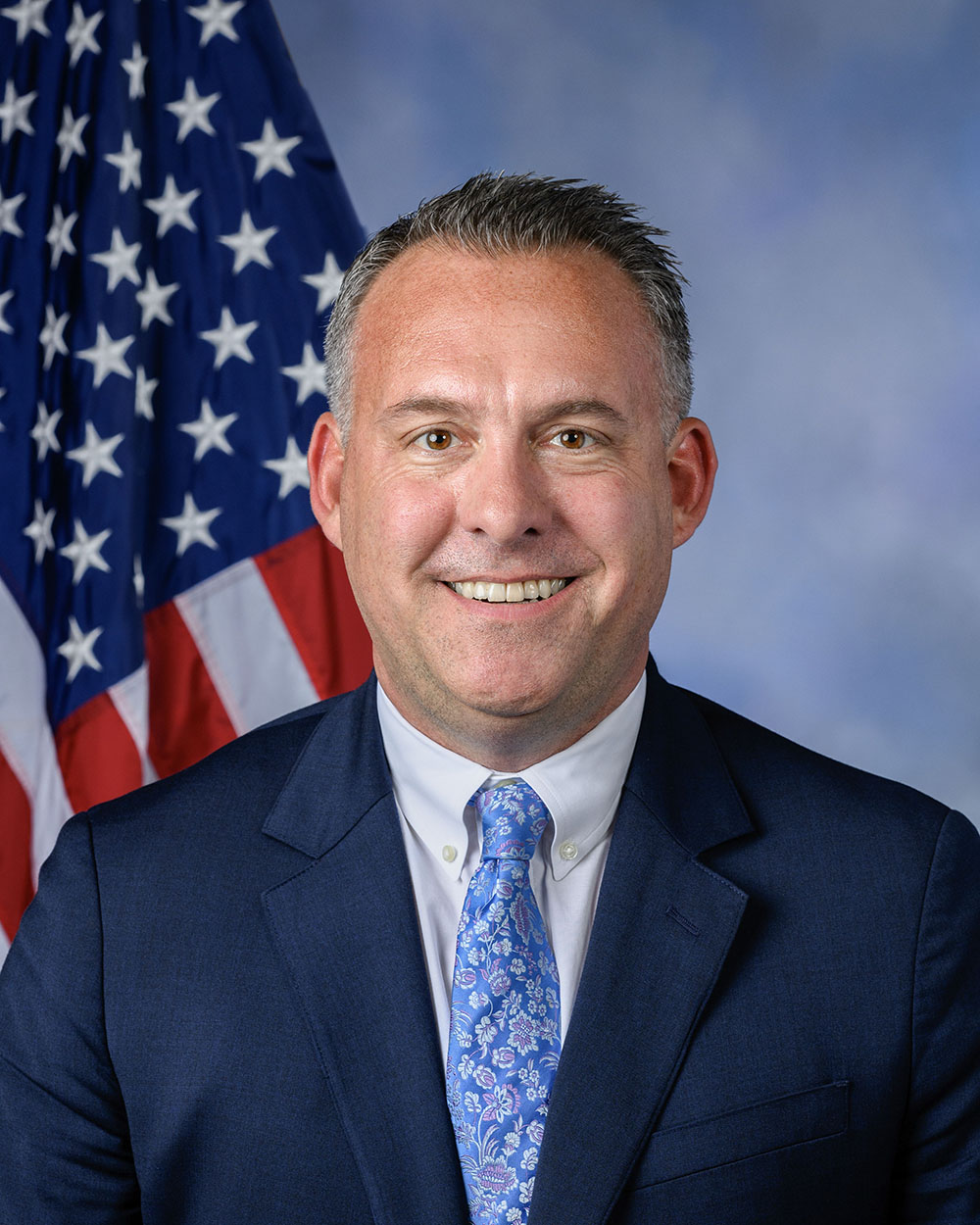
Rep. Adam Gray
Sponsored bills
Farmers First Act of 2025 This bill extends through FY2030 and revises the Farm and Ranch Stress Assistance Network (FRSAN). This Department of Agriculture program provides competitive grants to states, Indian tribes, and qualified nonprofit organizations to provide stress assistance programs (i.e., professional agricultural behavioral health counseling, helplines, and resources) to individuals engaged in farming, ranching, and agriculture-related occupations. The bill specifies that the grant funding for farm telephone helplines and websites may also be used for crisis lines. Further, FRSAN grant recipients may establish referral relationships with providers, including Certified Community Behavioral Health Clinics, health centers, rural health clinics, and critical access hospitals.
Maddy summaryHRES 575 is a symbolic resolution designating July 10th as "Journeyman Lineworkers Recognition Day." It honors lineworkers who face significant risks daily - working at heights near live wires and responding to disasters like hurricanes and wildfires. The resolution specifically references Henry Miller, an early leader of the International Brotherhood of Electrical Workers, who died on July 10, 1896, while troubleshooting an outage. It encourages the public to recognize these workers' contributions but does not create new laws or allocate funding.
Maddy summaryThe Livestock Indemnity Program Improvement Act of 2025 updates how market value is calculated for livestock loss compensation under the existing program. It requires the Secretary of Agriculture to determine market value quarterly, in coordination with the Agricultural Marketing Service Administrator and using other appropriate resources. This change directly affects livestock producers who receive payments for losses due to natural disasters (like droughts or floods) or disease outbreaks. The bill ensures compensation rates reflect current market conditions more frequently, without altering eligibility or payment amounts.
Maddy summaryThis bill requires drug manufacturers to pay rebates to Medicare when their "selected drugs" (cancer and complex therapies subject to negotiated maximum fair prices) are used. Manufacturers must calculate rebates based on the difference between current Medicare payment rates (ASP+6) and new negotiated rates (MFP+6), covering the gap for beneficiaries. This lowers patient coinsurance from the current 20% of ASP+6 to 20% of MFP+6 for these specific drugs during the negotiated price period. The rebates are paid to the Medicare trust fund and apply to Medicare Part B beneficiaries using these drugs, directly affecting drug manufacturers and patients covered under Medicare Part B.
Maddy summaryHRES 543 is a symbolic House resolution (not a law) introduced by multiple representatives. It affirms the constitutional right to peaceful protest under the First Amendment and condemns violent acts by some individuals during demonstrations, such as vandalism and looting. The resolution specifically criticizes the President’s 2025 deployment of National Guard and Marines to Los Angeles without proper legal authority (violating 10 U.S.C. § 12406 and the Posse Comitatus Act) and without coordination with California’s governor. It also denounces inflammatory rhetoric that escalated tensions and supports law enforcement efforts to protect public safety during protests. The resolution has no binding effect but formally expresses congressional position on these issues.
Maddy summaryHR 3946, the FIGHT Act of 2025, amends the Animal Welfare Act to specifically prohibit gambling on animal fighting events and restrict the interstate transport of roosters used in such ventures. It defines "rooster" as male chickens over six months old and makes it unlawful to sponsor, exhibit, attend (for those under 16), or gamble on animal fighting events - whether in-person or broadcast. The bill creates a civil enforcement mechanism allowing any person to file a lawsuit to stop violations after providing 60 days' notice to authorities, with potential fines up to $5,000 per violation. It also establishes seizure of property used to facilitate violations and clarifies that state laws on animal fighting remain in effect unless directly conflicting with federal provisions.
Maddy summaryThis resolution (HRES 503) is a non-binding expression of support for designating June 11, 2025, as "World Franchise Day." It does not create new laws or directly affect any individuals or businesses; instead, it symbolically recognizes franchising's economic role. The resolution cites franchising's history (tracing to Benjamin Franklin and Isaac Singer), its current scale (830,876 U.S. establishments supporting 8.8 million jobs), and its contribution to the economy (nearly 3% of GDP). It is a procedural resolution, not a policy change, meant to acknowledge franchising's significance as a business model.
Maddy summaryThis bill mandates annual funding for USDA programs to prevent, detect, and respond to foreign animal diseases affecting livestock. It requires $30 million annually for 2023-2025, increases to $233 million yearly for 2026-2029, and then reduces to $75 million annually after 2030, with specific allocations for surveillance, laboratory networks, and emergency response. The funds directly support state and federal animal health programs, including the National Animal Health Laboratory Network and the National Animal Disease Preparedness Program. These provisions aim to strengthen protections for U.S. agriculture by ensuring consistent resources for disease monitoring and rapid containment.
Maddy summaryHR 3912, the Stop the Baseline Bloat Act of 2025, changes how the federal budget baseline is calculated by excluding emergency funding and supplemental appropriations. This affects the annual budget process by removing these funds from the baseline figure used to measure spending limits under the Budget Control Act. The key provision amends the Balanced Budget and Emergency Deficit Control Act to specify that emergency requirements and supplemental funding are not counted in the baseline calculation. As a result, future budget targets will reflect only regular appropriations, not additional emergency or supplemental spending.